Marco Riley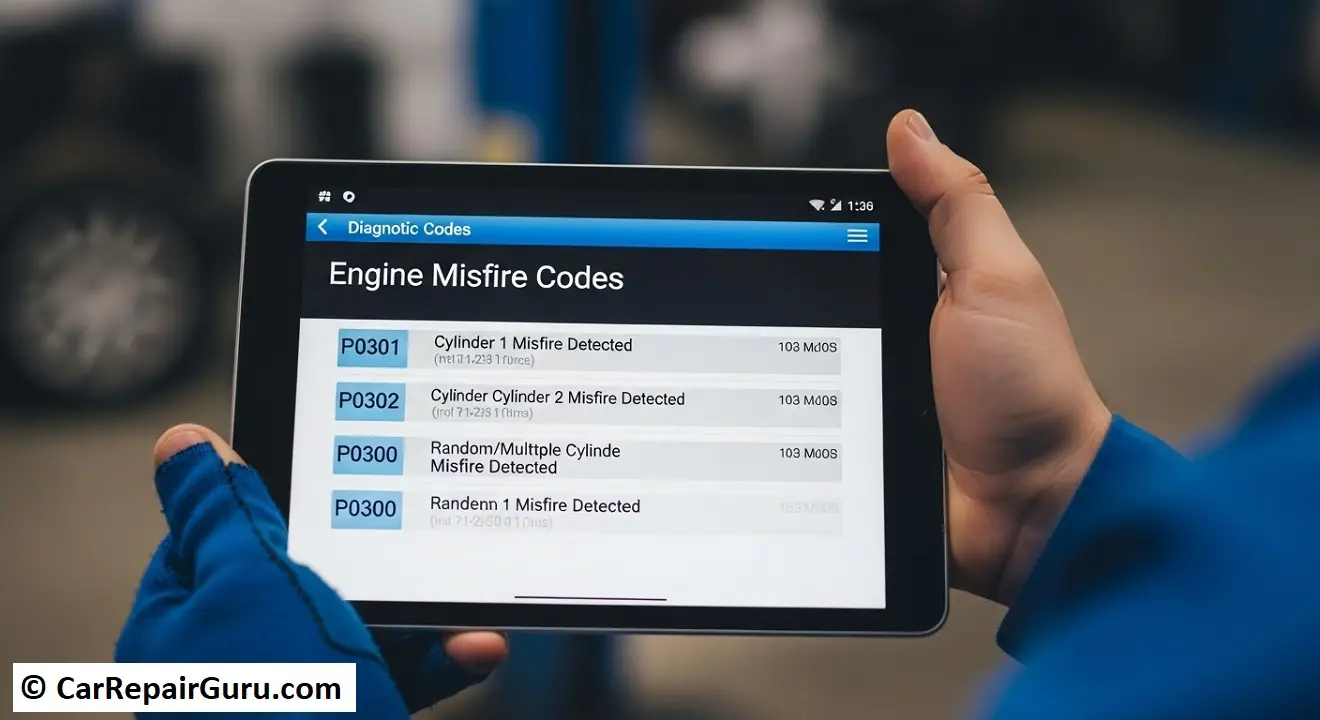
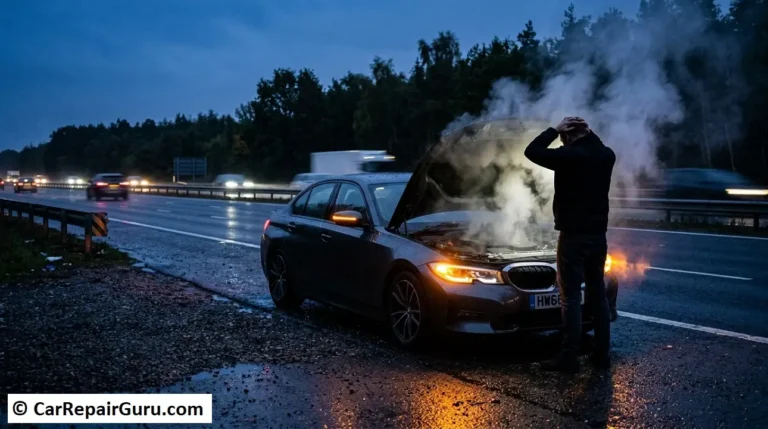
You’re driving along, and then it happens. A little light on your dashboard, shaped like an engine, suddenly blinks to life. Maybe your car starts to shake at a stoplight, or it feels like it’s stuttering when you try to accelerate. If this sounds familiar, you’ve likely encountered one of the most common and frustrating automotive issues: an engine misfire.
An engine misfire code can be alarming, but it doesn’t have to be a mystery. These diagnostic trouble codes (DTCs) are your car’s way of telling you exactly what’s wrong. This guide will demystify everything from the dreaded P0300 random misfire to specific cylinder codes like P0301 and P0302. We’ll explore the common causes, walk you through diagnosis, and help you understand how to fix an engine misfire, saving you time, money, and stress.
- What Is an Engine Misfire? (And Why It Matters)
- The Telltale Signs – Common Symptoms of an Engine Misfire
- Decoding the Codes – Understanding P030X Misfire DTCs
- The General Misfire Code – P0300 – Random/Multiple Cylinder Misfire Detected
- The Specific Cylinder Codes – P0301 to P0312
- Top 7 Common Causes of Engine Misfires
- How to Diagnose an Engine Misfire – A Step-by-Step Guide
- Step 1 – Read the Code with an OBD-II Scanner
- Step 2 – Perform a Visual Inspection
- Step 3 – Isolate the Faulty Component (The “Swap Test”)
- Step 4 – Inspect the Spark Plugs
- Step 5 – When to See a Professional
- Can You Drive With an Engine Misfire?
- Final Thoughts – Take Control of Your Misfire Codes
- Engine Misfire FAQ
- How much does it cost to fix an engine misfire?
- Will an engine misfire fix itself?
- Can a bad O2 sensor cause a misfire code?
- What’s the difference between a P0300 and a P0301 code?
What Is an Engine Misfire? (And Why It Matters)
In simple terms, an engine misfire occurs when one or more of your engine’s cylinders fails to produce power correctly. Think of your engine’s cylinders as a team of runners working in perfect rhythm. A misfire is like one of those runners suddenly skipping a step. The rhythm is broken, and the whole team’s performance suffers.
This “skipped step” happens when the precise mixture of air and fuel in a cylinder fails to ignite at the right moment. This incomplete combustion event matters—a lot. A consistent misfire leads to:
- Reduced Power and Performance: Your car will feel sluggish and weak.
- Increased Emissions: Unburnt fuel is released into the atmosphere.
- Horrible Fuel Economy: You’ll be visiting the gas station much more often.
- Catastrophic Engine Damage: This is the big one. If left unchecked, unburnt fuel can overheat and destroy your catalytic converter, a repair that can easily cost over $1,500.
The Telltale Signs – Common Symptoms of an Engine Misfire
Your car is pretty good at telling you when something is wrong. An engine misfire will trigger several noticeable symptoms. Here are the most common signs to watch for:
- Flashing Check Engine Light: This is a critical warning. A flashing or blinking check engine light signals a severe misfire that is actively dumping raw fuel into your exhaust. This can destroy your catalytic converter in a matter of minutes. If you see this, pull over safely and turn off the engine as soon as possible.
- Solid (Steady) Check Engine Light: This indicates a less severe but persistent misfire has been detected. The check engine light needs to be addressed soon, but it’s not an immediate emergency.
- Rough Idle: The engine shakes or vibrates noticeably when you’re stopped at a light or parked.
- Hesitation or Stuttering on Acceleration: When you press the gas, the car may stumble or jerk before picking up speed.
- Noticeable Loss of Power: The car feels sluggish and struggles to get up to highway speeds or climb hills.
- Poor Fuel Economy: You notice you’re filling up your gas tank more frequently than usual.
- Smell of Gasoline from the Exhaust: A strong fuel smell is a clear sign that unburnt fuel is passing through the engine.
- Engine Sounds Different: You might hear sputtering, popping, or backfiring sounds from the engine or exhaust.
Decoding the Codes – Understanding P030X Misfire DTCs
When your check engine light comes on, a Diagnostic Trouble Code (DTC) is stored in your vehicle’s computer. To read it, you’ll need a basic OBD-II scanner. Misfire codes belong to a specific family: P030X. The “X” is a number that tells you which cylinder is misfiring.
The General Misfire Code – P0300 – Random/Multiple Cylinder Misfire Detected
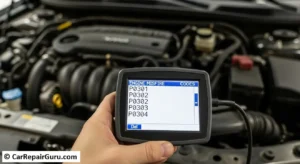
A P0300 code is arguably the most frustrating of the bunch. It means your engine’s computer knows there’s a misfire happening, but it can’t isolate the problem to a single, specific cylinder. The misfires are happening randomly across two or more cylinders.
This usually points to a problem that affects the entire engine, not just one component. Common causes for a P0300 code include:
- A massive vacuum leak
- Low fuel pressure (from a failing fuel pump or clogged filter)
- A dirty or faulty Mass Air Flow (MAF) sensor
- A bad crankshaft position sensor
- Extremely old, worn-out spark plugs
The Specific Cylinder Codes – P0301 to P0312
These codes are much more direct. The last digit tells you exactly which cylinder is the culprit. This makes diagnosis significantly easier.
P0301: Misfire Detected in Cylinder 1P0302: Misfire Detected in Cylinder 2P0303: Misfire Detected in Cylinder 3P0304: Misfire Detected in Cylinder 4P0305: Misfire Detected in Cylinder 5P0306: Misfire Detected in Cylinder 6- (And so on for 8 and 12-cylinder engines…)
If you get a code like P0302, your diagnostic efforts should be focused on the components directly related to Cylinder 2.
Pro Tip: How to Find Cylinder 1?
The location of “Cylinder 1” varies by manufacturer. On an inline 4 or 6-cylinder engine, it’s almost always the cylinder at the very front of the engine (closest to the belts and pulleys). On a V6 or V8, it’s typically the front-most cylinder on a specific bank (check your owner’s manual or a quick online search for your vehicle’s firing order).
Top 7 Common Causes of Engine Misfires
An engine needs three things to run properly: spark, fuel, and compression. A misfire is caused by a problem with one of these three elements. Here are the most common culprits, starting with the most likely.
- Worn or Faulty Spark Plugs: This is the #1 cause of engine misfires. Spark plugs have a limited lifespan. As the electrode wears down, the gap becomes too large for a strong spark to form, leading to incomplete combustion.
- Bad Ignition Coils or Coil Packs: The ignition coil acts as a transformer, converting the car’s 12-volt power into the 40,000+ volts needed to create a spark. Modern cars use a “coil-on-plug” design where each spark plug has its own coil. When one fails, that cylinder goes dead.
- Defective Spark Plug Wires or Boots: On older cars with a distributor or coil pack, the spark plug wires carry the high voltage to the plugs. Wires can crack with age, and the rubber boots can fail, causing the spark to arc to the engine block instead of the plug.
- Clogged or Malfunctioning Fuel Injectors: A fuel injector is a tiny electronic valve that sprays a fine mist of gasoline into the cylinder. If fuel injectors get clogged with debris or fail electronically, the cylinder won’t get the fuel it needs, causing a misfire.
- Vacuum Leaks: This is a very common cause of a
P0300random misfire code. A cracked hose, failed intake manifold gasket, or bad PCV valve allows unmetered air to enter the engine, throwing off the delicate air-fuel ratio for all cylinders. - Low Fuel Pressure: If the fuel pump is weak or the fuel filter is clogged, the entire system can be starved of fuel. This lack of pressure affects all the injectors, leading to lean conditions and random misfires across the engine.
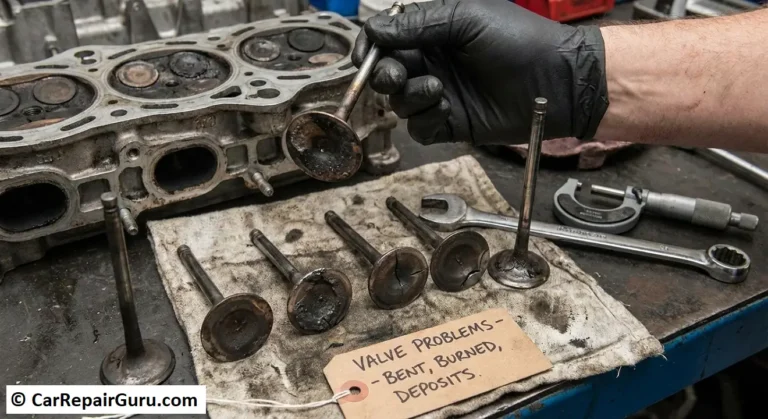
- Mechanical Engine Issues (Less Common): These are the most serious and expensive causes. Problems like a blown head gasket, a burnt valve, worn piston rings, or a jumped timing belt/chain will cause a loss of compression in a cylinder, making combustion impossible.
How to Diagnose an Engine Misfire – A Step-by-Step Guide
Ready to get your hands dirty? With a few basic tools, you can often pinpoint the cause of a specific misfire code (like P0303).
Step 1 – Read the Code with an OBD-II Scanner
This is non-negotiable. An affordable OBD-II scanner is the most important tool in modern DIY car repair. Plug it into the port under your dashboard (usually near the steering column), turn the key to the “On” position, and read the code. This tells you which cylinder to focus on.
Step 2 – Perform a Visual Inspection
Before you start replacing parts, just look. Pop the hood and inspect the area around the misfiring cylinder. Look for:
- Cracked or disconnected vacuum hoses.
- Loose electrical connectors on the ignition coil or fuel injector.
- Oil pooled in the spark plug well (indicating a leaking valve cover gasket).
- Frayed or damaged wiring.
Step 3 – Isolate the Faulty Component (The “Swap Test”)
This is the single most effective DIY diagnostic trick for a specific cylinder misfire (P0301, P0302, etc.). Let’s say you have a P0302 code (Cylinder 2 Misfire).
- Locate the ignition coils on top of Cylinder 2 and a known good cylinder, like Cylinder 3.
- Unplug the electrical connector and remove the single bolt holding each coil in place.
- Swap the coils. Put the coil from Cylinder 2 onto Cylinder 3, and the coil from Cylinder 3 onto Cylinder 2.
- Clear the engine codes with your scanner.
- Start the car and let it run for a minute or drive it briefly until the check engine light comes back on.
- Read the new code.
- If the code is now
P0303, you’ve found your problem! The misfire “followed” the bad coil. You need a new ignition coil. - If the code is still
P0302, the coil is not the problem. The issue lies with the spark plug, fuel injector, or compression in that cylinder.
- If the code is now
Step 4 – Inspect the Spark Plugs
If the swap test didn’t pinpoint the coil, your next step is the spark plug. Remove the plug from the misfiring cylinder. A healthy plug should have a light tan or grayish deposit on the tip. Look for:
- Worn Electrode: The center tip is rounded off.
- Carbon Fouling: Covered in black, sooty deposits (running too rich).
- Oil Fouling: Wet and black with oil (internal engine leak).
- Cracked Porcelain: The white ceramic insulator is cracked.
If the plug looks bad, replace it. It’s best practice to replace all of them at the same time.
Step 5 – When to See a Professional
If you’ve checked the coil and the spark plug and the misfire persists, the problem is likely a faulty fuel injector or a more serious mechanical issue. At this point, it’s best to take your vehicle to a trusted mechanic who can perform a fuel pressure test, an injector balance test, or a compression test to find the root cause.
Can You Drive With an Engine Misfire?
This is a question that requires two very different answers.
If the Check Engine Light is FLASHING: NO.
We can’t stress this enough. A flashing CEL is a dire warning. Driving for even a few miles can superheat and melt the inside of your catalytic converter, turning a potentially simple fix like a $50 ignition coil into a $2,000+ repair bill. Pull over, shut it down, and call for a tow.
If the Check Engine Light is SOLID: Proceed with caution.
A solid light means the misfire isn’t immediately catastrophic. However, you should still get it diagnosed as soon as possible. Limit your driving, avoid hard acceleration, and don’t take long trips. Continuing to drive will still result in poor fuel economy, increased emissions, and long-term strain on your engine and exhaust components.
Final Thoughts – Take Control of Your Misfire Codes
An engine misfire code can be intimidating, but it’s simply your car’s way of communicating. By understanding what the codes mean and learning the basic steps of diagnosis, you can move from a state of worry to a position of control. Remember the most important rule: a flashing check engine light means stop driving immediately. For everything else, a logical approach using an OBD-II scanner can often lead you directly to the source of the problem.
Whether you’re a seasoned DIYer or just want to be more informed when you visit your mechanic, knowing how to interpret these codes is the first step toward a smooth-running, reliable vehicle.
Have you dealt with a frustrating P0300 code or a stubborn misfire? Share your experience in the comments below!
Engine Misfire FAQ
How much does it cost to fix an engine misfire?
The cost varies dramatically depending on the cause. A set of new spark plugs might cost $100-$300 installed. A single ignition coil replacement is often in the $150-$400 range. A clogged fuel injector could be $300-$700, while a failing fuel pump or a mechanical issue like a head gasket can easily exceed $1,000.
Will an engine misfire fix itself?
No. An engine misfire is a symptom of a failing part or a system problem. It will not resolve on its own. Ignoring it will only allow the problem to get worse and lead to more expensive, cascading failures down the line.
Can a bad O2 sensor cause a misfire code?
Yes, it’s possible. A faulty oxygen (O2) sensor can send incorrect data to the engine’s computer, causing it to create an overly rich or lean air-fuel mixture. This imbalance can lead to hesitation and, in some cases, trigger a random misfire code (P0300).
What’s the difference between a P0300 and a P0301 code?
A P0300 code indicates a random or multiple cylinder misfire, meaning the problem is affecting the whole engine. A P0301 code indicates a specific misfire isolated to Cylinder 1, making it much easier to diagnose.
About the Author