Marco Riley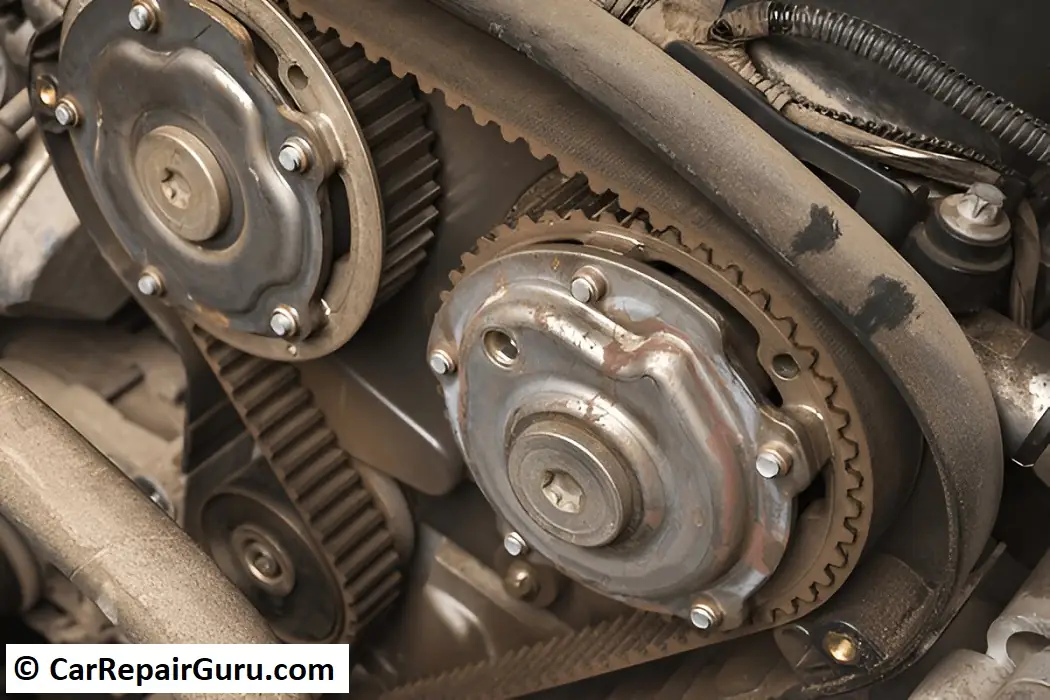
We have all felt that sinking feeling when looking at the odometer on a high-mileage vehicle, wondering if that hidden rubber belt inside the engine is living on borrowed time. Maybe a shop advisor mentioned it during your last inspection, or perhaps you bought a used commuter car without any service records.
As an ASE Certified Master Technician who has torn down dozens of cylinder heads ruined by snapped belts, I can tell you that staying ahead of your timing belt replacement is the single most important maintenance commitment you will make for your vehicle. Unlike brake pads that screech or tires that wear thin right before your eyes, timing belts often give zero warning before letting go.
Let’s dig into how this system works, what happens when it wears out, and how to protect your engine without overpaying at the shop.
- What Does a Timing Belt Actually Do Inside Your Engine?
- Interference vs Non-Interference Engines – The Stakes Explained
- Warning Signs That Signal It Is Time for a Timing Belt Replacement
- Timing Belt Replacement Intervals – Mileage vs Age
- Why You Should Always Replace the Water Pump and Tensioner Together
- DIY vs Professional Service – What Does the Job Actually Entail?
- Realistic Timing Belt Replacement Cost Breakdown
- How Mechanics Inspect for Belt Crazing and Wear
- Final Word From the Service Bay
- Frequently Asked Questions About Timing Belt Service
- Can I drive with a squeaking timing belt?
- What happens if my timing belt snaps while driving?
- Does my car have a timing belt or a timing chain?
- Can I just replace the belt and skip the pulleys?
- How long does a timing belt service take in a shop?
What Does a Timing Belt Actually Do Inside Your Engine?
To understand why this belt matters so much, you have to look at the mechanical symphony happening inside an internal combustion engine. Your engine produces power by moving pistons up and down inside cylinders while intake and exhaust valves open and close at the top of the cylinder head. The timing belt is the direct mechanical link that keeps these two halves moving in exact harmony.
Mechanical Synchronization
How the Timing Belt Links Your Engine
Camshaft Sprocket
Controls Intake & Exhaust Valves
Cogged Timing Belt
Locked 2:1 Rotation Sync
Crankshaft Sprocket
Driven Directly by Pistons
The crankshaft turns at twice the speed of the camshaft. The timing belt uses heavy-duty rubber teeth (cogs) that lock into matched gears on both shafts to guarantee that valves open only when the pistons are in the correct position for intake or exhaust strokes.
Many drivers confuse this internal component with the external serpentine belt visible at the front of the motor. The serpentine belt drives accessories like your alternator, power steering pump, and air conditioning compressor. If a serpentine belt snaps, you lose electrical charging and power steering assist, but your engine internals remain safe. If your timing belt snaps, the internal sync is broken instantly.
- Shop Floor Reality: Timing belts live completely hidden behind plastic or metal timing covers. You cannot hear them squeal like an accessory belt because their cogged design prevents slippage, which means a quiet engine bay does not mean a healthy belt.
Three core components make up this synchronization setup:
- The Crankshaft Gear: Drives the system from the bottom of the engine based on piston movement.
- The Camshaft Gear (or Gears): Controls the precise opening and closing rates of the valves.
- The Cogged Belt Compound: High-tensile synthetic rubber reinforced with fiberglass or Kevlar cords to resist stretching under extreme heat.
Interference vs Non-Interference Engines – The Stakes Explained
Engine designs fall into two distinct engineering categories: interference and non-interference (often called freewheeling) engines. Knowing which design powers your car determines whether a broken belt is an inconvenient tow bill or a totaled engine.
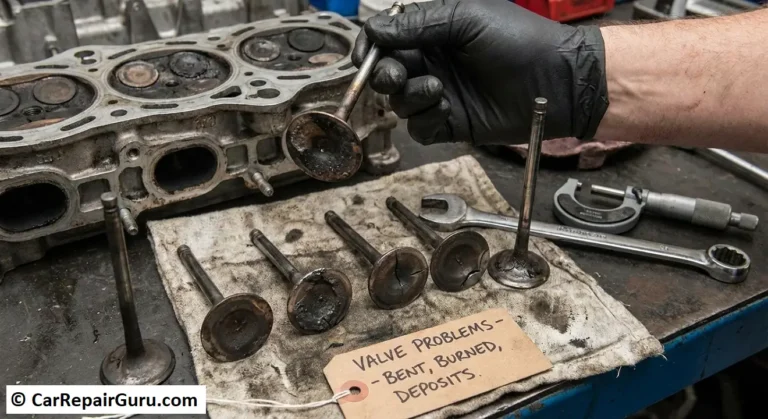
In an interference engine, the clearance between the open valves and the top of the piston at Top Dead Center (TDC) is zero. They share the exact same physical space inside the combustion chamber, just at split-second differences in time. As long as the belt keeps them synchronized, they never touch. When the belt snaps, the camshaft stops instantly, leaving several valves stuck in the wide-open position and causing catastrophic engine valve problems. The heavy crankshaft keeps spinning under vehicle momentum, driving steel pistons directly into fragile valve stems at thousands of rotations per minute.
Sync Safe
Bent Valves / Engine Ruin
On a non-interference engine, engineers designed sufficient mechanical clearance in the cylinder head. Even if a valve stays fully open, a rising piston can never reach it. If the belt snaps, the engine stalls out immediately, but the internal hardware remains intact.
- Crucial Risk Assessment: Most modern multi-valve and high-compression engines (including nearly all modern Honda, Toyota, Subaru, and European four-cylinders) are interference designs. Treating timing maintenance as optional on these platforms is a massive gamble.
| Engine Design | What Happens if Belt Snaps | Typical Repair Action |
|---|---|---|
| Interference | Bent valves, punctured pistons, cracked cylinder head | Complete engine teardown, rebuild, or replacement ($3,500 – $7,000+) |
| Non-Interference | Engine stalls out; zero internal metal contact | Tow vehicle to shop, install new timing belt kit ($600 – $900) |
Warning Signs That Signal It Is Time for a Timing Belt Replacement
Timing belts rarely send out obvious warnings before letting go, which is why preventive replacement based on service schedules is non-negotiable. With that said, an aging or deteriorating belt system does sometimes display subtle red flags if you know what to look and listen for.
Diagnostic List Critical Symptoms of an Ailing Timing Belt
Inspect Immediately
!
Loose belt slapping cover or failing idler bearing.
!
Belt skipped 1–2 teeth, throwing valve sync off.
!
Oil/coolant seals leaking, softening rubber teeth.
!
Altered valve timing reducing compression.
Here is where things get tricky under the hood. As the belt compound weakens, the internal tensioner may struggle to maintain proper load, causing the belt to vibrate or slap against the inside of the plastic casing. If the rubber teeth strip off or the belt jumps even a single tooth on the camshaft gear, engine timing slips out of alignment.
- Common Mechanic Mistake to Avoid: Never assume a belt is healthy simply because the visible outer backing looks smooth and black. The structural strength comes from the embedded internal cords and the integrity of the molded teeth on the underside.
Pay close attention to these mechanical warning signs:
- High-RPM Engine Ticking: A loose timing belt or a worn-out idler pulley bearing creates a rhythmic clicking or rattling sound from the front engine cover.
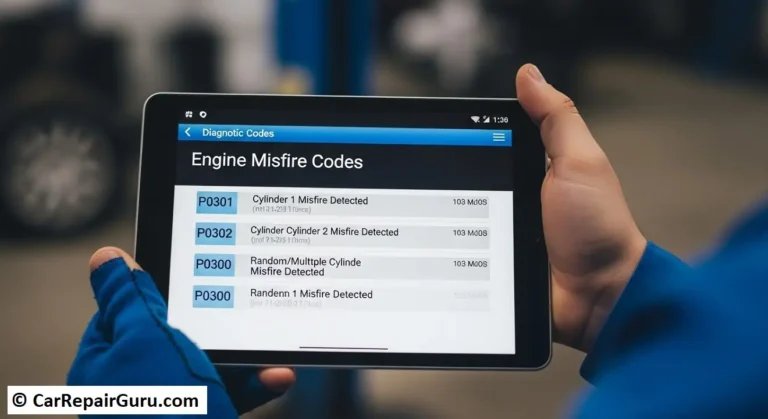
- Engine Misfires and Power Loss: If the belt jumps a tooth, the valves will open a fraction of a second too late or early, triggering engine misfire codes like P0300 along with a rough idle.
- Oil or Coolant Leaks Around the Front Cover: Camshaft seals and front crankshaft main seals sit directly behind the timing belt. When these seals fail or engine coolant leaks drip onto the belt, motor oil and antifreeze coat the rubber, rapidly softening the material and causing the teeth to shear off under load.
- Hard Cranking / Fast Starter Spin: If you turn the ignition key and the starter motor spins unusually fast with a high-pitched whining sound, your belt has likely already snapped, leaving the engine with zero cylinder compression (which you can confirm with an engine compression test).
Timing Belt Replacement Intervals – Mileage vs Age
One of the most frequent questions I get in the shop is: “Marco, my car only has 45,000 miles, but it is 9 years old. Do I really need to spend money on a new belt?”
The short answer is yes. Timing belts are made of vulcanized rubber compounds. Rubber naturally breaks down over time due to ozone exposure, rapid temperature swings between freezing winter starts and 200-degree operating heat, and normal chemical oxidation. Even if a vehicle sits parked in a garage, the rubber is constantly under physical tension stretched across pulleys.
Degradation Chemistry
The Two Wear Equations: Age vs. Mileage
+
Thermal Heat Cycles
+
High Tensile Stress
- Pro Tip on Used Vehicles: When buying a second-hand car that uses a timing belt and has crossed the 80,000-mile mark, ask for physical service receipts showing the belt replacement. If the seller cannot prove it was done, factor the cost of an immediate replacement into your purchase budget.
| Manufacturer / Engine Platform | Recommended Mileage Interval | Recommended Time Interval |
|---|---|---|
| Honda / Acura (V6 & Older 4-Cyl) | 105,000 Miles | 7 Years |
| Toyota / Lexus (V6 & V8 Timing Belts) | 90,000 Miles | 7 Years |
| Subaru (EJ-Series Boxer Engines) | 105,000 Miles | 8 Years |
| Volkswagen / Audi (TDI & 2.0L Turbo) | 80,000 – 100,000 Miles | 6 – 8 Years |
Why You Should Always Replace the Water Pump and Tensioner Together
When you receive an estimate for a timing service, an honest technician will almost always quote a full “Timing Component Kit” rather than just a bare belt. This kit includes the timing belt, hydraulic tensioner, idler pulleys, and the engine water pump.
Shop Time Reality
Where Does Your Labor Money Actually Go?
Why you pay for hours of work even though the rubber belt only takes 20 minutes to mount.
Phase 1 – Teardown & Clearance (3.0 – 4.5 Hours)
- Removing serpentine belts, alternator, & AC brackets
- Unbolting engine mounts & supporting the motor
- Removing high-torque harmonic balancer crank bolt
- Stripping plastic upper/lower timing covers
Phase 2 – Part Swap & Calibration (0.5 – 1.0 Hour)
- Unbolting & swapping the water pump
- Aligning camshaft & crankshaft Top Dead Center (TDC)
- Routing the new belt & setting tensioner preload
- Performing mandatory 720° manual engine test rotation
On most modern timing-belt-driven engines, the water pump sits buried behind the timing cover and is driven directly by the back or toothed side of the timing belt. To reach the water pump, a technician has to perform 80% of the labor required for a timing belt job: removing accessory belts, engine mounts, crankshaft pulleys, and internal covers.
If you decide to save $60 by skipping the water pump, you are leaving an aging pump with 90,000 miles on its internal bearings behind a brand-new, tightly tensioned belt. If that old water pump starts leaking or its bearing seizes three months down the road, it will shred your new belt and force you to pay the entire labor charge all over again.
- Costly Mistake to Avoid: Never reuse a hydraulic timing belt tensioner. These small hydraulic dampers lose internal pressure over time. A weak tensioner allows the new belt to whip and jump teeth under hard acceleration.
Reasons to replace all timing components simultaneously:
- Labor Overlap: You pay the disassembly labor fee only once instead of two or three separate times.
- Matching Lifespans: New idler pulleys and water pump bearings are engineered to run another 100,000 miles reliably alongside the new belt.
- Preventing Premature Failures: Seized idler pulleys generate intense friction that burns through rubber belts within minutes.
DIY vs Professional Service – What Does the Job Actually Entail?
Tackling a timing belt replacement at home is a major milestone for any home mechanic, but it is not a beginner-friendly project. Unlike brake jobs or alternator swaps where a small error causes minor inconveniences, an error in engine timing will destroy your motor the second you turn the key.
Required Equipment for Safe Timing Service:
- Harmonic Balancer Puller & Crank Holding Tool
- Engine Support Bar / Floor Jack with Wood Block
- Camshaft Locking Blocks / Timing Alignment Pins
- Precision Click-Type Torque Wrench (Ft-Lbs & In-Lbs)
- Factory Service Manual Timing Diagram
To complete this job correctly, you must rotate the engine manually to Top Dead Center (TDC) on cylinder number one, lock the camshafts in position, remove the front harmonic balancer bolt (often torqued to over 150-200 ft-lbs), unbolt the engine mount while supporting the engine from below, and align every factory timing mark precisely.
- Crucial Step Warning: Always rotate the engine by hand with a ratchet on the crankshaft bolt for two full 360-degree rotations after installing the new belt and pulling the tensioner pin. If you feel any hard mechanical resistance, STOP. That resistance is a piston hitting a valve.
Key differences between DIY and professional repair:
- Tooling Requirements: Shops have specialized pneumatic/cordless impact guns, universal pullers, and specific camshaft lock sets for every make and model.
- Work Area Access: Transverse (front-wheel-drive) engines leave very little clearance between the engine timing cover and the vehicle frame rail, making hand tool clearance extremely tight in a home driveway.
- Warranty Protection: A professional repair shop provides a 12-month to 3-year parts and labor warranty, protecting you financially if a tensioner or pump fails prematurely.
Realistic Timing Belt Replacement Cost Breakdown

Understanding how repair shops build their estimates gives you leverage when reviewing quotes. The overall cost breaks down into two core elements: specialized labor hours and quality replacement hardware.
Labor makes up roughly 70% to 80% of the final invoice because a technician must systematically remove engine accessories, brackets, and covers before installing and timing the new components. Depending on the vehicle layout, book time for this job generally runs between 3.5 and 6.0 billable hours.
- Shop Quote Evaluation Tip: When getting quotes over the phone, ask: “Does this quote include the water pump, idler pulleys, hydraulic tensioner, and fresh coolant?” A quote that sounds unusually cheap often covers only the bare rubber belt.
| Expense Category | Independent Repair Shop | Dealership Service Center |
|---|---|---|
| Complete Timing Kit & Water Pump | $180 – $350 | $300 – $550 |
| Fresh Coolant & Gasket Supplies | $40 – $70 | $60 – $110 |
| Labor (3.5 to 6.0 Shop Hours) | $400 – $750 | $650 – $1,100 |
| Total Estimated Job Cost | $620 – $1,170 | $1,010 – $1,760 |
How Mechanics Inspect for Belt Crazing and Wear
When you bring your vehicle in for a major service inspection, we often pull the upper inspection cover off the timing case to examine the condition of the belt. While visual checks cannot guarantee how long an old belt will last, they quickly identify a belt on the verge of immediate failure.
We look for a condition known as crazing, which appears as thousands of tiny web-like micro-cracks spreading across the rubber valleys between the teeth. These cracks develop when the rubber loses its plasticizers from sustained engine heat.
Diagnostic Flow
Timing Belt Wear & Breakdown Progression
Healthy Flexible Rubber
Normal elasticity & full grip
Surface Hardening & Glazing
Loss of plasticizers from heat
Micro-Crazing in Valleys
Spiderweb cracks at tooth base
Tooth Root Stripping
Imminent Engine Failure
- Material Chemistry Rule: Motor oil and ethylene glycol coolant are rubber destroyers. If your camshaft seals or water pump shaft seal has been leaking onto the timing belt, the rubber will soften, swell, and peel away from the internal reinforcement cords.
Visual indicators of critical timing belt failure:
- Crazing and Deep Cracking: Visible cracks running along the spine or in the root valleys of the drive teeth.
- Tooth Shearing and Delamination: Teeth peeling away from the base fabric layer, allowing the gear to spin freely inside the belt.
- Edge Fraying: The belt walking off track due to a failing tensioner, causing its outer edges to rub raw against the timing cover.
- Glazing and Hardening: A shiny, glass-like outer backing indicating severe hardening, loss of grip, and bearing friction.
Final Word From the Service Bay
At the end of the day, automotive maintenance comes down to risk management. It is easy to ignore a component you cannot see, but putting off a necessary timing belt replacement is the most expensive gamble you can take with your car.
Check your vehicle’s maintenance manual, review your historical service records, and if you are anywhere near that 7 to 10-year or 90,000-mile mark, book an appointment with a trusted shop. Spending several hundred dollars today on a complete timing kit guarantees you will not be shopping for a new engine tomorrow.
Frequently Asked Questions About Timing Belt Service
Can I drive with a squeaking timing belt?
No, but chances are your squeak is coming from an external serpentine belt or an alternator pulley rather than the timing belt itself. Timing belts have cogged teeth and run silently. If you hear a loud squeak or high-pitched squeal coming from inside the timing cover, an idler pulley bearing or water pump bearing is on the verge of seizing, which will destroy the timing belt in short order.
What happens if my timing belt snaps while driving?
If your belt snaps while driving, the engine will immediately shut down as if you switched off the key. You will lose engine power, power steering assist, and power brake vacuum assist after one or two pedal presses. On an interference engine, you will hear a loud metal clattering or thudding sound as the pistons strike the valves before the vehicle coasts to a stop.
Does my car have a timing belt or a timing chain?
Look at your engine configuration or consult your owner’s manual. As a general rule, timing belts are housed behind lightweight black plastic covers at the front of the engine, whereas timing chains run internally under direct engine oil pressure behind sealed, cast-aluminum timing covers. Most modern GM, modern Ford, and modern BMW engines use timing chains, while many Honda, Subaru, and older Toyota platforms utilize timing belts.
Can I just replace the belt and skip the pulleys?
You can physically do it, but no professional mechanic will recommend it. Pulleys and tensioners use internal sealed ball bearings packed with grease. Those bearings spin at engine speeds for 100,000 miles. Leaving a dry, worn bearing in place to spin against a brand-new belt invites bearing lock-up, throwing off the new belt and causing total engine failure.
How long does a timing belt service take in a shop?
A standard timing belt and water pump service generally takes between 3 to 5 hours of actual hands-on labor. Depending on shop scheduling, parts delivery, and cooling system bleeding procedures, you should plan to leave your vehicle at the repair facility for a full working day.
About the Author