Marco
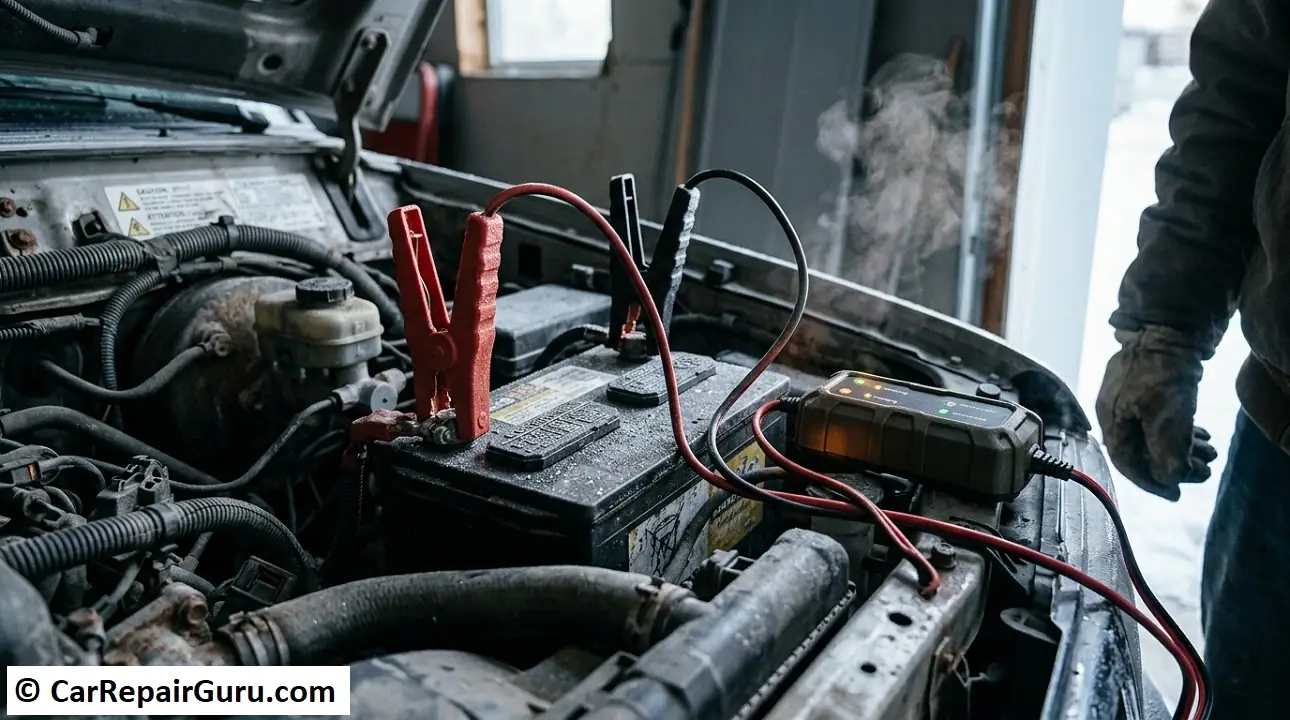
It is a cold morning, you turn the key or press the start button, and your engine barely turns over. You try again, but all you hear is a clicking sound. If your car starts fine in warm weather but struggles when temperatures drop, your battery may be losing its ability to deliver enough power.
Cold weather makes it harder for a battery to supply electricity, while cold engine oil increases the power needed to start the engine. A battery that is already weak or undercharged may not have enough power to handle both demands.
The good news is that a few simple checks can help you catch problems before they leave you stranded. Here are 7 practical ways to maintain your car battery in winter, keep it properly charged, and recognize when it needs professional attention.
- How Cold Weather Affects Your Car Battery
- Signs Your Car Battery May Be Struggling in Winter
- 7 Tips for Maintaining Your Car Battery in Winter
- 1. Inspect the Battery and Its Terminals
- 2. Keep the Battery Charged When Your Car Sits
- 3. Park in a Sheltered Spot and Follow Battery Insulation Guidance
- 4. Avoid Relying on Frequent Short Trips
- 5. Reduce Unnecessary Electrical Loads
- 6. Check Battery Age and Condition Before Winter
- 7. Test the Battery and Charging System
- How to Check Your Battery Before Winter
- What to Check Without Special Tools
- What a Resting Voltage Reading Can Tell You
- Choosing the Right Replacement Battery for Winter
- Should You Upgrade to an AGM Battery?
- Could It Be the Battery or the Charging System?
- What to Keep in Your Car for a Winter No-Start
- Keep Your Battery Ready for Winter
- Winter Car Battery FAQs
- How often should I start my car in winter to keep the battery charged?
- Does idling charge a car battery?
- Can a car battery freeze in winter?
- When should I replace my car battery?
- Can I maintain my car battery myself?
How Cold Weather Affects Your Car Battery
A typical 12-volt lead-acid car battery produces electricity through chemical reactions inside its cells. As the temperature drops, those reactions slow down, reducing the power available to start the engine.
At the same time, cold engine oil becomes thicker, so the starter motor needs more power to turn the engine. Your battery must deliver more power precisely when its ability to do so is reduced.
Cold weather can also make it harder to recharge a battery. If you mostly drive short distances, use electrical accessories frequently, or leave your car parked for long periods, the battery may gradually lose charge.
According to Interstate Batteries’ explanation of how temperature affects batteries, a battery can lose a substantial amount of its starting power as temperatures fall. The exact effect depends on the battery and its condition.
The main lesson is simple: a healthy, fully charged battery is better prepared for winter than an aging or undercharged one.
Signs Your Car Battery May Be Struggling in Winter
Your battery may show warning signs before it fails completely. Watch for these symptoms when starting your car or checking under the hood.
- Slow engine cranking: The engine turns over more slowly than usual, especially on cold mornings.
- Clicking when you try to start the car: The starter may not be receiving enough power, although a poor electrical connection or starter problem can cause similar symptoms.
- Dim or flickering lights: Headlights or dashboard lights may dim noticeably during starting.
- Visible corrosion: White, blue, or green deposits around the battery terminals can interfere with electrical connections.
- An aging battery: Many conventional car batteries last around three to five years, although climate, usage, battery type, and maintenance affect their lifespan.
- A battery warning light: This may indicate a charging-system problem rather than a battery that simply needs replacing.
If the battery case is swollen, cracked, leaking, or unusually hot, do not attempt to charge or jump-start it. Avoid touching leaking material and arrange professional assistance.
If you notice repeated starting problems, a battery test can help determine whether the battery is weak, undercharged, or affected by another fault.
7 Tips for Maintaining Your Car Battery in Winter
1. Inspect the Battery and Its Terminals
Start with a visual inspection. With the vehicle switched off, look for corrosion around the terminals, loose-looking cable connections, cracks, leaks, or a damaged battery hold-down.
Corrosion can increase electrical resistance and make it harder for current to flow between the battery and the starter. However, corrosion alone does not prove that the battery has failed.
If the terminals are heavily corroded or the battery is damaged, have a qualified technician inspect it. If you clean the terminals yourself, follow the vehicle manufacturer’s instructions, wear appropriate eye protection and gloves, and keep metal tools from bridging the positive terminal and the vehicle body.
Never lean over a damaged battery or work near it with open flames or anything that could create sparks.
A clean, secure connection helps the battery deliver its available power, but it cannot restore a battery that has lost its internal capacity.
2. Keep the Battery Charged When Your Car Sits
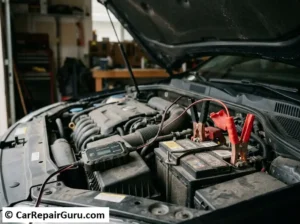
A parked car still uses some electricity. Its security system, onboard computers, and other components may draw a small amount of power even when the engine is off.
That gradual drain can become a problem during winter, particularly if the battery is old or the car sits unused for weeks.
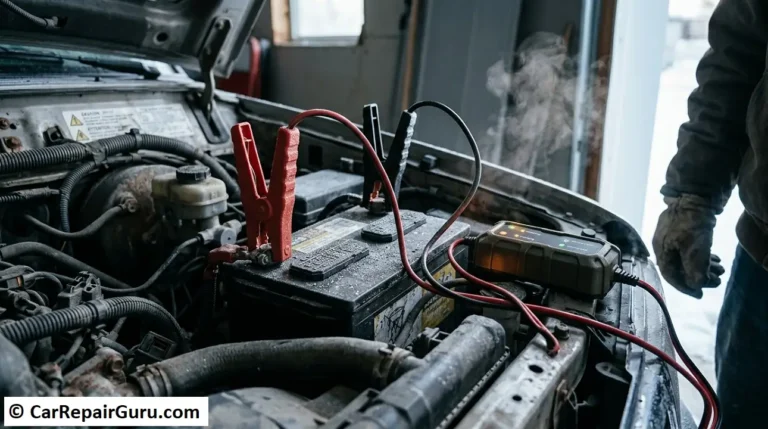
If you rarely drive, consider using a compatible smart battery charger or maintainer. A charger replenishes lost energy, while a maintainer is designed to keep a battery at an appropriate charge level during extended periods of inactivity.
Before connecting one:
- Check the vehicle owner’s manual for the correct charging procedure.
- Choose a charger compatible with your battery type, including AGM batteries where applicable.
- Follow the charger’s connection instructions and use a suitable, well-ventilated location.
- Do not charge a battery that is frozen, cracked, swollen, or leaking.
If your car repeatedly has a dead battery after sitting overnight, the cause may be a failing battery, a charging-system problem, or an electrical drain. Repeatedly charging it without finding the cause may not solve the problem.
3. Park in a Sheltered Spot and Follow Battery Insulation Guidance
Whenever possible, park in a garage or another sheltered location. A garage may stay warmer than the outside air, which can reduce the battery’s exposure to extreme cold.
Some vehicles have a factory-installed battery cover or thermal enclosure. Leave it in place unless the manufacturer instructs otherwise.
If you are considering a battery blanket or heating accessory, check that it is approved for your vehicle and battery. Do not wrap the battery in improvised insulation or install a heating device that could damage the battery or its surrounding components.
Remember that a sheltered parking space cannot repair a weak battery. Keeping the battery charged and checking its condition before winter remain more important.
4. Avoid Relying on Frequent Short Trips
Starting the engine uses energy from the battery. The alternator then supplies electricity to the vehicle and replenishes the charge while the engine runs.
However, a short trip may not replace all the energy used during starting, especially in cold weather or when the vehicle’s electrical systems demand additional power.
If most of your journeys last only a few minutes, the battery may gradually become undercharged.
Here is what you can do:
- Combine nearby errands when practical instead of making several separate trips.
- Use a compatible battery maintainer if the vehicle is driven infrequently.
- Have the battery and charging system tested if starting becomes progressively slower.
Do not rely on a fixed 15- or 20-minute drive to guarantee a full recharge. Charging depends on the battery’s condition, temperature, vehicle design, and electrical demand. Some modern charging systems also vary their output according to operating conditions.
5. Reduce Unnecessary Electrical Loads
Headlights, heated seats, the rear-window defroster, the blower motor, and other electrical accessories all use power.
Before starting the engine, switch off unnecessary accessories if doing so is practical. This may reduce the electrical demand during starting, particularly in an older vehicle.
Once the engine is running, use the heating and defrosting systems as needed for comfort and safe visibility. Do not compromise visibility or safety just to reduce electrical consumption.
If the battery struggles even when unnecessary accessories are switched off, have it tested rather than assuming the accessories are the main problem.
6. Check Battery Age and Condition Before Winter
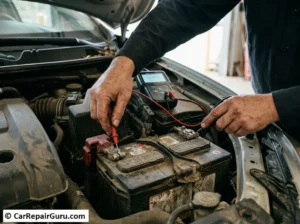
A battery can appear fine during mild weather but struggle when temperatures fall. If your battery is several years old, has needed jump-starts, or cranks slowly, arrange a test before the coldest weather arrives.
Battery age alone does not determine whether replacement is necessary. A newer battery can fail, while an older battery may still perform adequately.
A proper battery test can assess whether it can deliver sufficient starting power. It is also worth checking the charging system if the battery is repeatedly discharged.
If you need a broader overview of battery condition, maintenance, and replacement, read our car battery guide.
7. Test the Battery and Charging System
Testing before winter helps identify a weak or undercharged battery before it leaves you stranded.
A professional battery test can measure its starting performance under load. A charging-system test can help determine whether the alternator and related components are keeping the battery charged properly.
You can also take a resting-voltage reading with a suitable digital multimeter if you know how to use one safely.
For a conventional 12-volt lead-acid battery, a resting reading around 12.6 volts often indicates a high state of charge. A lower reading may indicate that the battery needs charging. However, the correct interpretation depends on battery type, temperature, and whether the battery has recently been charged or used.
A voltage reading alone cannot confirm that a battery is healthy. A worn battery may show a reasonable resting voltage but fail when asked to deliver the high current needed to start the engine.
For a more detailed walkthrough, follow our guide to checking your car battery at home.
How to Check Your Battery Before Winter
You do not need to wait until the first freezing morning to check your battery. Start with a visual inspection, then consider a voltage or professional battery test.
What to Check Without Special Tools
With the engine switched off, look for:
- Corrosion around the battery terminals.
- Loose or damaged battery cables.
- Cracks, swelling, or signs of leakage.
- A battery that is several years old or has a history of starting problems.
Do not touch a damaged battery or attempt to clean severe corrosion yourself. Have a professional inspect it.
What a Resting Voltage Reading Can Tell You
If you have a multimeter and are comfortable using it, measure the battery voltage according to the meter and vehicle manufacturer’s instructions. The engine should be off, and the battery should have rested after charging or driving for a more meaningful reading.
For a conventional lead-acid battery, these figures are general guidelines rather than definitive pass-or-fail thresholds:
- Around 12.6 volts: Often indicates a high state of charge.
- Around 12.4 volts: May indicate a partially charged battery.
- Around 12.2 volts or lower: Suggests the battery is significantly undercharged and should be assessed and charged as appropriate.
Temperature, battery chemistry, and recent use can affect the readings. Follow the specifications for your battery rather than treating these numbers as universal.
If the battery is undercharged, use a compatible charger according to the manufacturer’s instructions. If it will not hold a charge or the engine still cranks slowly, arrange a battery and charging-system test.
Choosing the Right Replacement Battery for Winter
If testing shows that your battery needs replacement, choose one that meets your vehicle manufacturer’s specifications. A more expensive battery is not automatically the right choice.
Pay attention to three things.
- Cold Cranking Amps (CCA): This rating indicates how much current a battery can deliver under a standardized cold-start test. Meet or exceed the minimum specification required for your vehicle.
- Correct battery type and size: The replacement must fit securely and be compatible with the vehicle’s electrical and charging systems. Some vehicles require AGM or EFB batteries, particularly those with start-stop systems.
- Battery age and condition: Check the manufacturing date where available and buy from a supplier that stores and handles batteries properly.
Reserve capacity can also be useful when comparing compatible batteries, but it should not replace the manufacturer’s requirements.
Should You Upgrade to an AGM Battery?
Absorbent Glass Mat (AGM) batteries are designed to handle particular charging demands and repeated charge-discharge cycles. They are used in many vehicles with start-stop technology and other demanding electrical systems.
However, AGM is not automatically the best replacement for every car. Battery compatibility, charging strategy, and the manufacturer’s specifications matter more than choosing a particular type simply because it is marketed as a premium option.
If your vehicle came with an AGM or EFB battery, do not downgrade to a conventional flooded battery unless the manufacturer explicitly permits it.
Could It Be the Battery or the Charging System?
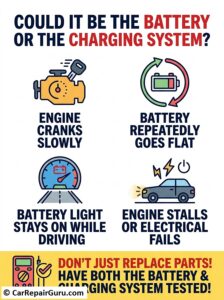
A weak battery is a common reason for winter starting trouble, but it is not the only possibility.
The battery supplies the energy needed to start the engine. The alternator and charging system replenish the battery while the engine runs, where applicable.
These symptoms can offer clues:
- The engine cranks slowly: A weak or discharged battery is one possibility, but poor connections, a starter fault, or an engine problem can cause similar symptoms.
- The battery repeatedly goes flat: The battery may be worn out, the charging system may not be working properly, or something may be drawing power while the vehicle is parked.
- The battery warning light stays on while driving: This may indicate a charging-system fault that needs prompt inspection.
- The engine stalls or electrical systems fail while driving: A charging-system or other electrical problem may be involved. Pull over safely and seek assistance if the vehicle cannot be operated reliably.
Do not replace the alternator or battery based on symptoms alone. Have both the battery and charging system tested to identify the actual cause.
If the car still will not start after a jump-start, or the problem keeps returning, see our guide to common reasons a car won’t start.
What to Keep in Your Car for a Winter No-Start
Even a well-maintained battery can fail unexpectedly. Keeping a few supplies in your car can make an unexpected breakdown easier to manage.
Consider carrying:
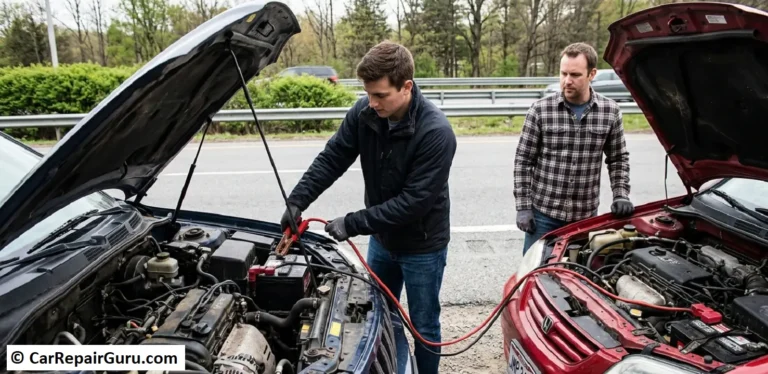
- A portable jump starter suitable for your vehicle and engine.
- Jumper cables, if you know how to use them safely.
- Warm gloves and a flashlight.
- A charged mobile phone and an emergency contact plan.
Read the vehicle and jump-starter instructions before using a jump starter. Some vehicles have designated jump-start terminals or specific procedures.
Never attempt to jump-start a battery that is frozen, swollen, cracked, or leaking. Do not allow the clamps to touch each other or connect them in a way that contradicts the vehicle manufacturer’s instructions.
If you are unsure how to jump-start your vehicle safely, call roadside assistance.
Keep Your Battery Ready for Winter
A reliable winter start begins with a battery that is in good condition and properly charged. Inspect the terminals and battery case, avoid relying on repeated short trips to recharge the battery, and arrange a test if starting becomes slower or the battery repeatedly loses charge.
If you rarely drive, consider a compatible smart battery maintainer. If the battery is aging or showing warning signs, have the battery and charging system checked before replacing any parts.
A little preparation before the cold weather arrives can help you avoid an unexpected no-start and make winter driving less stressful.
Winter Car Battery FAQs
How often should I start my car in winter to keep the battery charged?
There is no universal schedule that works for every vehicle. Starting the engine and idling for a few minutes may not replace the energy used during starting. If the car sits for extended periods, a compatible battery maintainer may be more effective. Follow the vehicle manufacturer’s storage guidance.
Does idling charge a car battery?
Yes, the charging system may recharge the battery while the engine idles, but the charging rate varies by vehicle, engine speed, electrical demand, and battery condition. Short periods of idling may not replace the energy used during starting. Do not leave a running vehicle unattended or idle it in an enclosed garage.
Can a car battery freeze in winter?
Yes. A discharged lead-acid battery is more vulnerable to freezing than a fully charged one. Keeping the battery properly charged reduces this risk. If you suspect the battery has frozen, do not charge or jump-start it. Have it inspected by a qualified professional.
When should I replace my car battery?
Consider replacement when a suitable battery test shows that the battery can no longer deliver the required starting power, it cannot hold a charge, or it has physical damage. Age and slow cranking are reasons to arrange a test, but neither alone confirms that replacement is necessary.
Can I maintain my car battery myself?
You can perform basic visual checks and use a compatible battery maintainer if you follow the correct instructions. Cleaning terminals, opening serviceable batteries, disconnecting cables, and replacing batteries require additional precautions. Some vehicles also need battery registration or electronic-system procedures after replacement. If you are unsure, use a qualified technician.
About the Author