Marco
Marco 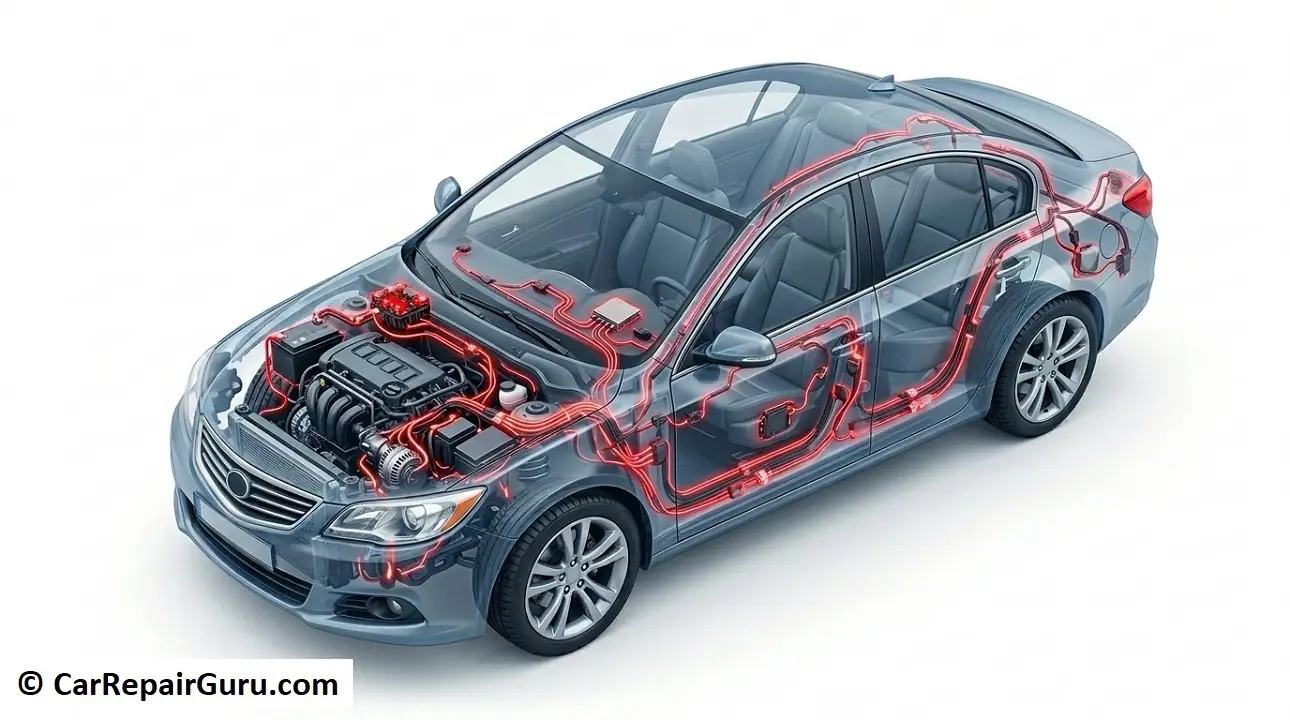
There is nothing quite as frustrating as a car with “electrical gremlins.” One day your radio works fine; the next, it only turns on when you hit the brakes. Or maybe your dashboard lights have started flickering like a disco ball every time you idle at a stoplight.
If you are dealing with issues like these, you aren’t alone, and you definitely shouldn’t ignore them.
Car electrical wiring problems can range from minor annoyances, like a stuck window, to major safety hazards, like a car fire. If your glass is acting up, you might want to refer to my article on fixing power windows for a targeted repair.
Your vehicle’s wiring harness is essentially its nervous system. It sends signals and power to everything from your headlights to your fuel injectors. When that system gets pinched, frayed, or disconnected, the results can be baffling.
In this guide, we’re going to cut through the jargon. We’ll look at the top symptoms of bad wiring, why these issues happen (spoiler: it might be mice), and how you can troubleshoot the problem without spending a fortune at the mechanic.
- Top 7 Symptoms of Bad Car Wiring
- 1. Blown Fuses (Recurring)
- 2. The Burning Plastic Smell
- 3. Flickering or Dimming Lights
- 4. Engine Misfires or Stalling
- 5. Dead Battery (Parasitic Drain)
- 6. Electrical Components Malfunctioning
- 7. The Check Engine Light
- What Causes Car Wiring Problems?
- Rodent Damage to Car Wiring
- Age and Heat
- The “Bad Ground”
- Poor Aftermarket Installation
- How to Troubleshoot Car Electrical Wiring (DIY Guide)
- Step 1 – The Visual Inspection
- Step 2 – Check the Fuse Box
- Step 3 – The “Wiggle Test”
- Step 4 – Using a Multimeter
- Electrical Short vs. Open Circuit – What’s the Difference?
- Estimated Cost to Repair Car Electrical Wiring
- Final Thoughts
- Frequently Asked Questions
Top 7 Symptoms of Bad Car Wiring
Electrical issues are notorious for being tricky to diagnose because they often mimic other mechanical failures. However, your car usually gives you clues before it completely shuts down. Here are the most common signs that your wiring is waving a red flag.
1. Blown Fuses (Recurring)
Think of a fuse as a bodyguard. Its only job is to blow itself up to save more expensive components from a power surge. If you replace a fuse and it works fine for years, great—it was likely a fluke.
However, if you replace a fuse and it blows again immediately or within a few days, you have a deeper issue. This is one of the classic car electrical short symptoms. It means a wire carrying live current is touching something it shouldn’t (usually the metal frame of the car), causing a surge that overloads the circuit. If you’re stuck on this step, check out my guide on car fuse replacement to ensure you’re using the right amperage and techniques.
2. The Burning Plastic Smell
This is the symptom you never want to ignore. If you smell burning plastic or electrical insulation while driving, pull over immediately.
When wiring gets damaged or shorted, the resistance increases, generating massive amounts of heat. This heat melts the protective insulation around the wires. If left unchecked, this can easily lead to an electrical fire. If you catch a whiff of this, don’t try to “limp it home”—call a tow truck.
3. Flickering or Dimming Lights
Have you noticed your headlights dimming when you turn on the AC or roll down the windows? Or maybe your dashboard lights flicker when you go over a bump?
While this can sometimes point to a failing alternator or battery, it is frequently caused by a bad ground wire. The ground wire completes the electrical circuit; if it’s loose or corroded, the voltage fluctuates, causing lights to dim or strobe. Before you tear into the wiring harness, it’s a good idea to learn more about how a failing alternator affects your voltage.
4. Engine Misfires or Stalling
We often think of engine trouble as a mechanical issue—bad spark plugs or a clogged fuel filter. But how do those spark plugs get the signal to fire? Through the wiring harness.
If the wires leading to your ignition coils or fuel injectors are compromised, the signal gets interrupted. This results in the engine stumbling, misfiring, or stalling out completely at intersections. I recommend diagnosing engine misfire codes with an OBD-II scanner to see if the computer is reporting a circuit-specific failure.
5. Dead Battery (Parasitic Drain)
You bought a new battery last month, but you woke up this morning and your car is dead. You jump-start it, drive it, and the next morning… dead again.
This is often caused by a “parasitic drain.” Essentially, a wiring fault or a stuck switch is keeping an electrical component (like a glove box light or amplifier) running even when the car is turned off. It slowly sucks the life out of your battery overnight. To keep your electrical system healthy, take a look at my breakdown on dead car battery causes and how to track them down.
6. Electrical Components Malfunctioning
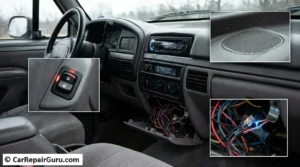
This is the “poltergeist” category. Perhaps your power locks cycle up and down on their own, or your radio volume creates static in your speakers.
Intermittent failure of accessories usually points to a loose connection. When the car vibrates, the wires touch and separate, causing the component to work one second and fail the next.
7. The Check Engine Light
Modern cars are smart. If the Electronic Control Unit (ECU) detects that a sensor isn’t returning the right voltage, it triggers the Check Engine Light. Codes regarding “circuit low” or “circuit high” (like P0300 series codes) are strong indicators that the sensor itself might be fine, but the wiring connecting it is damaged.
What Causes Car Wiring Problems?
Wiring is designed to be durable, but it lives in a harsh environment. Between the heat of the engine and the vibrations of the road, it takes a beating. Here are the primary culprits.
Rodent Damage to Car Wiring
Believe it or not, this is one of the highest-volume search queries for mechanics in the winter. Many modern car manufacturers use soy-based insulation for their wiring. To a mouse or squirrel looking for a warm nesting spot, your wiring harness smells like a buffet. Rodent damage to car wiring can destroy a vehicle’s electrical system in a single night.
Age and Heat
Under the hood, temperatures fluctuate wildly. Over time, the plastic insulation on wires becomes brittle and cracks. Once the copper is exposed, moisture gets in, leading to corrosion (the green crusty stuff you see on connectors), which blocks the flow of electricity.
The “Bad Ground”
We mentioned this earlier, but it deserves its own section. A car sits on rubber tires, so it isn’t grounded to the earth. Instead, the negative terminal of the battery connects to the car’s metal frame (chassis). Every electrical component also connects to this frame to complete the circle.
Symptoms of a bad ground wire often show up as multiple, seemingly unrelated problems happening at once because several components often share a single grounding point. If that bolt rusts or comes loose, everything attached to it goes haywire.
Poor Aftermarket Installation
Did you recently have a remote starter, alarm, or new stereo installed? If the installer used cheap “scotch locks” or twisted wires together with electrical tape instead of soldering them, you are on a fast track to failure. Poor splicing is a leading cause of shorts.
How to Troubleshoot Car Electrical Wiring (DIY Guide)
Before you worry about the car wiring repair cost, you can do some detective work yourself. You don’t need to be a master mechanic, but you do need patience.
Safety Warning: Before touching any bare wires, always disconnect the negative (black) battery terminal to prevent shocks or accidental airbag deployment.
Step 1 – The Visual Inspection
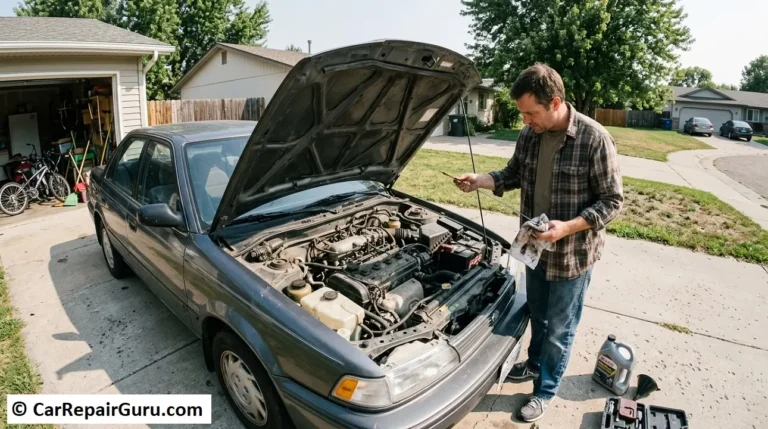
Pop the hood and grab a flashlight. Look for:
- Wires resting on hot engine parts (like the exhaust manifold).
- Signs of chewing (mouse droppings or shredded insulation).
- Connectors that look green or rusty.
- Black, soot-like marks on the frame (evidence of arcing).
Step 2 – Check the Fuse Box
Locate your fuse box (usually under the dash or in the engine bay). Pull the fuse related to the component that isn’t working. If the metal strip inside the clear plastic is broken or black, the fuse is blown. Replace it with one of the exact same amperage.
Step 3 – The “Wiggle Test”
This is exactly what it sounds like. If you have an intermittent issue (like a light that flickers), have a friend watch the light while you gently wiggle different sections of the wiring harness. If the light flickers when you touch a specific bundle of wires, you’ve found the location of the break or short.
Step 4 – Using a Multimeter
If you want to know how to find an electrical short in a car professionally, you need a multimeter.
- Voltage Test: Set the meter to DC Volts. Probe the wire at the connector. If you see 0 volts when the switch is on, there is a break in the wire upstream.
- Continuity Test: Set the meter to the “beep” mode (Ohms). Touch the probes to both ends of a suspected wire. If it beeps, the wire is intact. If it stays silent, the wire is broken internally (an “open circuit”).
Electrical Short vs. Open Circuit – What’s the Difference?
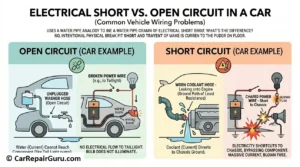
When researching wiring, you will hear these two terms constantly. It helps to use a water pipe analogy:
- Open Circuit: Imagine a water pipe that has been capped off or cut in half. Water (electricity) cannot flow to the destination. The result? The component simply stops working.
- Short Circuit: Imagine that water pipe springs a leak, and water sprays out onto the floor before reaching the faucet. Electricity takes the path of least resistance. If a hot wire touches the metal frame, the electricity “shortcuts” back to the battery without going through the lightbulb or motor. This causes massive current flow and usually blows the fuse.
Estimated Cost to Repair Car Electrical Wiring
This is the question everyone asks, and the answer is: it depends.
The actual materials—wire, electrical tape, shrink wrap, and connectors—are cheap. You can buy supplies for under $20. The real cost is labor.
- Diagnostic Fees: Mechanics typically charge between $100 and $150 per hour. Finding an electrical short can take 15 minutes, or it can take 5 hours of tearing apart the dashboard.
- Simple Repairs: Fixing a corroded ground wire or replacing a sensor pigtail might cost $150 to $300.
- Major Repairs: If the entire engine wiring harness is damaged (common with rodent issues), the harness itself can cost $500 to $1,500, plus another $500+ in labor to install.
DIY vs. Pro: If you can see the damage (like a chewed wire near the top of the engine), it is an easy DIY fix with a soldering iron and heat shrink tubing. However, if the issue is buried deep in the dash or involves the car’s computer (ECU), it is best to leave it to a professional to avoid causing expensive damage.
Final Thoughts
Car electrical wiring problems can be intimidating, but they aren’t magic. They are simply broken pathways that need to be reconnected. By paying attention to symptoms like flickering lights or blown fuses, and performing a visual inspection for rodent damage or corrosion, you can often identify the issue before it leaves you stranded.
If you aren’t comfortable working with electricity, there is no shame in calling a pro. Electrical systems are complex, and sometimes the peace of mind is worth the diagnostic fee.
Are you struggling with an electrical gremlin? Drop a comment below with your symptoms, and let’s see if we can help you figure it out!
Frequently Asked Questions
Can I drive my car with electrical problems?
It depends on the severity. If it’s just a broken radio, yes. However, if you have flickering headlights, engine stalling, or a burning smell in the car, it is dangerous. You risk losing power at high speeds or starting a fire.
How do I find a parasitic drain?
Connect a multimeter (set to Amps) in series with the negative battery terminal. Pull fuses one by one. When the amp reading drops to near zero, the last fuse you pulled controls the circuit that is draining your battery.
Does insurance cover rodent damage to car wiring?
In many cases, yes! If you have “Comprehensive” coverage on your auto insurance policy, rodent damage is typically considered an “Act of Nature” (similar to a tree branch falling on your car). Check with your provider.
How can I prevent rodents from chewing my car wires?
Park on pavement away from tall grass and consider using peppermint oil sprays or ultrasonic repellents under the hood to deter them from nesting.
Can water damage cause permanent wiring issues?
Yes, moisture leads to corrosion (green buildup) inside connectors, which increases resistance and causes intermittent failures long after the water dries.
About the Author