Marco Riley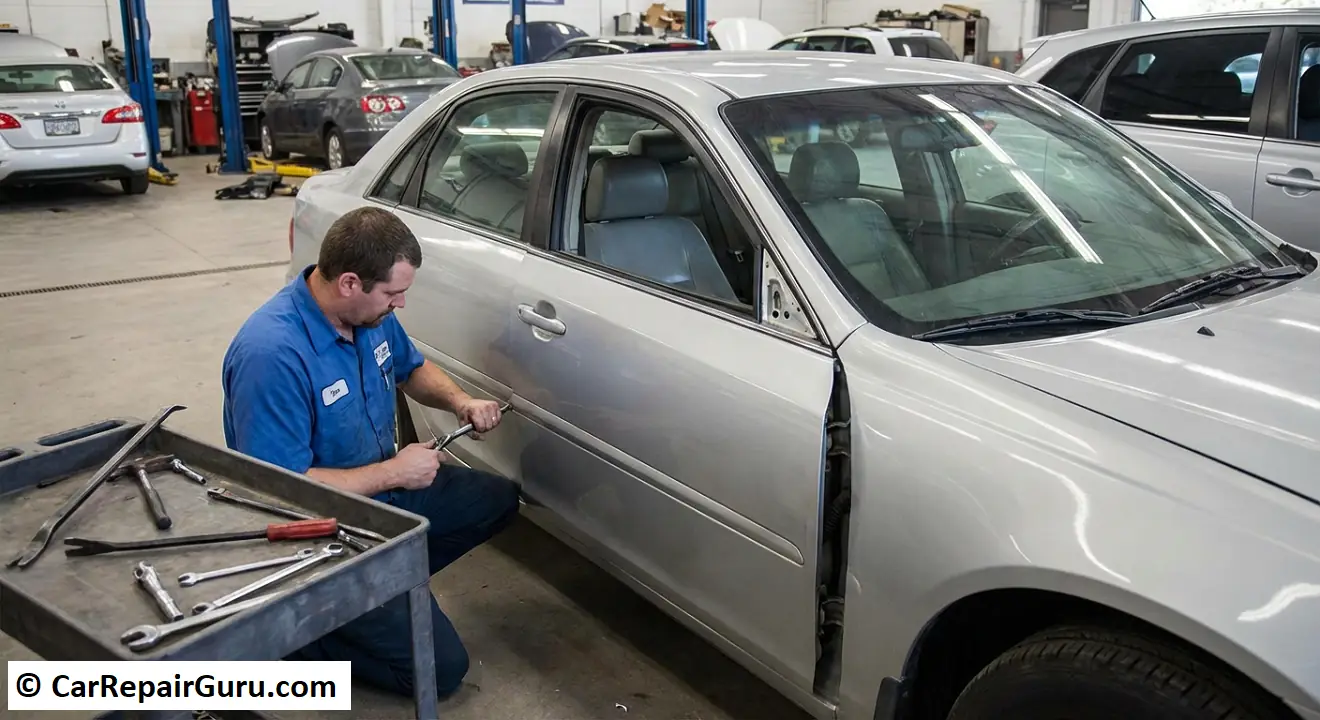
That dreaded second slam. The annoying whistle of wind cutting through the cabin on the highway. That small, mysterious puddle on your floor mat after a rainstorm. If any of these sound familiar, you’re not alone. These are the classic calling cards of a misaligned car door, a problem that’s more than just a minor annoyance—it can affect your car’s safety, security, and integrity.
The good news is that fixing a sagging or misaligned door is often a very manageable task. Whether you’re a seasoned DIYer or just trying to understand what you’re up against, this guide has you covered. We’ll walk you through how to diagnose the problem, the common causes, a step-by-step guide to fixing it yourself, and what you can expect to pay if you call in a professional.
- Is Your Car Door Misaligned? Key Symptoms to Look For
- Common Causes of Car Door Misalignment
- Worn Hinges, Pins, and Bushings
- Loose Hinge Bolts
- Improperly Adjusted Striker Plate
- Minor Accidents or Impacts
- DIY Fix vs. Calling a Professional – Making the Right Choice
- When to Try a DIY Repair
- When to Call a Professional Body Shop
- How to Align a Car Door – A Step-by-Step DIY Guide
- Safety First & Tools You’ll Need
- Step 1 – Diagnose the Exact Problem (The “Lift Test”)
- Step 2 – The Easiest Fix – Adjusting the Striker Plate
- Step 3 – The More Involved Fix – Adjusting the Door Hinges
- Car Door Alignment Repair Cost – What to Expect
- Don’t Ignore a Droopy Door
- Frequently Asked Questions (FAQ)
- Can a misaligned door really drain my car battery?
- Is a sagging car door an annoyance or a safety issue?
- How long does a DIY door alignment usually take?
- Will aligning my car door fix annoying wind noise?
- When should I stop a DIY fix and call a professional?
Is Your Car Door Misaligned? Key Symptoms to Look For
Before you can fix the problem, you need to be sure you’ve correctly identified it. A poorly aligned door leaves a trail of clues. Here are the most common signs of bad door alignment:
1. Uneven Gaps: Look at the seams around your closed door. The space between the door panel and the car’s body should be perfectly even all the way around. If the gap is wider at the top and tighter at the bottom, you likely have a door sag issue.
2. Difficulty Closing or Latching: If you have to put your shoulder into it or slam the door multiple times for it to latch securely, the alignment is off. A properly aligned door should close smoothly and catch with a single, firm push.
3. A “Dropping” Door: Open your door about halfway and watch it closely. Does it drop down slightly as it swings open? This is a clear indicator that the hinges are worn and can no longer support the door’s weight properly.
4. Excessive Wind Noise: That high-pitched whistle or dull roar you hear at highway speeds isn’t just annoying; it’s a sign that the door seal isn’t making complete contact with the frame, allowing air to rush in.
5. Water Leaks: Finding damp carpets or seeing water drip marks around the door frame after it rains is a major red flag. This means the weatherstripping isn’t creating a watertight seal, a direct result of a water leaking car door caused by misalignment.
6. Chipped Paint or Scuff Marks: Check the area around the door latch on the frame (the striker) and the inside of the door jamb. If you see chipped paint or metal-on-metal scuff marks, it means the door is scraping against the frame every time it closes.
Common Causes of Car Door Misalignment
So, what causes a car door to sag or fall out of alignment in the first place? It’s usually one of a few simple, mechanical issues.
Worn Hinges, Pins, and Bushings
This is the number one culprit, especially on older vehicles or the driver’s door, which gets the most use. Think of the door hinge like the spine of a book. Inside the hinge are a metal pin and small sleeves called bushings. Over thousands of open-and-close cycles, these components wear down, creating “play” or looseness in the hinge. This is what allows the door to sag under its own weight.
Loose Hinge Bolts
The hinges themselves are bolted to both the car’s frame (the A-pillar) and the door. The constant vibration of driving and the force of the door swinging can, over time, cause these bolts to loosen slightly. Even a millimeter of movement here can translate to a significant drop at the far end of the door.
Improperly Adjusted Striker Plate
The striker is the U-shaped metal loop on the car’s frame that the door latch clamps onto. Sometimes, the door itself is perfectly aligned, but the striker has been knocked out of position. This can make the door difficult to close or cause it to sit too far in or out from the body when closed.
Minor Accidents or Impacts
You don’t need a major collision to knock a door out of whack. Backing into a post, opening the door into a high curb, or even someone forcefully leaning on the open door can be enough to bend a hinge or shift the alignment.
DIY Fix vs. Calling a Professional – Making the Right Choice
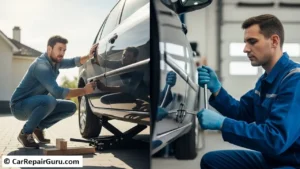
Now for the big question: can you handle this yourself? In many cases, yes. But it’s crucial to be honest about your skill level and the severity of the problem.
When to Try a DIY Repair
You can likely tackle this job yourself if:
- The problem is minor. For example, the door just needs a slight adjustment to close easier, but it isn’t visibly sagging. This often points to a simple striker plate adjustment.
- The hinge bolts are just loose. If you can see the bolts have backed out slightly, tightening them is a straightforward fix.
- You have the right tools and a helper. You will need a decent socket set and, most importantly, a friend to help you support and position the heavy door.
When to Call a Professional Body Shop
It’s time to find a trusted professional for car door alignment repair when:
- The door is severely sagging. If the door drops noticeably when you open it, this almost always means the hinge pins and bushings are shot. Replacing them can be a tricky job that often requires specialized tools.
- You suspect frame damage. If the misalignment is the result of an accident, there could be underlying damage to the car’s frame that needs to be addressed by a body shop.
- You’re not comfortable. Car doors are heavy and awkward. If you’re not confident in your ability to support one while loosening bolts, it’s safer to let a pro handle it.
- Your vehicle is new or a luxury model. Modern cars often have complex wiring (for windows, speakers, sensors) running through the door jamb, which can be easily damaged if you’re not careful.
How to Align a Car Door – A Step-by-Step DIY Guide
Ready to give it a shot? Follow these steps carefully. Remember, the key to door alignment is making small, incremental adjustments.
Safety First & Tools You’ll Need
- Safety: Wear safety glasses and gloves. Never work alone. You absolutely need a helper to support the door’s weight.
- Tools:
- A good socket and wrench set (with metric and/or imperial sockets). Make sure you have the essential car repair tools before you start.
- Torx or star bits (many modern cars use these on striker plates).
- A floor jack.
- A block of wood or a folded towel to place between the jack and the door to prevent damage.
- A marker or grease pencil.
Step 1 – Diagnose the Exact Problem (The “Lift Test”)
Open the door all the way. Grab the bottom, outer edge of the door and gently try to lift it up and down.
- If you feel significant play or hear a clunking sound from the hinge area: Your hinge pins and bushings are worn out. This guide may help you make a temporary adjustment, but the real fix is replacing those parts.
- If the door feels solid with no vertical movement: Your hinges are likely fine! The problem is probably a simple bolt or striker adjustment.
Step 2 – The Easiest Fix – Adjusting the Striker Plate
If your door closes but sits too high, too low, or doesn’t seem flush with the body, start here.
- Outline the Striker: Use your marker to draw a clear outline around the striker plate’s current position on the car frame. This is your baseline so you don’t get lost.
- Loosen the Bolts: Use the appropriate socket or Torx bit to slightly loosen the striker bolts. Don’t remove them, just loosen them enough so you can move the striker with a firm tap.
- Make a Small Adjustment:
- Door won’t latch easily/hits the striker? Tap the striker outward, away from the car’s interior.
- Door closes but is too low? Tap the striker upward.
- Door closes but is too high? Tap the striker downward.
- Tighten and Test: Snug one bolt down and gently close the door to test the new position. It might take a few tries. Once you’re happy with the fit, tighten both bolts securely.
Step 3 – The More Involved Fix – Adjusting the Door Hinges
This is how you fix a sagging door. Patience and a helper are not optional here.
- Support the Door: Open the door just enough to get the floor jack underneath. Place your block of wood on the jack’s saddle and position it under the flat, strong bottom edge of the door. Raise the jack just enough to take the full weight of the door—you should see the door lift ever so slightly into its correct position.
- Outline the Hinges: Just like with the striker, trace around the hinges where they meet the car’s body. This is your reference point.
- Slightly Loosen the Bolts: Have your helper hold the door steady. Choose either the bolts on the car’s body or the bolts on the door itself (not both). Loosen them just enough so the hinge can be moved. It’s often easier to access the bolts on the body frame.
- Make a Tiny Adjustment: With the jack supporting the weight, you and your helper can now carefully push, pull, or lift the door a tiny fraction of an inch in the direction it needs to go.
- Tighten and Test: Snug one or two bolts down and have your helper hold the door. Carefully lower the jack and gently try to close the door. Does it line up better? This process is all about trial and error. Repeat the process, making tiny adjustments until the alignment is correct.
- Final Tightening: Once the door closes perfectly, tighten all the hinge bolts to the manufacturer’s recommended torque.
Car Door Alignment Repair Cost – What to Expect
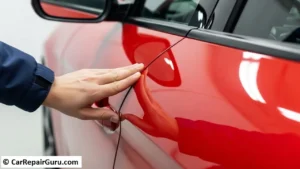
If you decide the DIY route isn’t for you, here’s a general idea of what professional repair might cost. Prices can vary significantly based on your vehicle, location, and the extent of the damage.
Simple Adjustment Cost: $75 – $150
This typically covers one hour of labor for a technician to adjust the striker and/or hinges to bring the door back into alignment.
Hinge Pin & Bushing Replacement Cost: $150 – $300
The parts themselves are very cheap, but the labor is more involved. A mechanic will need to remove the door, press out the old pins/bushings, install the new ones, and then re-hang and align the door.
Full Hinge Replacement Cost: $300 – $700+
If the entire hinge assembly is damaged or bent, it will need to be replaced. For some vehicles, hinges are welded to the frame, which dramatically increases the labor cost.
Post-Accident Repair: $500 – $2,000+
If the alignment issue is due to a collision, the cost becomes part of a much larger body repair job that could involve fixing the car’s frame.
Don’t Ignore a Droopy Door
A properly aligned car door is something you never notice, but a misaligned one is a constant source of frustration. From annoying wind noise to damaging water leaks, the problems only get worse over time.
By understanding the symptoms and causes, you can decide whether a quick DIY adjustment is within your reach or if it’s time to call a professional. Whether you fix it yourself this weekend or schedule an appointment with your local body shop, you’ll be rewarded with a quieter ride, a drier interior, and the simple satisfaction of a door that closes with a solid, reassuring “thunk.”
Frequently Asked Questions (FAQ)
Can a misaligned door really drain my car battery?
Yes. If the door doesn’t fully close, it may not trigger the sensor that turns off your interior lights or dashboard warnings, leading to a slow but steady battery drain.
Is a sagging car door an annoyance or a safety issue?
It starts as an annoyance but can become a safety issue. A door that doesn’t latch securely compromises the car’s structure in a crash and, in extreme cases, could open while driving.
How long does a DIY door alignment usually take?
A simple striker plate adjustment can be done in 20-30 minutes. Adjusting the main hinges is more complex and requires patience, typically taking one to two hours.
Will aligning my car door fix annoying wind noise?
In most cases, yes. Wind noise is caused by a poor seal, and realigning the door ensures the weatherstripping makes tight contact with the frame, effectively blocking the air leaks.
When should I stop a DIY fix and call a professional?
If you’ve adjusted the hinges and striker but the door still drops when you open it, it’s time to call a pro. This indicates worn-out hinge pins, which require specialized tools to replace.]
About the Author