Marco Riley
That minor fender-bender in the parking lot or the startling jolt from hitting a deep pothole—it’s easy to focus on the scratched paint or the dented bumper. But beneath the surface, a more serious and unseen threat could be lurking: damage to your vehicle’s frame.
Your car’s frame is its skeleton. It’s the foundational structure that everything else is built upon, and it’s engineered to protect you in a collision. When that foundation is compromised, it affects everything from how your car drives to its ability to keep you safe in a future accident.
But don’t panic. Frame damage isn’t always a death sentence for your vehicle. With the right technology and expertise, it can often be repaired with incredible precision. This guide will walk you through everything you need to know about car frame damage repair, from spotting the signs to understanding the costs and finding a trustworthy repair shop.
Understanding Your Vehicle’s Skeleton
Before we dive into the repairs, let’s quickly cover what we’re talking about. The frame, or chassis, is the rigid structure that supports the weight of your vehicle’s components and the forces of acceleration, braking, and turning. Its most critical job, however, is to provide structural integrity during a crash.
There are two main types of frames you’ll find on the road today:
Unibody Construction
If you drive a modern car, crossover, or small SUV, you most likely have a unibody frame. In this design, the frame and the body of the car are a single, integrated piece. Think of it like an eggshell—it’s lightweight, strong, and designed with specific “crumple zones” that intentionally deform during an impact to absorb energy and protect the passengers inside. This integrated design makes unibody repair a highly specialized task requiring precision equipment.
Body-on-Frame Construction
Common in trucks, large SUVs, and older vehicles, this is a more traditional design. It features a strong, ladder-like steel frame as the base, with the vehicle’s body bolted on top as a separate component. While incredibly durable and easier to repair in some cases, it can also sustain significant damage that compromises its strength.
How to Tell if Your Car Has Frame Damage (The Telltale Signs)
Frame damage isn’t always obvious. A car can look perfectly fine on the outside while hiding a bent or twisted foundation. So, how to check for frame damage? Pay close attention to these critical clues.
1. Visible Clues and Poor Fit
Walk around your car and look closely. A properly aligned vehicle is symmetrical.
- Uneven Panel Gaps: Look at the spaces between the hood and fenders, or around the doors and trunk. Are the gaps wider on one side than the other? This is a classic sign the frame has been pushed or pulled out of alignment.
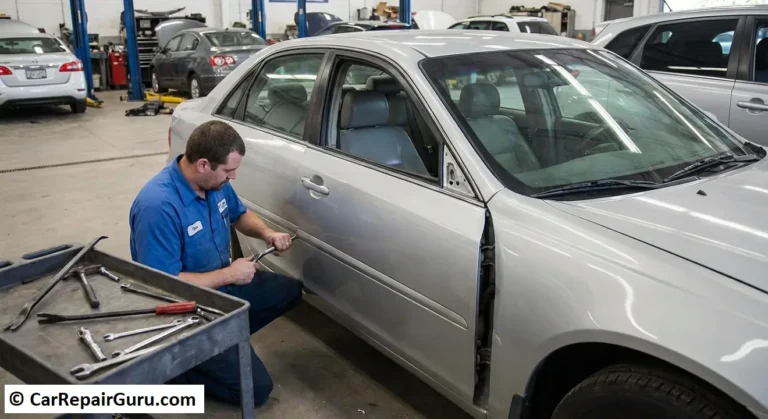
- Doors, Hood, or Trunk Don’t Close Smoothly: If you have to slam a door to get it to latch, or if the hood doesn’t line up perfectly when closed, it could be because the underlying structure is bent.
- Obvious Bends or Cracks: Get on the ground with a flashlight and look underneath the car. Check the frame rails running along the length of the vehicle. Do you see any visible bends, kinks, or cracks in the metal or welds?
2. Driving and Performance Issues
The way your car feels on the road is one of the best indicators of its structural health.
- The Car Pulls to One Side: This is more than a simple alignment issue. If you’ve had the wheels aligned but the car still drifts, the frame itself may be preventing the wheels from tracking straight.
- Uneven Tire Wear: A bent frame can throw off the suspension geometry, causing tires to wear down unevenly and much faster than they should.
- Strange Noises: Do you hear creaking, groaning, or squealing sounds when you turn or drive over bumps? These noises can come from a twisted frame putting stress on the body and suspension components.
- Wheels Look “Off”: Look at your car from the side. Do the wheels appear to be sitting centered in the wheel wells? If one wheel seems pushed forward or backward, it’s a major red flag.
Is It Safe to Drive with Frame Damage?
Let’s be direct: it is incredibly unsafe to drive a vehicle with significant frame damage.
A car’s frame is a masterpiece of safety engineering, designed to crumple and deform in specific ways to channel crash energy away from the passenger cabin. When the frame is already bent, its structural integrity is gone.
Here’s why it’s a massive risk:
- It Won’t Protect You in a Crash: In a subsequent accident, the damaged frame won’t absorb impact as designed. The crumple zones will fail, potentially leading to far more severe damage and a higher risk of injury.
- Unpredictable Handling: Your car’s suspension and steering systems are bolted to the frame. When the frame is bent, these systems can’t function correctly, leading to poor handling, loss of control in emergency maneuvers, and an increased risk of an accident.
- A Domino Effect of Damage: The constant stress from a misaligned frame will cause premature failure of tires, shocks, struts, bearings, and other expensive components.
Can a Bent Car Frame Be Fixed? Yes, with the Right Technology.
So, is frame damage fixable? In the vast majority of cases, the answer is a resounding yes. Modern auto body shops don’t just “bang out” dents anymore. Car frame straightening is a precise science that can restore a vehicle’s frame to its exact factory specifications.
Here’s how the professionals do it:
Step 1: Precise Damage Assessment
The process begins with a computerized laser measuring system. Technicians attach sensors to specific points on the frame. The system then compares these measurements to the original factory data for your exact make and model, identifying every bend and twist down to the millimeter.
Step 2: Car Frame Straightening
The vehicle is secured to a sophisticated piece of equipment called a frame rack or frame machine. Using powerful hydraulic towers and chains, a technician applies controlled pressure from multiple angles. This process carefully and slowly pulls and pushes the metal back into its original, correct shape.
Step 3: Welding and Component Replacement
If a section of the frame is torn, cracked, or too stretched to be safely repaired, that section will be professionally cut out. A brand-new piece from the manufacturer is then expertly welded into place, ensuring the repair is as strong as the original.
Step 4: Final Verification and Alignment
Once the repairs are complete, the vehicle is measured again with the laser system to confirm it is back within factory specifications. Finally, a full four-wheel alignment is performed to ensure everything is tracking perfectly.
When done correctly by a certified technician, a repaired frame can be just as safe and strong as it was before the accident.
The Big Question – How Much Does Bent Frame Repair Cost?
This is the question on everyone’s mind, and the honest answer is: it varies—a lot. The bent frame repair cost can range from $600 for a very minor pull to over $10,000 for extensive reconstruction on a high-end vehicle.
Several key factors influence the final price:
- Severity of Damage: Is it a minor sway in one frame rail or a complex “diamond” or “twist” condition affecting multiple points?
- Vehicle Type: Unibody repairs often require more labor than body-on-frame repairs.
- Make and Model: Parts and labor for luxury brands or specialty vehicles cost more.
- Labor Rates: Costs differ depending on your geographic location.
- Parts Needed: If frame sections need to be replaced, the cost of those parts will be added to the bill.
Will My Insurance Declare it a “Total Loss”?
Insurance companies will “total” a vehicle if the cost of repairs exceeds a certain percentage (often 70-80%) of the car’s Actual Cash Value (ACV). Because frame damage repairs can be costly, it is a primary reason cars are declared a total loss. A qualified auto body shop can provide a detailed estimate to help you and your insurance company make that determination.
How to Choose the Right Auto Body Shop
Not all repair shops are equipped to handle frame damage. This is a job for a specialist. When looking for frame damage repair near me, here’s what you should look for:
- I-CAR or ASE Certifications: These certifications show that the technicians have undergone extensive, up-to-date training in modern collision repair techniques.
- Modern Equipment: Ask them if they use a computerized laser measuring system and a modern frame rack. A shop that invests in this technology is serious about precision.
- Lifetime Warranty: A reputable shop will stand behind its work with a written lifetime warranty on all repairs.
- Great Reviews: Check their reputation on Google and Yelp. See what past customers have said about their quality and service.
Driving Forward Safely – The Final Word on Frame Repair
Ultimately, the structural integrity of a vehicle’s frame is non-negotiable when it comes to safety. While external damage is easy to spot, a compromised frame fundamentally alters how a car performs and, most importantly, how it protects its occupants in a collision. As we’ve covered, the signs of this damage can be subtle, from uneven tire wear to doors that simply don’t close right.
The key takeaway is that while the issue is serious, modern repair technology offers a precise and reliable solution. Through computerized measurement and expert straightening techniques, a vehicle’s frame can often be returned to exact factory specifications.
Therefore, any driver who suspects frame damage should prioritize a professional evaluation. An inspection by a certified technician is the only definitive way to assess the extent of the damage, understand the potential costs, and make an informed decision that ensures the vehicle is safe for the road.
Your Frame Damage (FAQ)
Is a Car with Repaired Frame Damage Safe?
Yes, when performed correctly by a certified technician using modern equipment. The repair process is designed to restore the vehicle’s structural integrity to original factory safety standards.
Will Frame Repair Show Up on a Vehicle History Report?
Most likely, yes. If an insurance claim was filed or the shop reported the work, it will typically appear on reports like CarFax, which is important for future resale transparency.
How Long Does Frame Repair Usually Take?
The timeline depends entirely on the severity of the damage. A minor pull might take a few days, while extensive reconstruction involving part replacement could take several weeks.
Can I Attempt to Fix Frame Damage Myself?
This is extremely dangerous and highly discouraged. Proper frame repair requires thousands of dollars in specialized machinery and expert training to ensure the vehicle is structurally sound.
When Does Insurance Total a Car for Frame Damage?
An insurer will declare a vehicle a “total loss” if repair costs exceed a certain percentage of its pre-accident value. Significant frame damage is a common reason for this decision.
About the Author