Marco Riley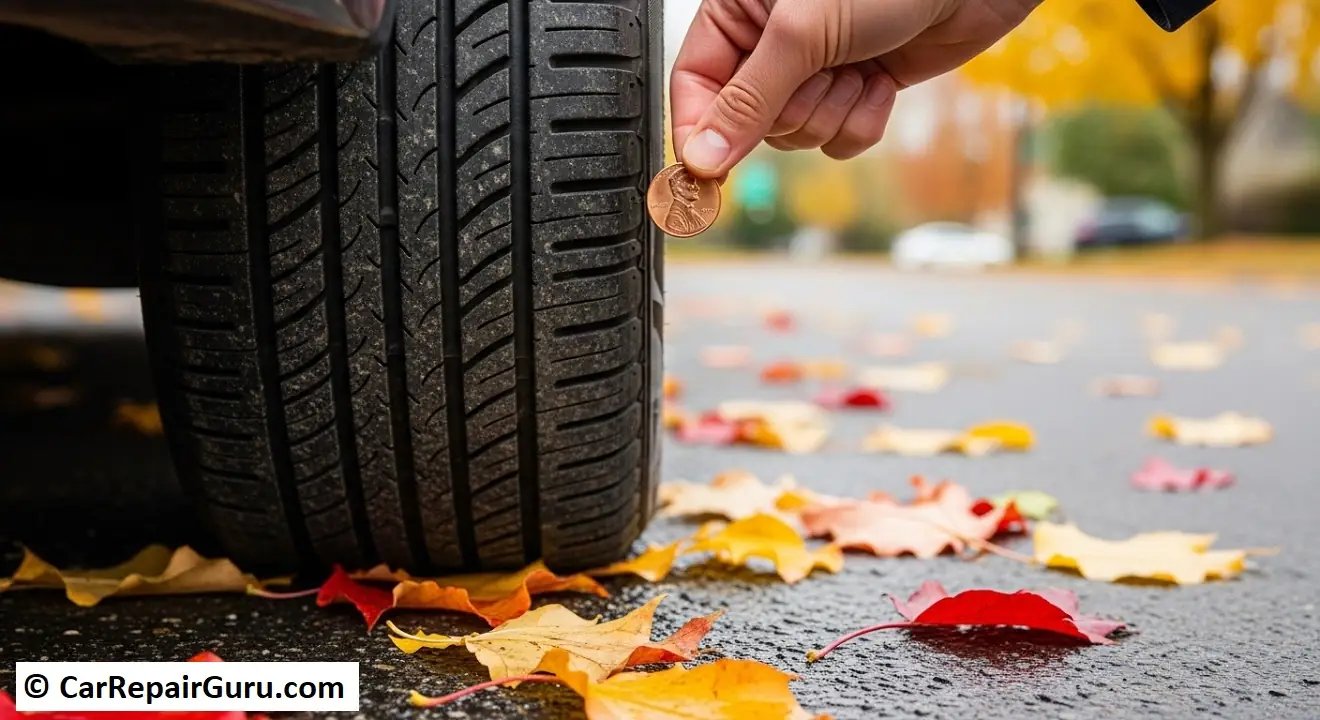
Autumn is here. The air is getting crisp, the scenery is painted in brilliant shades of red and gold, and pumpkin spice is… well, everywhere. It’s a beautiful season. But as the leaves fall, a hidden danger covers our roads. That morning rain, combined with a blanket of slick leaves, can turn your daily commute into a slippery mess.
The single most important factor keeping you in control is the one you probably think about the least: your tire tread.
Worn-out tires are a massive safety risk in these unpredictable conditions. But the good news is you don’t need to be a mechanic to ensure your car is safe. This guide will walk you through the simple why, how, and when of checking your tire tread this autumn. It’s a five-minute check that could make all the difference.
- Why Autumn is a Critical Time for Tire Health
- The Hazard of Hydroplaning on Wet Roads
- Slippery Leaves – A Deceptive Danger
- Dropping Temperatures and Tire Pressure
- Preparing for the First Frost and Early Snow
- How to Check Your Tire Tread Depth – 3 Easy Methods
- Method 1 – The Classic Penny Test
- Method 2 – The Quarter Test (A Safer Bet)
- Method 3 – The Built-in Tread Wear Indicators
- What Else to Check on Your Tires This Fall
- Proactive Tire Maintenance – An Autumn Checklist
- The Verdict – When to Replace Your Tires for Autumn & Winter
- Choosing the Right Tire Type for Fall and Beyond
- Adjusting Your Driving for Autumn Road Conditions
- Final Thoughts – A 5-Minute Check for a Season of Safety
- Frequently Asked Questions (FAQ)
- How often should I check my tires?
- What is the legal tire tread depth?
- Is it okay to replace just two tires?
- Are all-season tires good enough for autumn?
- Why is my tire tread wearing unevenly?
Why Autumn is a Critical Time for Tire Health
You might think of tire checks as a winter-only task, but autumn is arguably the most crucial transition period for your wheels. Here’s why your tire tread depth suddenly becomes so important.
The Hazard of Hydroplaning on Wet Roads
The deep grooves on your tires aren’t just for looks. They are engineered channels designed to pump water out from underneath the tire, allowing the rubber to maintain firm contact with the road. When your tread is worn down, it can’t clear water effectively. Instead, your car can begin to float on a thin layer of water, a terrifying phenomenon known as hydroplaning. When you hydroplane, you lose all steering and braking control. Good tread is your number one defense against it.
Slippery Leaves – A Deceptive Danger
A thick layer of wet leaves can be as slick as a patch of ice. Tires with deep, healthy tread can bite through that slippery layer to find grip on the pavement below. Worn tires, however, will just skim across the top, significantly increasing your braking distance and reducing control.
Dropping Temperatures and Tire Pressure
Did you know that for every 10°F drop in ambient temperature, your tire pressure can decrease by about 1 PSI (pound per square inch)? Those cool autumn nights can quietly steal air from your tires, leaving them under-inflated. An under-inflated tire wears unevenly, handles poorly, and can overheat, making a proper tire check more than just a tread inspection.
Preparing for the First Frost and Early Snow
Think of this autumn check as your final dress rehearsal for winter. Tires that are just “okay” in the fall will be downright dangerous when the first frost or surprise flurry hits. Taking care of your tires now means you won’t be scrambling for an appointment during the first snowstorm. This is a key part of preparing your car for winter.
How to Check Your Tire Tread Depth – 3 Easy Methods
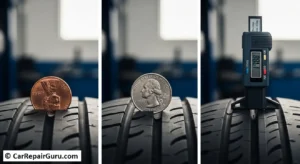
You don’t need any fancy equipment. In fact, you can get a reliable reading on your tire health with something you probably have in your pocket right now.
Method 1 – The Classic Penny Test
Is Your Tread “Honest Abe” Approved?
The penny test is a classic for a reason—it’s simple and effective. It tells you if your tires have reached the minimum legal tread depth, which is 2/32 of an inch in most states.
- Take a regular penny and turn it so Abraham Lincoln’s head is pointing down.
- Place the edge of the penny into one of the main tread grooves on your tire.
- Look closely. If you can see the very top of Lincoln’s head, your tread is worn out.
The Verdict: Seeing Abe’s whole head means your tread is at or below 2/32″. Your tires can no longer effectively channel water, and they need to be replaced immediately.
Method 2 – The Quarter Test (A Safer Bet)
Why Washington Gives You a Better Warning
While the penny test tells you if your tires are legally worn out, the quarter test tells you when they are starting to lose performance in wet conditions. For true tire safety for fall, this is the better test.
- Take a quarter and place it upside down in a tread groove, with Washington’s head facing down.
- Check the top of Washington’s head. If the tread doesn’t touch his hairline, your tread depth is at 4/32″ or less.
The Verdict: While still legal, tires with 4/32″ of tread have significantly reduced grip on wet roads. You should start shopping for new tires, especially with winter on the horizon.
Method 3 – The Built-in Tread Wear Indicators
Every tire has a built-in warning system. Molded into the bottom of the tread grooves are small, raised rubber bars called “tread wear indicators.” They run horizontally across the tire.
To find them, look for a small arrow or “TWI” marker on the tire’s sidewall. Follow it across the tread, and you’ll see the bar.
The Verdict: If your tread has worn down to be level (or flush) with these indicator bars, it means your tread depth is at the 2/32″ limit. It’s an unmistakable sign that it’s time for new tires.
What Else to Check on Your Tires This Fall
A complete tire inspection is about more than just depth. As part of your autumn car maintenance, take another minute to look for these key indicators.
- Check Your Tire Pressure (PSI): As mentioned, cold air means lower pressure. Find the correct PSI for your vehicle on the sticker inside the driver’s side door jamb—do not use the number on the tire sidewall. Check the pressure with a simple gauge when the tires are cold (before you’ve driven).
- Inspect for Uneven Wear Patterns: How your tire is wearing tells a story.
- Wear in the center: Likely over-inflated.
- Wear on both edges: Likely under-inflated.
- Wear on just one side: You may have a wheel alignment problem.
- Look for Cracks, Bulges, and Punctures: Carefully run your hand over the tire (when parked and cool!) and visually inspect the sidewalls. Any bulges, deep cracks, or visible punctures mean the tire’s structural integrity is compromised. It should be inspected by a professional immediately.
Proactive Tire Maintenance – An Autumn Checklist
Moving from just checking your tires to actively maintaining them is what keeps you safer, longer. Autumn is the perfect time to tackle this simple checklist.
- Schedule a Tire Rotation: To ensure your tires wear evenly, they should be rotated every 5,000 to 7,000 miles. A rotation simply means moving the tires to different positions on the car. This dramatically extends their lifespan.
- Check Your Wheel Alignment: Potholes and rough roads can knock your wheels out of alignment. This causes your car to pull to one side and, more importantly, causes rapid and uneven tire wear. A pre-winter alignment check is a smart, tire-saving investment.
- Clean Your Tires and Wheels: A good cleaning does more than make your car look nice. It removes corrosive brake dust and road grime, and it gives you a clear view to spot any hidden damage, like a small nail embedded in the tread.
The Verdict – When to Replace Your Tires for Autumn & Winter
Let’s keep it simple. Here’s what your tread depth reading means for the coming seasons.
- ✅ 5/32″ and Above: Good to Go. You have plenty of healthy tread to handle autumn rain and wet leaves with confidence.
- ⚠️ 3/32″ – 4/32″: Caution Zone. This is the gray area. Your tires have lost significant wet-weather performance. You should start planning and budgeting for a replacement before the first snowfall.
- 2/32″ or Less: Replace Immediately. Your tires are unsafe, illegal in most places, and a serious hazard to you and others on the road. Do not wait.
Choosing the Right Tire Type for Fall and Beyond
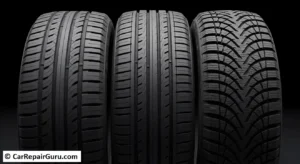
If your tread check reveals it’s time for a new set, the next big question is “which kind?”
- All-Season Tires: For most drivers in most climates, all-season tires are the right choice. They provide a good balance of performance for dry, wet, and light snow conditions.
- Summer Tires: The 45°F (7°C) Rule: This is a critical safety warning. Summer tires are made with a rubber compound that gets hard and loses grip like a hockey puck in the cold. If you have summer tires and the temperature in your area consistently drops below 45°F, you must switch them out.
- The Crossover to Winter Tires: If you live where snow and ice are a given, autumn is the perfect time to schedule your switch to winter tires. You’ll beat the inevitable rush that happens after the first storm.
Adjusting Your Driving for Autumn Road Conditions
Even with brand-new tires, the most important safety feature is you. Adjusting your driving habits for the season is non-negotiable.
- Increase Your Following Distance: The “3-second rule” for following distance isn’t enough on wet or leaf-covered roads. Give yourself at least 4-5 seconds of space between you and the car ahead to account for longer braking distances.
- Slow Down and Avoid Sudden Moves: Speed is the number one enemy on slick surfaces. Reduce your speed, especially on curves, and make all of your inputs—braking, steering, and accelerating—smooth and gentle.
- How to React if You Hydroplane: If you feel the car begin to hydroplane, your instincts might scream “slam the brakes!” Don’t. Instead:
- Ease your foot off the accelerator.
- Hold the steering wheel steady.
- Steer gently in the direction you want to go until you feel the tires regain traction.
Final Thoughts – A 5-Minute Check for a Season of Safety
Your tires are the only part of your car that touches the road. Their condition directly impacts your ability to steer, brake, and stay in control. As the leaves begin to turn, don’t let tire safety fall by the wayside.
Don’t put it off. Grab a coin and head outside to check your tire tread this autumn. It’s the simplest, most important safety check you can do for yourself and your family. Drive with confidence knowing your tires are ready for whatever the season throws at you.
Frequently Asked Questions (FAQ)
How often should I check my tires?
Check your tire pressure and tread depth at least once a month. A dedicated check at the start of autumn is a smart move for seasonal safety and peace of mind.
What is the legal tire tread depth?
The legal minimum is 2/32″ in most states. For safe driving in autumn rain, it is strongly recommended to replace tires when they reach 4/32″ of tread.
Is it okay to replace just two tires?
While replacing all four is best, if you only replace two, they must be installed on the rear axle. This placement is crucial to help prevent spin-outs on slick roads.
Are all-season tires good enough for autumn?
Yes, all-season tires are designed to handle autumn’s wet conditions well. If your area sees early snow or cold snaps, you may want to switch to winter tires.
Why is my tire tread wearing unevenly?
Uneven wear is typically caused by improper inflation or a wheel alignment issue. Regular tire rotations are the best way to promote even tread wear and extend tire life.
About the Author