Marco Riley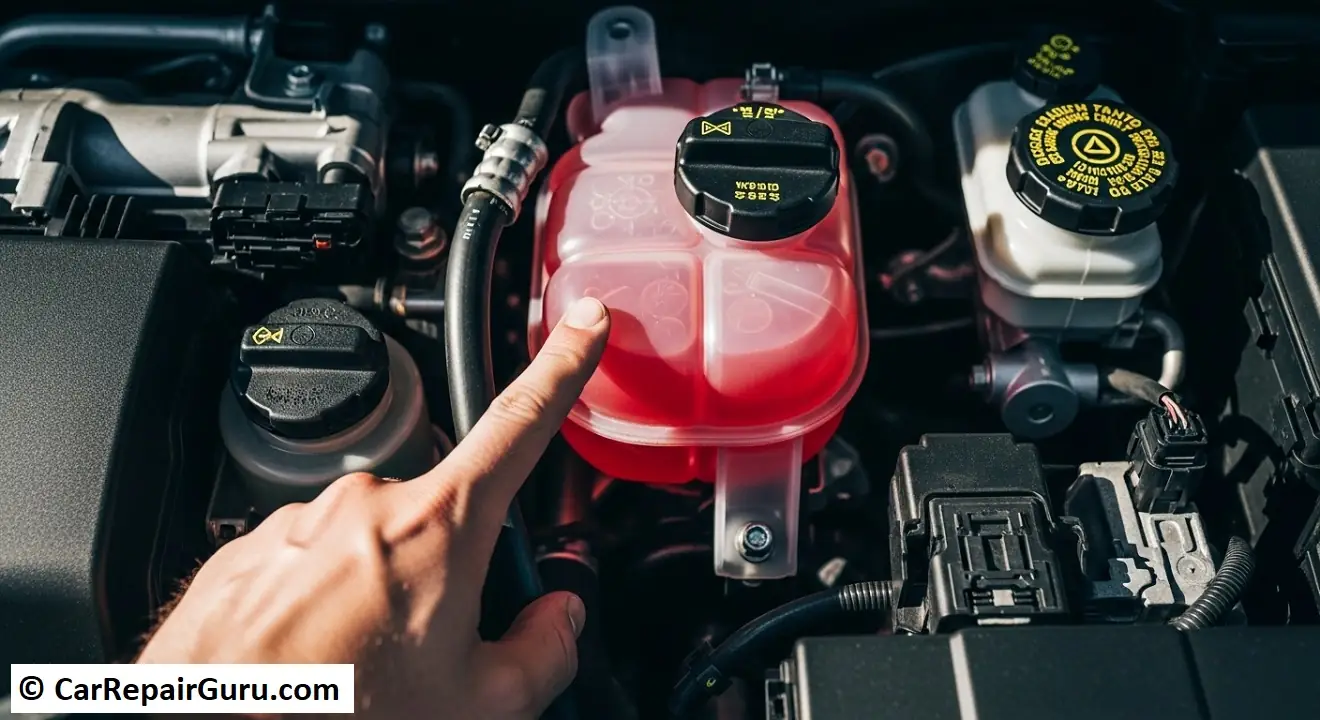
Ever hear a strange whining or groaning noise when you turn your steering wheel? Or maybe turning into a parking spot suddenly feels more like a workout? These are common signs your car is trying to tell you something important about its power steering system.
The good news is, the most common cause is also the easiest to check: low power steering fluid.
Think of power steering fluid as the lifeblood of your steering system. This special hydraulic fluid flows under pressure to make turning your wheel feel effortless. When the fluid level gets low or the fluid gets old and dirty, it can lead to strange noises, difficult steering, and even permanent damage to expensive parts like the power steering pump.
Checking your power steering fluid is a simple, 5-minute task that anyone can do. It requires no special tools and is one of the most empowering pieces of basic car maintenance you can learn. Let’s pop the hood and get started.
- First, Know the Telltale Signs – Symptoms of Low Power Steering Fluid
- Step-by-Step Guide – How to Check Your Power Steering Fluid
- Before You Begin – Safety & Supplies
- Step 1 – Locate the Power Steering Fluid Reservoir
- Step 2 – Clean the Cap and Check the Fluid Level
- Step 3 – Inspect the Fluid’s Color and Condition
- What to Do If Your Fluid is Low or Dirty
- How to Add Power Steering Fluid
- When to See a Mechanic
- A Critical Choice – Understanding Different Types of Power Steering Fluid
- Why is My Power Steering Fluid Low? Common Leak Causes
- Final Thoughts – A Quick Check for a Safer Drive
- Frequently Asked Questions (FAQ)
- How often should I check my power steering fluid?
- Can I use brake fluid instead of power steering fluid?
- My car has Electric Power Steering (EPS). Do I need to check any fluid?
- What is the cost to fix a power steering fluid leak?
First, Know the Telltale Signs – Symptoms of Low Power Steering Fluid
Before you even look under the hood, your car will often give you audible and physical clues that something is amiss. If you’re experiencing any of the following, a low fluid level is the first thing you should investigate.
- Whining or Groaning Noise When Turning: This is the classic symptom. The noise is caused by the power steering pump struggling to circulate fluid that isn’t there, pulling in air instead. It’s usually loudest when you turn the wheel to its furthest point left or right.
- A Stiff or Difficult Steering Wheel: Does the wheel feel unusually heavy, especially at low speeds? This means the hydraulic assistance is fading, forcing you to use sheer muscle power to steer.
- Squealing Sound When You Start the Car: A brief, high-pitched squeal when you first start the engine can sometimes be linked to the power steering pump, especially in cold weather.
- Puddles Under Your Car: If you see reddish or pinkish-brown, oily spots on your driveway or in your parking space, you likely have a power steering fluid leak. It’s often found near the front of the car.
Step-by-Step Guide – How to Check Your Power Steering Fluid
Ready to become your own mechanic for a few minutes? Follow these simple steps.
Before You Begin – Safety & Supplies
First, a little prep work makes the job safer and more accurate.
- Park on Level Ground: This ensures the fluid is settled and you get an accurate reading on the dipstick.
- Let the Engine Cool Down: For safety, it’s best to check when the engine is cold or has been off for at least an hour. This also allows you to use the “COLD” marking on the dipstick for the most accurate baseline reading. (Some manuals advise checking when hot, which we’ll cover below).
- Gather Your Supplies: All you need is a clean, lint-free cloth or paper towel.
Step 1 – Locate the Power Steering Fluid Reservoir
Open the hood and look for a small, cylindrical plastic container with a screw-on cap. It’s usually near the front of the engine bay, often on one side or the other.
Look for identifying marks on the cap—it will typically have a steering wheel icon or the words “Power Steering Fluid” printed on it.
Pro-Tip: If you can’t find it after a few minutes of looking, your owner’s manual will have a diagram showing its exact location. And if you still can’t find it, your car may have Electric Power Steering (EPS). EPS systems use an electric motor instead of hydraulic fluid and don’t require this check.
Step 2 – Clean the Cap and Check the Fluid Level
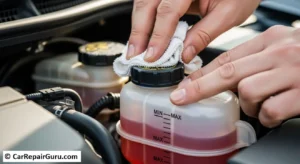
- Use your clean rag to wipe the top of the reservoir cap and the area around it. This prevents any dirt or grit from falling into the system when you open it.
- Unscrew the cap and pull it out. In most cars, a small dipstick is attached to the bottom of the cap.
- Wipe the dipstick completely clean with your rag.
- Re-insert the dipstick, screwing the cap on all the way. Then, unscrew it again and pull it out to get a clean reading.
The dipstick will have markings on it. You’ll typically see two sets of lines:
- “COLD” or “MIN”: If your engine is cold, the fluid level should be at or near this mark.
- “HOT” or “MAX”: If your engine is fully warmed up, the fluid should be at this higher mark, as fluid expands when it heats up.
Some cars don’t have a dipstick. Instead, the reservoir itself is made of translucent plastic with “MIN” and “MAX” lines marked directly on the side. Simply look at the side of the container to see where the fluid level sits.
Step 3 – Inspect the Fluid’s Color and Condition
The level is only half the story. The color and condition of the fluid can tell you a lot about the health of your steering system. Dip the tip of the dipstick (or a clean paper towel) into the fluid and look closely.
- Healthy Fluid: Good power steering fluid is typically clear with a reddish, pinkish, or sometimes amber tint. It should look clean.
- Bad Fluid: If you see any of the following, it’s a sign of a problem:
- Dark Brown or Black: The fluid is old, oxidized, and full of contaminants. It’s no longer lubricating properly and should be flushed and replaced.
- Milky or Foamy: This indicates that water or air has gotten into the system, usually from a leak. Air in the system is what causes that whining noise.
- Metallic Sparkles: This is a serious red flag. Tiny metal flecks in the fluid mean that internal components, like the pump, are grinding themselves apart. The system needs immediate professional attention.
What to Do If Your Fluid is Low or Dirty
So you’ve found an issue. Here’s what to do next.
How to Add Power Steering Fluid
If the level is simply low, topping it off is easy.
- Crucial First Step: Use the Right Fluid! This is non-negotiable. Check your owner’s manual to find the specific type of fluid your vehicle requires. Using the wrong kind can destroy the seals in your system, leading to very expensive repairs. We’ll cover fluid types in more detail below.
- Using a small funnel to prevent spills, slowly pour a small amount of fluid into the reservoir.
- Add a little at a time, re-checking the dipstick after each addition. It’s very easy to overfill.
- Stop when the fluid reaches the correct “COLD” or “MIN” line. Don’t overfill, as the fluid needs room to expand when it gets hot.
When to See a Mechanic
A simple top-off is a great DIY fix, but some situations require a professional. You should book an appointment with a trusted mechanic if:
- The fluid level is consistently low. This means you have a leak that needs to be located and repaired.
- The fluid is very dark, milky, or has metal particles in it. The system needs to be flushed and inspected for damage.
- Adding fluid doesn’t solve your steering problems. If the noise or stiffness continues, there may be a deeper issue with the pump or steering rack.
A Critical Choice – Understanding Different Types of Power Steering Fluid
Walking into an auto parts store can be overwhelming. You’ll see shelves of different fluids. Grabbing the wrong one is a costly mistake. Here’s a simple breakdown.
- Why Using the Correct Fluid is Non-Negotiable: Different car manufacturers design their systems to work with fluids of a specific viscosity (thickness) and with a unique package of additives for lubrication and seal protection. The wrong fluid can cause seals to swell or shrink, leading to leaks and pump failure.
- Common Fluid Categories:
- Conventional/Mineral Power Steering Fluid: A standard hydraulic fluid for many older domestic and some import vehicles.
- Synthetic Power Steering Fluid: Engineered for high performance and extreme temperatures. It’s required for many European cars (like BMW, Mercedes) and newer vehicles.
- Automatic Transmission Fluid (ATF): This might seem strange, but many manufacturers, especially Honda, Acura, and some Ford, GM, and Chrysler models, specifically design their power steering systems to use certain types of ATF (like DEXRON or MERCON).
- How to Find the Right Fluid for YOUR Car:
- Check your owner’s manual. This is the most reliable source of information.
- Look at the reservoir cap. It often specifies the required fluid type right on it.
- When in doubt, consult the dealership or an auto parts professional.
Why is My Power Steering Fluid Low? Common Leak Causes
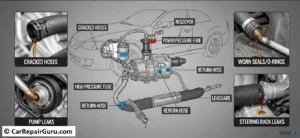
Remember, power steering is a closed system. Unlike engine oil, it doesn’t get “used up.” If your fluid is low, it has a leak. Finding it is the key to a permanent fix.
- Power Steering Hoses: This is the most common culprit. The system uses a high-pressure hose and a low-pressure return hose. Over time, the rubber can crack, become brittle, or the metal fittings can loosen, causing fluid to seep out.
- The Power Steering Pump: The pump itself has seals that can wear out, causing fluid to leak from the pump body or the pulley shaft.
- The Steering Rack or Gearbox: This is the component that actually turns your wheels. It has seals at either end, protected by rubber bellows (boots). If a seal fails, fluid will leak into the boot, which will eventually tear and release the fluid. A greasy, wet-looking boot is a dead giveaway.
Is a small leak a big deal? Yes. Even a minor seep will eventually get worse. If the system runs dry, it can destroy the power steering pump in minutes, turning a $20 hose repair into a $500+ pump replacement.
Final Thoughts – A Quick Check for a Safer Drive
Checking your power steering fluid is more than just car maintenance; it’s about staying connected to your vehicle and ensuring your safety on the road. By taking just five minutes every few months, you can listen to what your car is telling you, catch small problems before they become expensive disasters, and keep your steering smooth, responsive, and reliable. Make it a part of your regular DIY maintenance routine, and you’ll drive with greater peace of mind.
Frequently Asked Questions (FAQ)
How often should I check my power steering fluid?
It’s a good habit to check it every few months, or whenever you check your engine oil. A quick glance is all it takes to catch a problem early.
Can I use brake fluid instead of power steering fluid?
Absolutely not. Brake fluid is chemically corrosive to the seals used in power steering systems and will cause catastrophic failure. Never mix them or substitute one for the other.
My car has Electric Power Steering (EPS). Do I need to check any fluid?
No. As mentioned, EPS systems use an electric motor for assistance and do not have any hydraulic fluid to check or change.
What is the cost to fix a power steering fluid leak?
The cost varies dramatically depending on the source. A simple hose replacement might cost $100-$250, while replacing a power steering pump can be $400-$800, and a steering rack replacement can exceed $1,000. This is why catching leaks early is so important.
About the Author