Marco Riley
We’ve all been there. It’s the first scorching hot day of the year, you jump in your car, crank the AC, and… nothing. Just a blast of lukewarm, disappointing air. The immediate thoughts are a mix of frustration and dread: “This is going to be expensive,” or “I don’t have time for this.” It feels like you’re at the mercy of a costly repair shop.
But what if I told you that you have more control than you think? What if you could prevent most major problems, improve your AC’s performance, and save a ton of money with just a little know-how? That’s exactly what we’re going to do today. This guide is your first step toward empowerment.
Together, we’re going to walk through everything you need to know to maintain car air conditioning. You’ll learn a valuable skill, build your confidence, and make sure your car is an ice-cold oasis when you need it most. You can absolutely do this.
- How Your Car’s AC System Works – A 60-Second Explainer
- The DIY Car AC Maintenance Checklist – 4 Simple Steps You Can Do Today
- 1. Run the AC Regularly (Even in Winter)
- 2. Inspect and Replace the Cabin Air Filter
- 3. Clean the Condenser Fins
- 4. Visually Inspect for Leaks
- Pro Tips – How to Maximize AC Efficiency and Make Your Car Colder, Faster
- Troubleshooting – Common Car AC Problems & What They Mean
- Car AC & Air Quality – Lessons from the Pandemic
- When to Call a Professional – The AC Service Checklist
- Decoding the Bill – Understanding Car AC Repair Costs
- Your Action Plan for a Cool & Comfortable Drive
- Your Car AC Maintenance Questions Answered
- How Often Should a Car AC Be Serviced
- Is Recharging My Car AC Myself a Good Idea
- Why Does My Car AC Smell Bad
- Does Running the AC Use a Lot of Gas
- What’s the Difference Between AC Recharge and Service
How Your Car’s AC System Works – A 60-Second Explainer
Before we roll up our sleeves, let’s quickly demystify what’s happening behind your dashboard. Don’t worry, there’s no test! Think of your car’s AC just like your refrigerator—it doesn’t create cold, it just moves heat from one place to another.
It does this with a few key players:
- The Compressor: This is the heart of the system. It’s an engine-driven pump that pressurizes a special gas called refrigerant.
- The Refrigerant: This is the magic cooling agent that absorbs heat from inside your car and carries it outside.
- The Condenser: Located right at the front of your car, usually in front of the radiator. Its job is to radiate that heat out of the refrigerant, turning it back into a liquid.
- The Evaporator: Tucked away inside your dashboard, this is where the magic happens for you. The cold refrigerant flows through it, and your blower fan pushes air across it, absorbing heat from the cabin and sending cool, refreshing air through your vents.
That’s it! Understanding this simple loop makes troubleshooting so much easier.
The DIY Car AC Maintenance Checklist – 4 Simple Steps You Can Do Today
Alright, let’s get to the good stuff. These are simple, powerful checks you can do this weekend with no special tools. Think of this as your seasonal tune-up.
1. Run the AC Regularly (Even in Winter)
This first one is the easiest habit to build. The refrigerant in your system is mixed with a special oil. By running your AC for about 10 minutes every few weeks—even in January—you circulate that oil. This keeps all the seals and gaskets lubricated, preventing them from drying out, cracking, and causing leaks down the road. It’s the single best preventative step you can take.
2. Inspect and Replace the Cabin Air Filter
Your cabin air filter is the unsung hero of your AC system. It cleans the air coming into your car, trapping dust, pollen, and leaves. When it gets clogged, it’s like trying to breathe through a dirty rag—air can’t get through. This makes your AC system work way harder and can cause a weak airflow from your vents.
How to do it: Most cabin filters are located behind the glove box. Usually, you just need to unclip the glove box, let it drop down, and you’ll see the filter access door. Slide the old one out and check it. If it’s black and full of debris, it’s time for a new one. This is a 10-minute job that makes a world of difference.
3. Clean the Condenser Fins
Remember the condenser? It sits at the very front of your car, and over time, it gets plastered with bugs, dirt, and road grime. A dirty condenser can’t release heat effectively, which means your AC won’t get as cold as it should.
Here’s a pro tip: Grab your garden hose and gently spray the condenser from front to back. Just a gentle spray will do the trick—no need to break out a pressure washer here, as that can damage the delicate fins. A clean condenser is a happy condenser.
4. Visually Inspect for Leaks
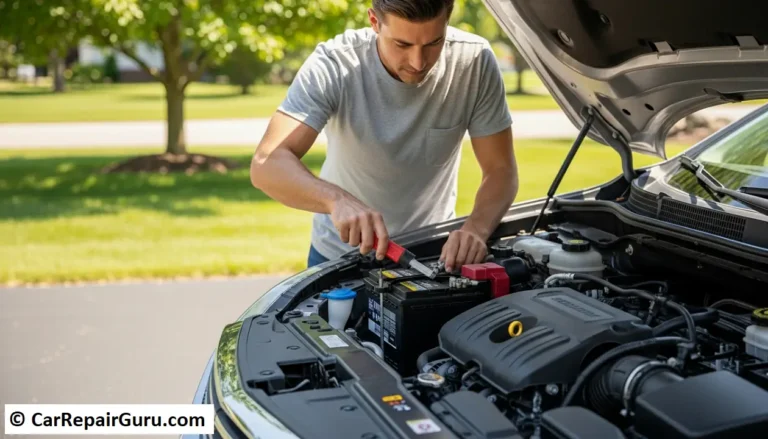
You don’t need fancy equipment for a quick check. Pop the hood and look at the various metal AC lines running around the engine bay. The system’s oil can attract dirt, so if you see any obviously greasy or oily fittings, hoses, or connections, it could be a sign of a slow refrigerant leak. Catching it early can save your compressor from damage.
Pro Tips – How to Maximize AC Efficiency and Make Your Car Colder, Faster

Maintaining the system is one thing; using it smartly is another. This is something most people don’t think about, but these simple tricks will get your car cooler, faster.
- Vent the Heat First: When you get into a car that’s been baking in the sun, don’t immediately blast the AC on max. The air inside is hotter than the air outside! Open your windows for the first minute of driving to push all that super-heated air out. Then, close them up and turn on the AC.
- Use the Recirculation Button Wisely: The recirculation button (the one with the arrow curving inside the car) is your best friend after the initial heat is gone. It re-cools the already chilled air in the cabin instead of constantly fighting to cool the hot air from outside. This is much more efficient.
- Park in the Shade: This one sounds obvious, but the difference is huge. Parking in the shade or using a windshield sunshade can drastically lower the starting temperature inside your car, giving your AC a massive head start.
Troubleshooting – Common Car AC Problems & What They Mean
Okay, so something’s not right. Let’s play detective. Don’t panic; most AC issues fall into a few common categories.
- Problem: The AC is Blowing Warm or Weak Air
- Possible Causes: This is the classic symptom. Most often, it means you’re low on refrigerant due to a leak. It could also be a failing compressor, a badly clogged cabin filter, or an electrical issue like a blown fuse.
- Problem: A Musty or Foul Smell from the Vents
- Possible Causes: That “dirty sock” smell is usually mold or mildew growing on the evaporator coil in your dash. It’s dark and damp in there—a perfect breeding ground.
- Problem: The AC Makes Strange Noises (Grinding, Squealing, Clicking)
- Possible Causes: Noises are your car’s way of crying for help. A grinding or squealing sound often points to a failing compressor or a worn-out bearing, which needs immediate attention.
- Problem: Water Leaking Inside the Cabin
- Possible Causes: Don’t worry, this is usually a simple fix. Your AC naturally creates condensation, which is supposed to drip out under the car through a drain line. If that line gets clogged, the water backs up and leaks onto your passenger-side floor.
Car AC & Air Quality – Lessons from the Pandemic
The world has changed, and it’s made us all a bit smarter about the air we breathe. Your car is an enclosed space, so let’s apply those lessons here for a healthier ride.
- Prioritize Fresh Air: When you have passengers, it’s best to use the “fresh air” mode instead of recirculation. This continuously brings in outside air, flushing out germs, allergens, and stale air.
- Upgrade Your Cabin Air Filter: At your next filter change, consider a premium filter. HEPA-style filters can trap much smaller particles, while activated carbon filters are fantastic at removing odors and exhaust fumes. It’s a small price for much cleaner air.
- Disinfect Safely: Never spray Lysol or other household disinfectants directly into your vents—it can damage electronics and create toxic fumes. Use an automotive-specific vent cleaner and wipe down your AC controls with a 70% isopropyl alcohol solution on a cloth.
When to Call a Professional – The AC Service Checklist
Part of being a smart owner is knowing when to tag in an expert. AC systems are pressurized and require special equipment. Calling a pro isn’t a failure—it’s the right tool for the job.
It’s time to call a mechanic if:
- You’re pretty sure you have a refrigerant leak.
- Your AC isn’t getting cold at all, and the basic checks didn’t help.
- You hear any loud grinding or squealing noises.
A professional service will typically include a performance check, using UV dye to find leaks, and a proper “evacuate and recharge” to fill the system with the exact amount of refrigerant your car needs.
Decoding the Bill – Understanding Car AC Repair Costs

Let’s pull back the curtain on what these repairs typically cost so you can walk into a shop feeling informed, not intimidated.
- Minor Fixes ($): $25 – $100. This covers things like a new cabin air filter or replacing a blown fuse.
- Standard Service: The AC “Recharge” ($$): $150 – $300+. This is for a professional leak test and refilling the system. Cars with newer, eco-friendlier R-1234yf refrigerant will be on the higher end of this range.
- Moderate Repairs ($$$): $400 – $800+. This is for replacing a component like a leaking hose or a new condenser.
- Major Repairs: The Compressor Replacement ($$$$): $800 – $2,500+. The compressor is the most expensive part. A failure often requires flushing the whole system, which is why the cost can be high. This is what we’re trying to avoid with good maintenance!
Your Action Plan for a Cool & Comfortable Drive
See? You’ve got this. We’ve covered how the system works, simple checks you can do yourself, and how to use your AC like a pro. You now know what the warning signs are and what to expect if you do need a professional. The mystery is gone.
By learning how to maintain car air conditioning, you’ve taken back control. You’ve replaced dread with confidence and are on your way to saving money and avoiding the hassle of a broken AC. You learned a new skill today that will serve you for as long as you drive.
Now, don’t wait for a heatwave! Go check your cabin air filter and give your condenser a quick rinse this weekend. Your future self will thank you for a cool, comfortable, and healthy ride.
Your Car AC Maintenance Questions Answered
How Often Should a Car AC Be Serviced
We recommend a professional check-up every 1-2 years, even if everything feels fine. This proactive step helps catch tiny leaks or worn parts before they lead to expensive failures.
Is Recharging My Car AC Myself a Good Idea
While those DIY cans seem convenient, they only mask the real problem, which is usually a leak. Overfilling the system can cause even more damage, so a professional service is the safest long-term solution.
Why Does My Car AC Smell Bad
That musty, “dirty sock” smell is typically caused by mold and mildew buildup on the evaporator core inside your dashboard. A professional cleaning or a special DIY vent cleaner can usually solve the problem.
Does Running the AC Use a Lot of Gas
Yes, the AC compressor does put a small extra load on the engine, which slightly reduces fuel economy. However, on the highway, it’s often more efficient than driving with the windows down due to wind drag.
What’s the Difference Between AC Recharge and Service
A recharge simply refills refrigerant, while a full service is more comprehensive. It includes a leak test, system evacuation to remove moisture, and refilling with the precise amount of refrigerant and oil.
About the Author