Marco Riley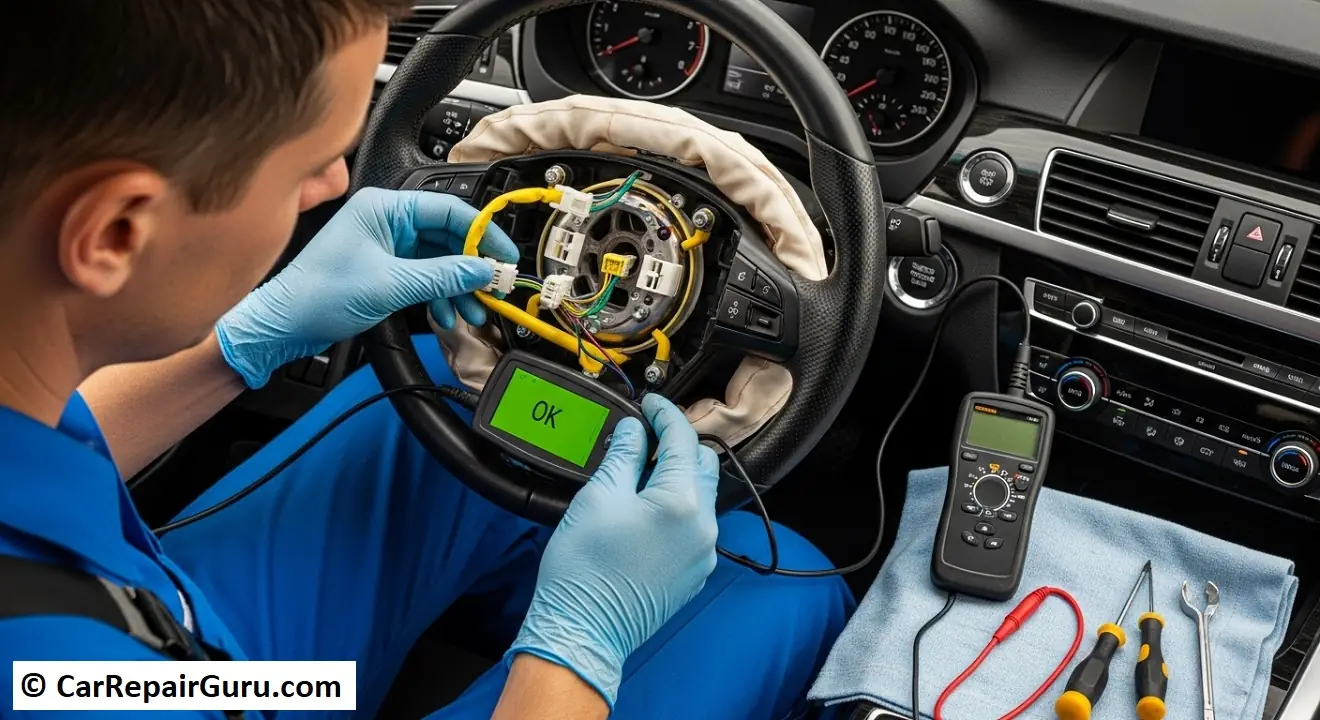
Your car’s airbags are the silent guardians of your daily commute. Tucked away behind panels in your steering wheel, dashboard, and even your seats, they wait for a moment you hope never comes. Most of us don’t give them a second thought—until that dreaded little red light, shaped like a person with a giant circle in their lap, suddenly stays on.
What does that light mean? Do airbags need maintenance like an oil change? Do they expire?
These are critical questions, and the answers aren’t always common knowledge. The truth is, while you won’t be “maintaining” your airbags with a wrench, your role in ensuring they work is absolutely vital. This guide will walk you through everything you need to know to properly maintain your car’s airbags, turning you from a passive passenger into an informed and safe car owner.
- What is the SRS (Supplemental Restraint System)?
- The Truth About Airbag Maintenance – It’s a “Hands-Off” Job (Mostly)
- Heeding the Airbag Warning Light
- What Does the Airbag Warning Light Mean?
- Common Causes for an Illuminated SRS Light
- What to Do Immediately When the Light Comes On
- Proactive Steps & Best Practices for Airbag System Health
- What Happens After Airbag Deployment? A Guide to Replacement
- Airbag Safety When Buying a Used Car
- Your Airbags are a Lifesaver – Prioritize Their Health
- Frequently Asked Questions (FAQ)
- Do car airbags expire?
- How long do airbags last?
- How much does it cost to fix an airbag light?
- Can I maintain or replace my airbags myself?
What is the SRS (Supplemental Restraint System)?
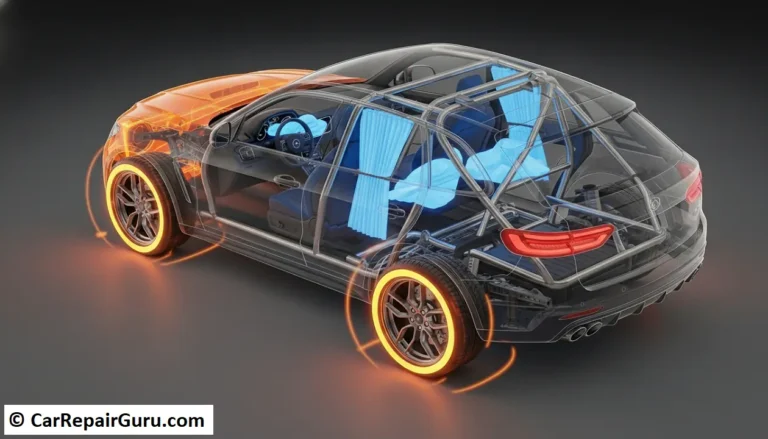
First, let’s clear up some terminology. Your airbags are just one part of a complex network called the SRS, or Supplemental Restraint System. Think of it as your car’s emergency response team, designed to work with your seatbelts (not replace them!) to protect you in a crash.
The key players in the SRS include:
- Airbag Modules: These are the actual airbag units, complete with an inflator that contains a chemical propellant.
- Impact Sensors: These are the system’s “nerves.” Placed at strategic points on the car, they detect the sudden deceleration and force of a collision.
- Control Module: This is the “brain” of the operation. It receives data from the impact sensors and, in a fraction of a second, decides whether a crash is severe enough to deploy the airbags.
- Indicator Light: This is your direct line of communication with the SRS. The airbag warning light (or SRS light) on your dashboard is the system’s way of telling you its status.
Understanding this network is key, because car airbag system maintenance is really about ensuring this entire system is healthy and ready to act.
The Truth About Airbag Maintenance – It’s a “Hands-Off” Job (Mostly)
Here’s the single most important thing to understand: unlike almost every other system in your car, airbags are designed to be maintenance-free for the life of the vehicle—unless a problem is detected.
Your car’s SRS performs a self-check every single time you turn the key. This is why properly to maintain car airbags isn’t about a 30,000-mile service interval. It’s about being vigilant and knowing how to respond when the system tells you something is wrong. Your job is one of awareness, not active work.
Heeding the Airbag Warning Light
If you take only one thing away from this article, let it be this: never, ever ignore the airbag warning light. That little light is your system’s cry for help, and ignoring it means you’re driving without one of your most critical safety features.
What Does the Airbag Warning Light Mean?
When you start your car, watch the dashboard. The SRS light should come on for a few seconds (this is the self-check) and then turn off. This is normal.
However, if the light does one of the following, you have a problem:
- It stays on continuously.
- It flashes while you’re driving.
- It never comes on at all (someone may have removed the bulb to hide a problem!).
CRUCIAL SAFETY WARNING: If the SRS light is on, the airbag system is deactivated. It will NOT deploy in an accident.
Common Causes for an Illuminated SRS Light
The brain of the SRS has detected a fault somewhere in the network. The cause could be relatively minor or quite serious. Common culprits include:
- A Faulty Sensor: A sensor for seat weight, seatbelt buckle, or a crash impact could be failing.
- A Damaged Clock Spring: This coiled wire in your steering column allows the steering wheel to turn while staying connected to the driver’s airbag. It can wear out over time.
- Depleted Backup Battery: The SRS has its own small power reserve in case the car’s main battery is damaged in a crash. If this backup battery dies, it will trigger the light.
- Wiring Issues: A connector could have become loose or corroded, interrupting communication within the system. This is common under seats where wires can get jostled.
- A Past Minor Accident: Even a small fender-bender that didn’t deploy the airbags can sometimes be enough to damage a sensor and trigger a fault code.
What to Do Immediately When the Light Comes On
- Don’t Panic, But Don’t Ignore It: Acknowledge the seriousness of the situation. Your primary safety net is down.
- Do Not Try to “Reset” It: Disconnecting your car’s battery will not fix the underlying issue. The light will just come back on until the fault is repaired.
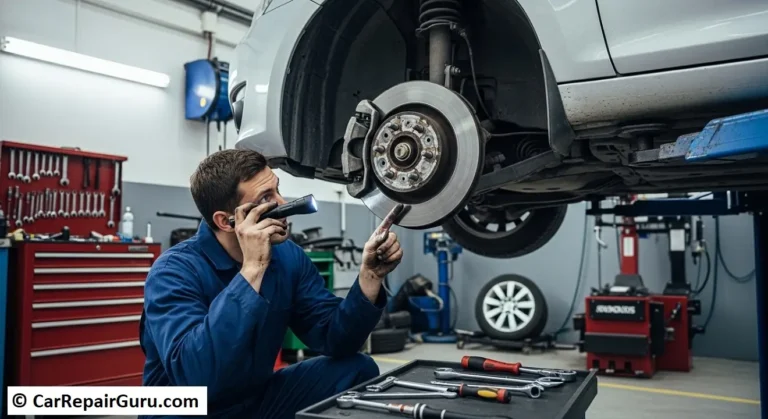
- Schedule a Diagnostic Appointment Immediately: Take your car to a certified mechanic or dealership. They have specialized tools that can read the specific fault codes from the SRS control module, pinpointing the exact problem. This is the first step in any proper airbag inspection.
Proactive Steps & Best Practices for Airbag System Health
While you can’t service the airbags yourself, you can take steps to protect the system:
- Perform Regular Visual Inspections: Look at the airbag covers on your steering wheel and dashboard. They should be clean, flush, and free of cracks or damage. Never place phone mounts, stickers, or any other objects over these panels.
- Avoid DIY Modifications and Water Damage: Be careful with aftermarket seat covers that could obstruct side airbags. Never install an aftermarket steering wheel unless it’s specifically designed to work with your car’s SRS. Furthermore, water from a leak or flood can wreak havoc on the system’s sensitive electronics and wiring.
- Insist on Professional Post-Accident Inspections: After any accident, even a minor one, insist that the repair shop performs a full diagnostic scan of the SRS. An impact can easily damage a hidden sensor.
- Keep Your Car Battery Healthy: A dying or weak main car battery can sometimes cause temporary, confusing electronic glitches, including triggering the SRS light.
What Happens After Airbag Deployment? A Guide to Replacement
If you’ve been in an accident where the airbags deployed, the repair process is non-negotiable. Airbags are single-use devices.
- Why Replacement is Mandatory: It’s a matter of safety and legality. A car with deployed airbags is not roadworthy.
- What Gets Replaced: An airbag replacement is more than just swapping out the bag itself. A professional will typically need to replace:
- The deployed airbag modules.
- The SRS control module (it stores crash data and is often a one-time-use component).
- Impact sensors near the collision point.
- Seatbelt pre-tensioners, which fire alongside the airbags to tighten your belt.
- Any trim pieces (like the dashboard) that were damaged by the deployment.
- The Critical Importance of OEM Parts: This is not the place to cut corners. Insist that the repair shop uses Original Equipment Manufacturer (OEM) parts. The market is flooded with dangerous counterfeit airbags that can fail to deploy or even spray shrapnel.
Airbag Safety When Buying a Used Car
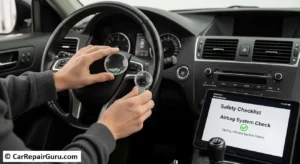
When you check the airbags on a used car, you’re looking for signs of a hidden, problematic past. Fraudulent repairs after an accident are frighteningly common.
Here’s your pre-purchase checklist:
- Watch the SRS Light: When you start the car, make sure the light comes on for a few seconds and then turns off. If it stays on, there’s a problem. If it never comes on, a shady seller might have removed the bulb—walk away.
- Inspect the Airbag Covers: Do the colors and textures of the airbag panels on the steering wheel and dashboard match their surroundings perfectly? A slight mismatch can be a sign of a cheap, non-OEM replacement cover.
- Get a Vehicle History Report: Services like CarFax can reveal if the car has been in a reported accident where airbag deployment is likely.
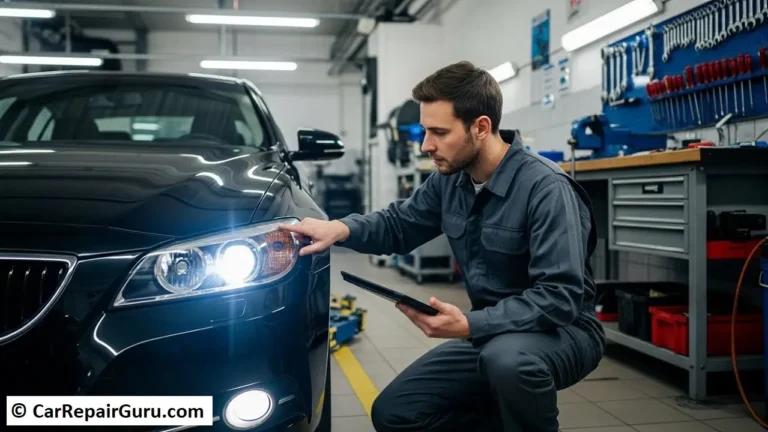
- Invest in a Pre-Purchase Inspection (PPI): This is the golden rule. A trusted mechanic can scan the SRS for any stored fault codes that could reveal past problems and visually inspect for signs of a shoddy repair.
Your Airbags are a Lifesaver – Prioritize Their Health
Your car’s airbag system is one of the most brilliant safety innovations in automotive history. While it doesn’t ask for much, it demands your attention.
Remember the key takeaways:
- Airbag maintenance is about awareness and vigilance, not hands-on work.
- The SRS/airbag warning light is a non-negotiable signal to get professional help.
- Always use certified professionals for diagnostics and especially for post-deployment replacement.
If your airbag light is on, or if you’re evaluating a used car, don’t leave your safety to chance. Find a trusted, certified mechanic today to diagnose the system and ensure you and your passengers are protected on every journey.
Frequently Asked Questions (FAQ)
Do car airbags expire?
For most modern cars (built since the late 1990s), the answer is no. They are designed to last the lifetime of the vehicle. Some much older vehicles (from the ’80s and early ’90s) had a recommended 10-15 year replacement interval, but this is no longer the standard. The system’s electronic components can fail over time, but this will be indicated by the warning light.
How long do airbags last?
As mentioned above, they are engineered to last as long as the car itself. The real question isn’t about the airbag’s age, but the health of the entire SRS network, which constantly monitors itself for faults.
How much does it cost to fix an airbag light?
This varies wildly. A diagnostic check to read the code typically costs between $100 and $200. The fix could be as simple as reconnecting a loose wire, a $150 sensor replacement, or as expensive as a $1,000+ control module.
Can I maintain or replace my airbags myself?
Absolutely not. This is a job for trained professionals only. Airbags contain an explosive charge and are part of a highly complex electronic system. Attempting a DIY repair is incredibly dangerous—you risk accidental deployment or, worse, installing it incorrectly, ensuring it will fail when you need it most.
About the Author