Marco
Marco 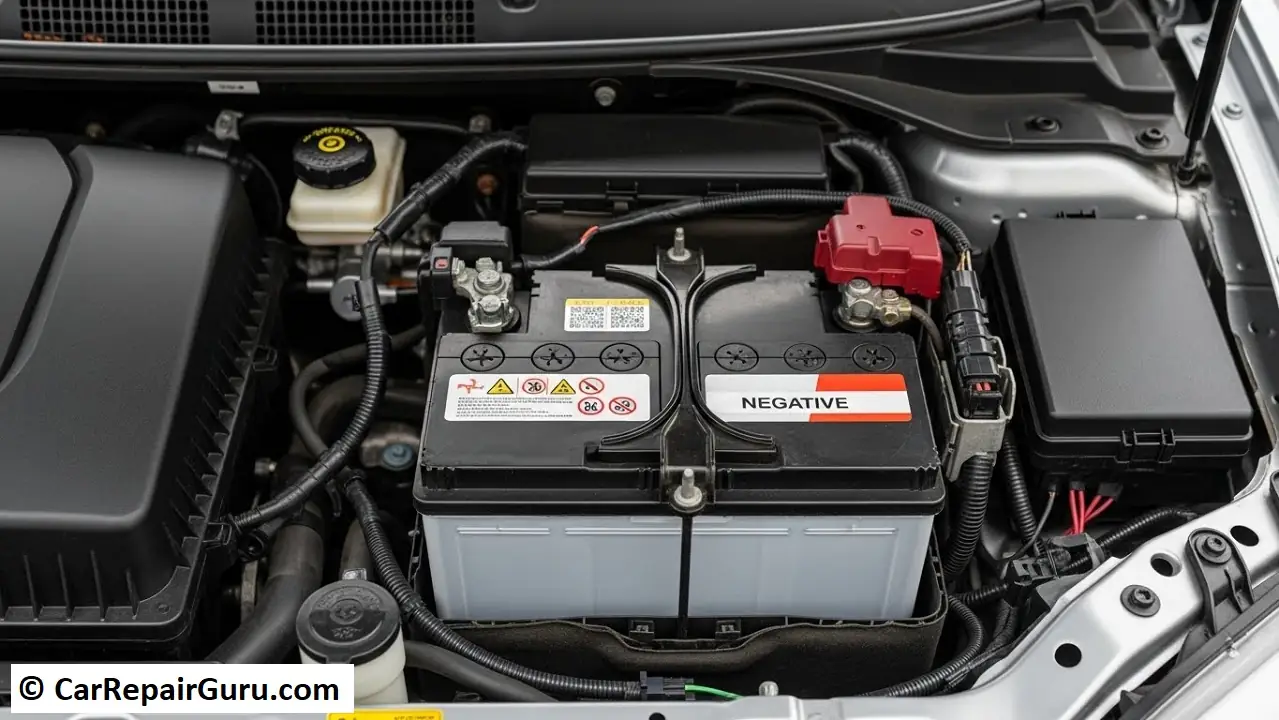
We’ve all been there. You’re running late, you jump in your car, turn the key, and all you get is that dreaded, soul-crushing “click-click-click.” A dead battery is more than an inconvenience; it can ruin your day. But what if you could significantly reduce the chances of this ever happening?
The good news is, you can. Proper car battery maintenance is one of the simplest and most effective ways to save money, avoid breakdowns, and ensure your car starts reliably every time. It doesn’t require a mechanic’s license or expensive tools—just a little bit of knowledge and a few minutes of your time every few months.
In this guide, we’ll walk you through everything. You’ll learn how to inspect your battery, how to safely clean away damaging corrosion, and even how to test a car battery yourself. These are the essential skills that will help you extend car battery life and keep you on the road.
- Don’t Get Stranded – Why Your Car Battery Deserves Your Attention
- The Role of a Car Battery
- Common Causes of Battery Failure
- Your Car Battery Maintenance Toolkit
- Your 5-Step DIY Car Battery Maintenance Check
- Step 1 – Safety First! Before You Begin
- Step 2 – Visual Inspection – What to Look For
- Step 3 – How to Clean Car Battery Terminals
- Step 4 – Testing Your Battery’s Health with a Multimeter
- Step 5 – Secure the Battery and Check Fluid Levels (If Applicable)
- Pro Tips – How to Make Your Car Battery Last Longer
- Recognizing the Warning Signs of a Failing Battery
- Take Control of Your Car’s Health
- Car Battery Maintenance FAQs
- How often should I check my car battery?
- What causes car battery corrosion?
- Can I just use Coke to clean battery terminals?
- How long does a typical car battery last?
Don’t Get Stranded – Why Your Car Battery Deserves Your Attention
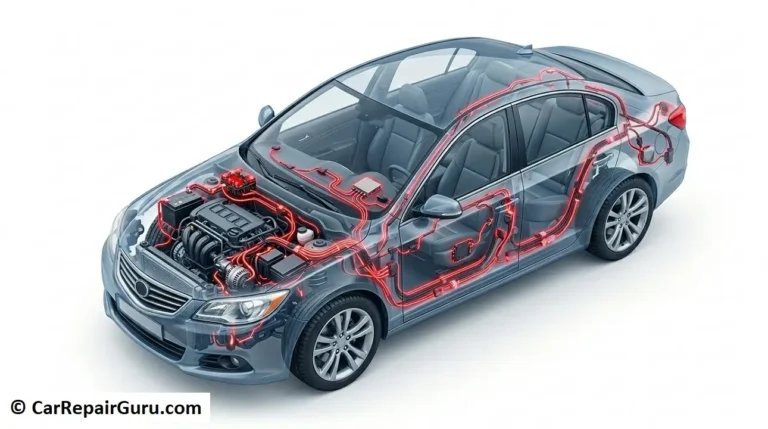
Think of your car battery as the heart of your vehicle’s electrical system. It doesn’t just start the engine; it provides the initial jolt of power for your lights, radio, computer, and all the other electronics before the alternator takes over. Without a healthy battery, your car is just a very heavy piece of driveway art.
The Role of a Car Battery
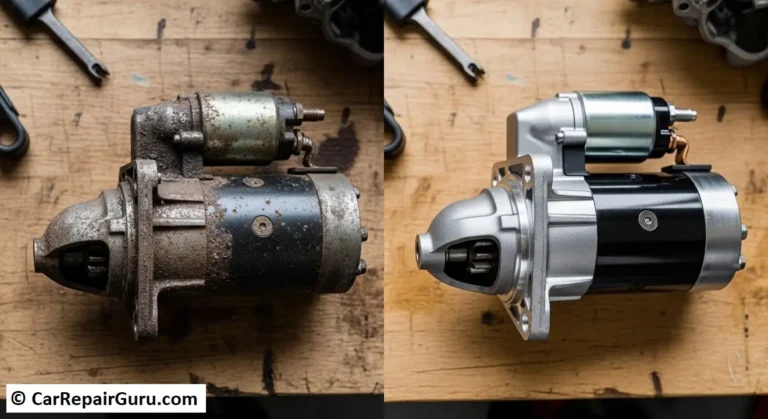
Every time you turn the key, the battery delivers a powerful surge of electricity to the starter motor, which cranks the engine to life. Once the engine is running, the alternator recharges the battery and powers the electrical system. This constant cycle of discharging and recharging is what makes regular maintenance so critical.
Common Causes of Battery Failure
Batteries don’t last forever, but many fail prematurely. Here’s why:
- Sulfation: When a battery is left in a discharged state, lead sulfate crystals build up on the battery plates, hindering its ability to hold a charge.
- Heat: Excessive heat can cause the battery’s internal fluids to evaporate, leading to internal damage and a significantly shorter lifespan.
- Vibration: Constant shaking from a loose battery mount can damage the delicate internal plates.
- Short Trips: Frequent short drives don’t give the alternator enough time to fully recharge the battery, slowly draining its power over time.
- Age: On average, a car battery lasts 3-5 years. After that, its ability to hold a charge naturally diminishes.
Your Car Battery Maintenance Toolkit
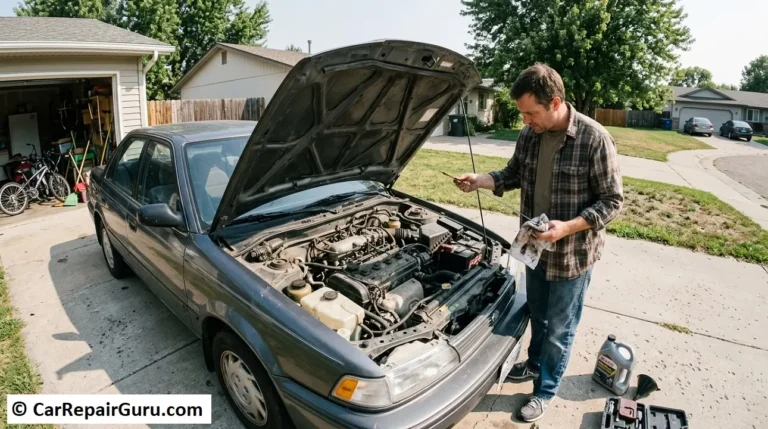
Before you pop the hood, let’s get your gear in order. Performing a DIY car battery check is easy, but having the right tools makes it faster and safer.
- Safety Gear:
- Safety Glasses: A non-negotiable must-have. Protects your eyes from acid splash and debris.
- Acid-Resistant Gloves: Nitrile or rubber gloves will keep corrosive materials off your skin.
- Cleaning Tools:
- Battery Terminal Brush: A cheap but invaluable tool designed to clean both the posts and the terminal clamps.
- Baking Soda & Water: A simple, powerful solution for neutralizing battery acid.
- Clean Rags or Paper Towels: For wiping everything down.
- Testing Tools:
- Digital Multimeter: The best way to get an accurate reading of your car battery voltage.
- Mechanical Tools:
- Wrenches or Socket Set: To loosen and tighten the terminal clamps and hold-down bracket.
Your 5-Step DIY Car Battery Maintenance Check
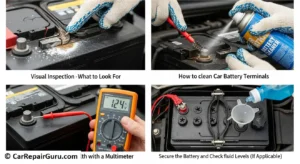
Ready to get started? This step-by-step checklist is your roadmap to a healthier battery. Set aside about 20-30 minutes for your first time.
Step 1 – Safety First! Before You Begin
Always prioritize safety. Work in a well-ventilated area (like an open garage or driveway) and make sure your engine is completely off. Keep sparks and open flames away from the battery, as it can release flammable hydrogen gas.
Step 2 – Visual Inspection – What to Look For
Your eyes are your first and best tool. Look for:
- Cracked or Bulging Case: A bulging or swollen case is a major red flag, often caused by overheating or freezing. If you see this, it’s a clear indicator of when to replace a car battery.
- Frayed or Damaged Cables: Check the cables connected to the terminals for any signs of wear and tear.
- Heavy Corrosion: Look for the white, green, or bluish powder build-up around the terminals. This is car battery corrosion, and it needs to be cleaned.
Step 3 – How to Clean Car Battery Terminals
That fuzzy stuff around your battery posts isn’t just ugly; it’s an insulator that can prevent your car from starting. Cleaning it is one of the most important car battery maintenance tips.
- Disconnect the Battery: Using a wrench, always disconnect the negative (-) terminal first. It’s usually black or marked with “NEG.” Tuck the cable aside so it can’t accidentally touch the post. Then, disconnect the positive (+) terminal (usually red or marked “POS”).
- Make Your Cleaning Solution: Mix one tablespoon of baking soda into one cup of warm water to create a paste.
- Scrub Away the Corrosion: Apply the paste to the corroded terminals and posts. You’ll see it fizz and bubble as it neutralizes the acid. Use your battery terminal brush to scrub both the posts and the inside of the terminal clamps until they are shiny.
- Rinse and Dry: Carefully wipe away the residue with a damp rag, then dry everything thoroughly with a clean, dry cloth.
- Reconnect the Battery: Now, reconnect the positive (+) terminal first, followed by the negative (-) terminal. Tighten them so they are snug but don’t overtighten.
- Protect from Future Corrosion: Apply a thin layer of dielectric grease or a specialized battery terminal protector spray to the posts. This will create a barrier against moisture and future build-up.
Step 4 – Testing Your Battery’s Health with a Multimeter
A visual check is good, but a voltage test tells you the real story. This simple test reveals your battery’s state of charge.
- Set your digital multimeter to the 20V setting in the DC Volts section (V—).
- With the engine off, touch the red probe to the positive (+) terminal and the black probe to the negative (-) terminal.
- Read the voltage on the screen.
Car Battery Voltage Chart (Engine Off)
- 12.6V or higher: Your battery is at or near 100% charge. It’s healthy.
- 12.4V – 12.5V: Good charge (75-90%).
- 12.2V – 12.3V: Partially discharged (50-75%).
- 12.1V or lower: Significantly discharged. Your battery needs to be slow-charged and tested to see if it can still hold a charge.
Step 5 – Secure the Battery and Check Fluid Levels (If Applicable)
Make sure the battery hold-down clamp is tight. A loose battery can vibrate excessively, leading to internal damage and a shorter life. Wiggle the battery; if it moves, tighten the clamp.
Most modern batteries are sealed and “maintenance-free.” However, if yours has removable caps, put on your safety gear and carefully pry them open. Check that the electrolyte fluid covers the lead plates inside. If not, top it off only with distilled water.
Pro Tips – How to Make Your Car Battery Last Longer
Maintenance is key, but good habits can dramatically extend car battery life.
- Limit Short Trips: Driving for less than 15-20 minutes doesn’t give the alternator enough time to fully recharge the battery. Try to combine errands into one longer trip.
- Keep It Out of Extreme Temperatures: If possible, park in a garage to protect the battery from extreme heat in the summer and freezing cold in the winter.
- Turn Off Electronics: Before you shut off the engine, make sure your headlights, radio, and interior lights are off to prevent unnecessary drain.
- Drive Your Car Regularly: Cars aren’t meant to sit. If you don’t drive daily, try to take it for a 30-minute drive at least once a week to keep the battery charged.
- Use a Battery Tender: For long-term storage, a battery tender (or trickle charger) will maintain the optimal charge without overcharging it.
Recognizing the Warning Signs of a Failing Battery
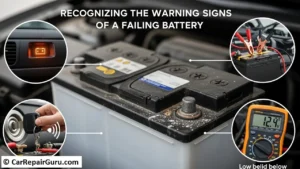
Your car will usually give you hints before the battery completely dies. Be on the lookout for these signs of a dying car battery:
- Slow Engine Crank: The engine turns over sluggishly, sounding like it’s struggling to start.
- Dim Headlights: Your headlights and interior lights appear weaker than usual, especially when the engine is off.
- Battery Warning Light: The battery-shaped light on your dashboard is illuminated.
- Clicking Sound When Turning the Key: This means the battery has enough power to activate the starter solenoid, but not enough to turn the engine.
- An Old Battery: If your battery is over three years old, it’s a good idea to have it professionally tested annually.
- A Rotten Egg Smell: This is a sign of a leaking battery venting sulfuric acid gas. It’s a serious issue that requires immediate attention.
Take Control of Your Car’s Health
Your car’s battery is a hardworking component that is too often ignored—until it fails. By following this guide, you now have the knowledge and confidence to perform your own DIY car battery check. Regular inspection, cleaning, and testing are the three pillars of a long and reliable battery life.
Spending just a few minutes every few months on these simple steps can save you from the stress of a breakdown, the cost of a tow truck, and the price of a premature replacement battery. So, schedule 15 minutes this weekend, pop the hood, and give your battery the attention it deserves
Car Battery Maintenance FAQs
How often should I check my car battery?
A quick visual inspection for corrosion or leaks every three months is a great habit. A full clean and voltage test, like the one outlined here, should be done every six months or with every oil change.
What causes car battery corrosion?
It’s typically caused by hydrogen gas being released from the battery acid. This gas mixes with other elements in the atmosphere and condenses on the metal terminals, creating the crystalline build-up.
Can I just use Coke to clean battery terminals?
While the mild acid in soda can dissolve some corrosion, it’s not the best solution. It leaves behind a sticky, sugary residue that can attract dirt. The baking soda and water method is far more effective because it actively neutralizes the acid and leaves no harmful residue.
How long does a typical car battery last?
The average car battery lifespan is 3 to 5 years. Factors like your climate (extreme heat is the biggest killer), driving habits, and how well you perform car battery maintenance all play a significant role.
About the Author