Marco Riley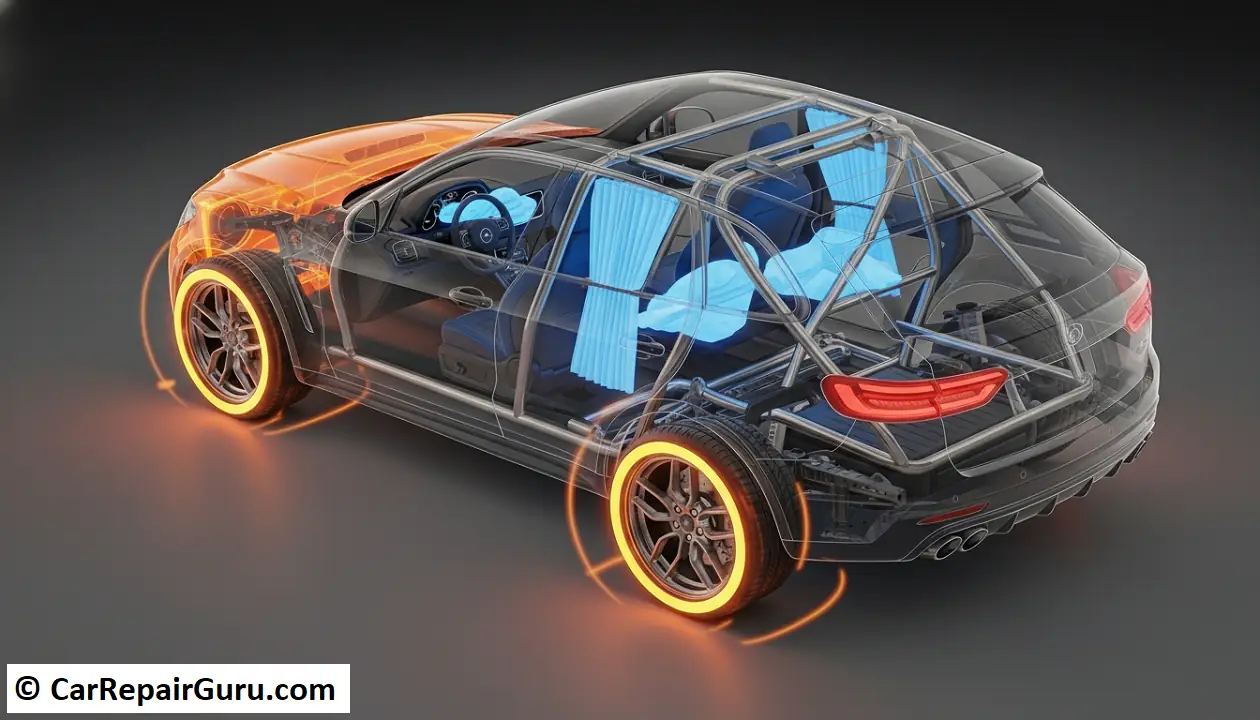
Your car is so much more than a machine that gets you from A to B. It’s your family shuttle, your commuter pod, your adventure vehicle. In many ways, it’s a protective shield for you and the people you care about most. But that shield is only as strong as its weakest link.
Over time, the very features designed to protect you—the brakes, the tires, the advanced sensors—can wear down, become misaligned, or even fail silently. Ignoring them isn’t just a risk; it’s a gamble. The good news? Proactive car care is the single best way to stay in control and drive with confidence.
This isn’t another complicated technical manual. This is your straightforward, comprehensive guide and checklist for maintaining every crucial safety feature in your vehicle. Let’s get started.
- The Foundation of Safety – Brakes and Tires
- Your Complete Brake System Check
- Brake Fluid – The System’s Lifeblood
- Brake Pads and Rotors – The Gripping Force
- Don’t Ignore the Warning Lights (ABS & Brake Light)
- Tire Safety – Your Car’s Only Connection to the Road
- Tire Pressure and Your TPMS
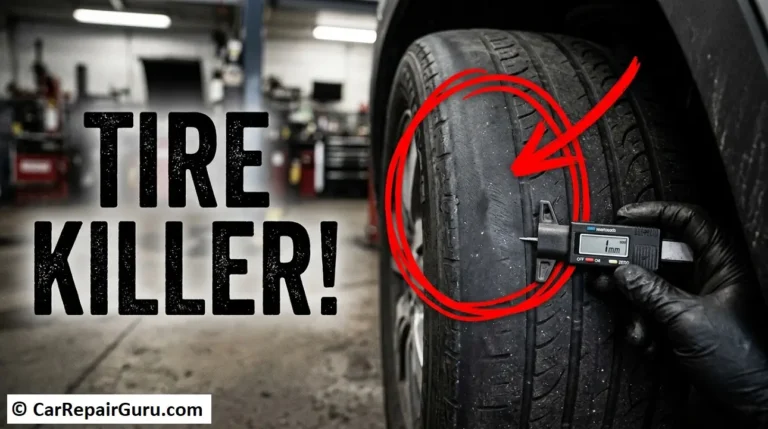
- Tread Depth – The Key to Grip
- Tire Rotation and Alignment
- See and Be Seen – Maintaining Visibility Systems
- Lights, Signals, and Horn
- Windshield and Wipers for a Clear View
- Modern Guardians – Maintaining Advanced Safety Features (ADAS)
- How to Maintain Your ADAS
- In-Cabin Protection – Passive Safety Systems
- Airbags (SRS – Supplemental Restraint System)
- Seatbelts and Head Restraints
- Your Car Safety Maintenance Schedule (A Simple Checklist)
- Monthly Checks (5-Minute Inspection)
- Every 6 Months / Every Oil Change
- Annually / As Needed
- Final Thoughts – Drive with Confidence
- FAQ – Common Car Safety Questions
- The Most Important Car Safety Check
- Safely Cleaning Your Car’s ADAS Sensors
- Is a Cracked Windshield a Major Safety Risk?
- Why Your Turn Signal is Blinking Fast
- What a Spongy Brake Pedal Means
The Foundation of Safety – Brakes and Tires
Before we talk about fancy sensors or airbags, let’s focus on the two systems that actively prevent accidents from happening in the first place. Your brakes and tires are the bedrock of vehicle safety.
Your Complete Brake System Check
When you press that pedal, you expect your car to stop. Every single time. A healthy brake system is a complex partnership of parts, and each one needs a little attention.
Brake Fluid – The System’s Lifeblood
Think of brake fluid as the messenger. When you press the pedal, this hydraulic fluid transmits that force to the brakes at each wheel. If it’s low or contaminated, the message gets weak.
- Why it’s crucial: Old brake fluid absorbs moisture from the air, which can cause internal corrosion and reduce its boiling point. In a hard-braking situation, this can lead to a “spongy” or completely unresponsive pedal.
- How to check: Pop the hood and locate the brake fluid reservoir (it’s usually a small, semi-transparent plastic container in the driver’s side corner of the engine bay). The fluid should be between the ‘MIN’ and ‘MAX’ lines.
- Color is key: Fresh brake fluid is typically a clear, light amber color. If it looks dark, murky, or like iced tea, it’s absorbed moisture and contaminants. That’s a clear sign you need to replace brake fluid immediately.
Brake Pads and Rotors – The Gripping Force
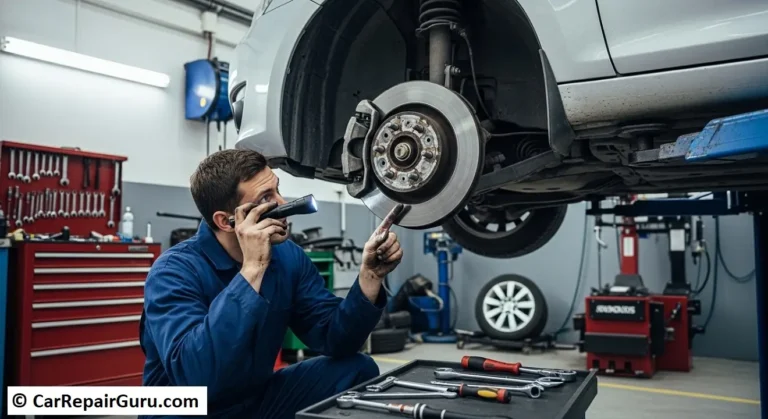
These are the components that do the physical work of stopping your car. They are designed to wear out, so regular inspection is non-negotiable.
- Listen for trouble: The most common sign of worn brake pads is a high-pitched squealing or scraping sound when you apply the brakes. If you hear a deep, metallic grinding, it’s a critical warning—it means you’ve worn completely through the pads and are damaging the rotors.
- Feel for issues: Does your car pull to one side when you brake? Does the brake pedal feel spongy, soft, or vibrate? These are all signs that your brake system needs immediate professional attention.
Don’t Ignore the Warning Lights (ABS & Brake Light)
That little light on your dashboard is a direct message from your car’s brain.
- ABS Light: The Anti-lock Braking System (ABS) prevents your wheels from locking up during a hard stop, allowing you to maintain steering control. If this light is on, your primary brakes will likely still work, but the critical anti-lock safety feature is disabled.
- Brake Light: This can indicate anything from the parking brake being engaged to critically low brake fluid. Never, ever ignore it.
Tire Safety – Your Car’s Only Connection to the Road
It’s easy to forget, but your entire vehicle—all two tons of it—is connected to the road by just four patches of rubber, each about the size of your hand. That’s why tire safety tips are so essential.
Tire Pressure and Your TPMS
Proper inflation is the single most important part of tire maintenance.
- Why it matters: Underinflated tires overheat, wear out unevenly, and drastically increase your stopping distance. Overinflated tires reduce traction and lead to a harsh, bumpy ride. Both will hurt your fuel economy.
- The TPMS light: That little icon that looks like a flat tire with an exclamation mark is your Tire Pressure Monitoring System (TPMS). When it lights up, it means one or more of your tires is significantly underinflated. Don’t just dismiss it—pull over safely and check your tires.
- Check it manually: Your TPMS is a warning system, not a replacement for a good old-fashioned tire gauge. Check your tire pressure at least once a month when the tires are cold (before you’ve driven). The correct pressure is listed on a sticker inside your driver’s side door jamb, not on the tire itself.
Tread Depth – The Key to Grip
Your tire’s tread is designed to channel water away from the tire, keeping that rubber patch in contact with the road. As it wears down, its ability to prevent hydroplaning diminishes.
- The Penny Test: Take a penny and place it upside down in one of your tire’s tread grooves. If you can see the top of Abraham Lincoln’s head, your tread is worn down to a dangerous level (below 2/32″) and it’s time for new tires. For better performance in rain and snow, consider replacing them when they reach 4/32″.
- Uneven wear: While you’re down there, look at how the tread is wearing. Wear on the edges points to underinflation, wear in the center suggests overinflation, and choppy wear patterns can signal an alignment issue.
Tire Rotation and Alignment
- Rotation: Your front tires typically wear faster than your rear tires. Regularly rotating them (e.g., every 5,000-7,000 miles) ensures they wear down evenly, extending their life and saving you money.
- Alignment: If you hit a pothole or curb, it can knock your suspension out of alignment. This causes the car to “pull” to one side and leads to rapid, uneven tire wear. If you notice this, get a wheel alignment check.
See and Be Seen – Maintaining Visibility Systems
Safe driving depends on two things: your ability to see the road and other drivers’ ability to see you.
Lights, Signals, and Horn
This is a simple check you can do in two minutes.
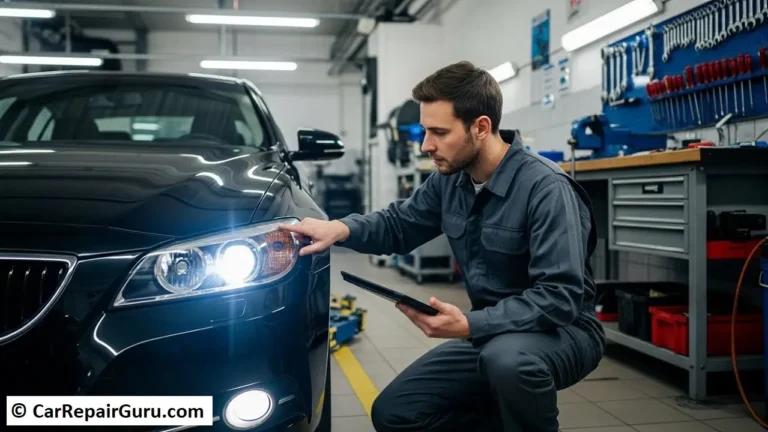
- Headlights, Taillights, and Brake Lights: With your car running, turn on your headlights. Do a quick walk-around. Are both on? Are they bright? Have a friend step on the brake pedal—do all three brake lights illuminate?
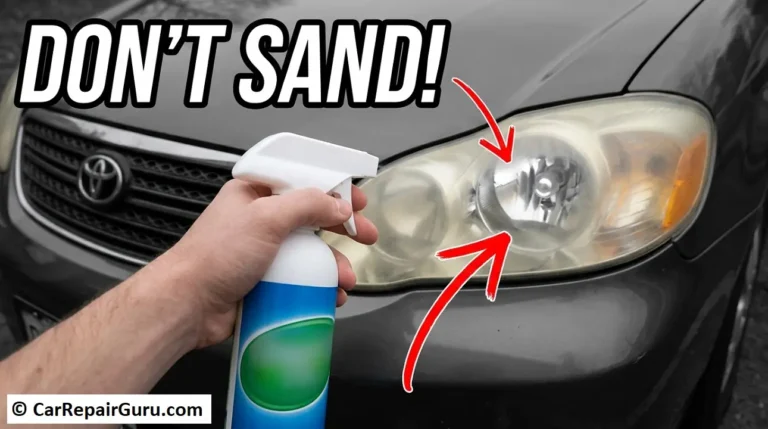
- Cloudy Headlights: Over time, plastic headlight lenses can become yellow and hazy, severely reducing light output. Use a headlight restoration kit or have them professionally cleaned to restore your nighttime visibility.
- Turn Signals & Horn: Test your left and right signals, and your hazard lights. A signal that blinks much faster than usual is a tell-tale sign of a burnt-out bulb. And finally, give the horn a quick tap. You’ll be glad it works when you need it.
Windshield and Wipers for a Clear View
Your view of the road is everything.
- Windshield Integrity: Small chips and cracks can quickly spread, compromising the structural integrity of the windshield (which is a key part of your car’s safety cage) and obstructing your vision. Get small chips repaired immediately before they become a costly replacement.
- Wiper Blade Health: Your wipers live a tough life. Sun, ice, and road grime take their toll. If they are streaking, skipping, or chattering across the glass, it’s time to change wiper blades immediately. A good rule of thumb is to replace them every 6 to 12 months.
- Washer Fluid: Don’t get caught on a dusty road or behind a mud-splattering truck with an empty washer fluid reservoir. Keep it topped up for a clear view on demand.
Modern Guardians – Maintaining Advanced Safety Features (ADAS)
Most new cars come equipped with a suite of high-tech safety features called Advanced Driver-Assistance Systems (ADAS). These are the systems behind features like blind-spot monitoring, lane-keeping assist, and automatic emergency braking. They rely on a network of sensors and cameras to “see” the world around your car.
How to Maintain Your ADAS
For the most part, ADAS maintenance is simple, but it’s critically important.
- Keep Sensors and Cameras Clean: This is the #1 thing you can do yourself. These sensors are your car’s eyes, and if they’re covered in dirt, snow, or mud, they can’t see. Gently wipe them down with a soft cloth. You can find them in places like:
- The vehicle’s front grille (often behind the emblem)
- The front and rear bumpers
- Your side mirrors
- At the top of your windshield, near the rearview mirror
- The Importance of ADAS Calibration: If you get into a collision, have your windshield replaced, or even get a wheel alignment, these sensitive cameras and sensors can be knocked out of their precise positions. They must be professionally recalibrated to function correctly. An uncalibrated system might not detect an obstacle or might brake unnecessarily. This is always a job for a qualified technician with the right equipment.
In-Cabin Protection – Passive Safety Systems
These are the unsung heroes that protect you during a collision. You hope you never need them, but you must be certain they’ll work if you do.
Airbags (SRS – Supplemental Restraint System)
- The SRS Warning Light: If you see a light on your dash that looks like a person with a circle in front of them, that’s your airbag or SRS light. It means the system has detected a fault. This is not a suggestion. It means your airbags may not deploy in an accident. Get your vehicle serviced by a professional immediately.
Seatbelts and Head Restraints
- Seatbelt Check: Give each seatbelt a visual inspection. Look for any fraying, cuts, or wear. Pull the belt out quickly to ensure the locking mechanism engages properly. Make sure it retracts smoothly and latches securely.
- Head Restraint Position: This is a key defense against whiplash. Adjust your head restraint so the top of it is level with the top of your head, and it’s as close to the back of your head as is comfortably possible.
Your Car Safety Maintenance Schedule (A Simple Checklist)
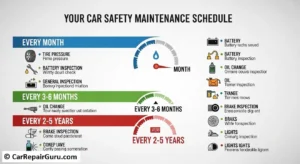
Feeling overwhelmed? Don’t be. Here’s how to break it down into a simple, repeatable routine.
Monthly Checks (5-Minute Inspection)
- Check tire pressure with a gauge.
- Top up windshield washer fluid.
- Perform a quick walk-around to check all exterior lights.
- Gently clean all ADAS sensors and cameras.
Every 6 Months / Every Oil Change
- Check brake fluid level and color.
- Test the horn.
- Inspect wiper blades for cracks and wear.
- Rotate your tires.
Annually / As Needed
- Get a professional brake inspection.
- Have your wheel alignment checked, especially after hitting a bad pothole.
- Replace wiper blades (or sooner if needed).
- Address any and all dashboard warning lights immediately.
Final Thoughts – Drive with Confidence
Maintaining your car’s safety features isn’t just another chore on a long to-do list. It’s an active investment in your well-being, your family’s security, and your peace of mind on the road. By paying attention to the fundamentals—your brakes, tires, lights, and modern safety systems— you are taking control. A few minutes of proactive care each month can make all the difference when seconds count.
Don’t leave your safety to chance. If you’re unsure about any of the checks listed above or a warning light has appeared on your dash, schedule a comprehensive vehicle safety inspection with our certified technicians today. We’re here to help you drive with confidence.
FAQ – Common Car Safety Questions
The Most Important Car Safety Check
Regularly checking your tire pressure and tread depth is the most critical. Your tires are your car’s only connection to the road, directly impacting braking, handling, and overall control.
Safely Cleaning Your Car’s ADAS Sensors
Yes, you can and should. Gently wipe cameras and sensors on your grille, bumpers, and windshield with a soft microfiber cloth to ensure your advanced safety systems function properly.
Is a Cracked Windshield a Major Safety Risk?
Absolutely. The windshield provides crucial structural support to the car’s roof and helps airbags deploy correctly. A small crack can seriously compromise your vehicle’s integrity in a crash.
Why Your Turn Signal is Blinking Fast
A rapidly blinking turn signal almost always indicates a burnt-out light bulb on that side of the vehicle. Check both the front and rear turn signal bulbs to find and replace the one that’s out.
What a Spongy Brake Pedal Means
A soft or “spongy” brake pedal is a serious symptom, typically caused by air in the hydraulic lines or old, contaminated brake fluid. This condition requires immediate professional inspection.
About the Author