Marco
Marco 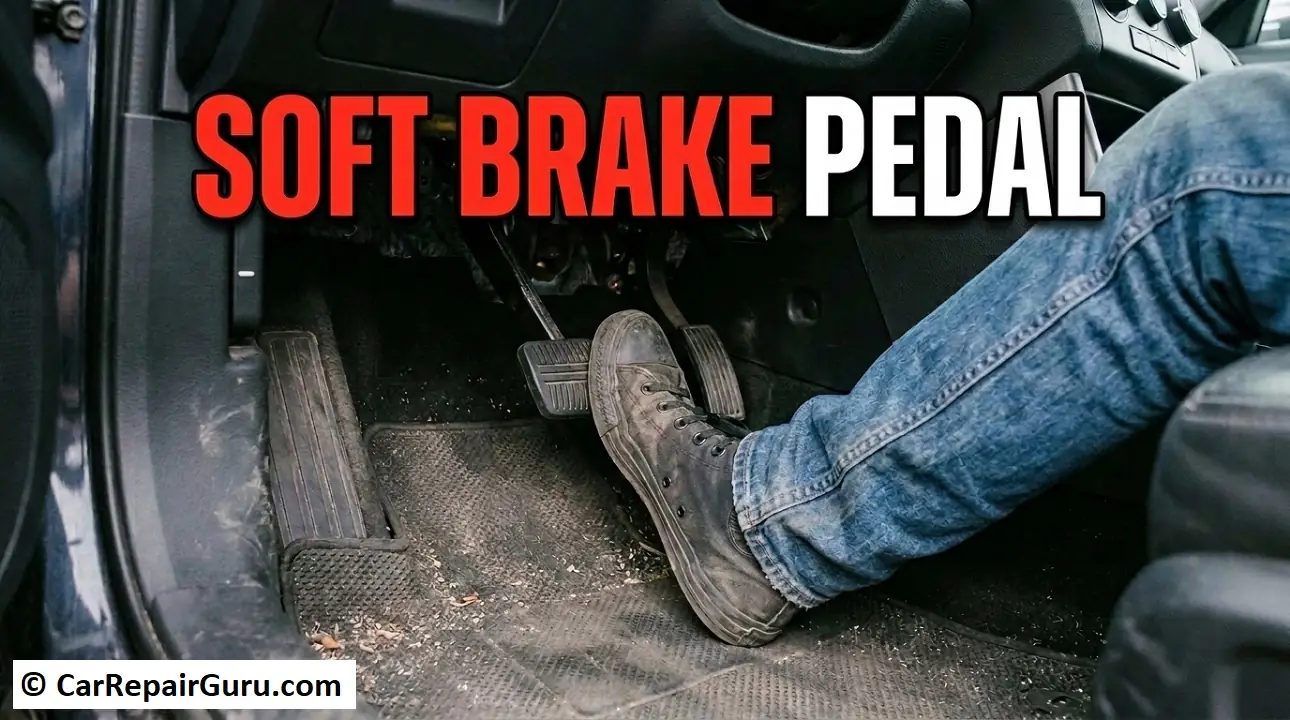
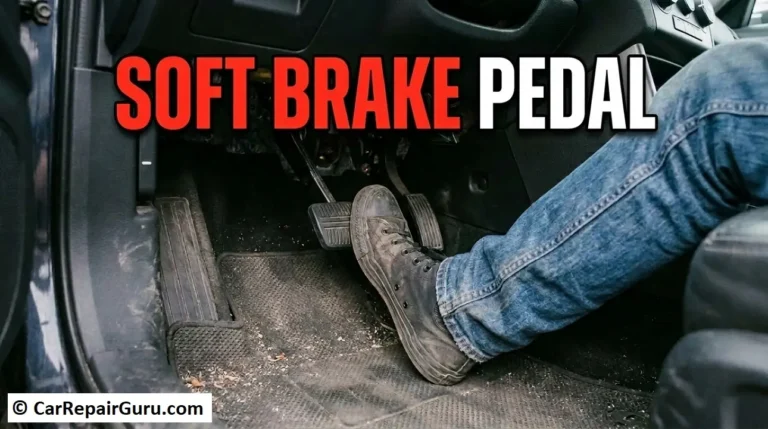
A brake pedal that suddenly feels soft, spongy, or lower than usual is not something to ignore. You may notice that the pedal travels farther before the brakes respond, feels springy under your foot, or slowly sinks while you are holding it down. These changes can indicate a problem with your vehicle’s braking system.
If your brake pedal feels unusually soft or your braking performance has changed, stop driving as soon as it is safe to do so and arrange a professional inspection or towing. Do not rely on pumping the pedal to restore braking or attempt to drive to a repair shop with uncertain stopping power.
Several problems can cause a soft brake pedal, including air in the brake lines, a hydraulic fluid leak, overheated brake fluid, or a failing master cylinder. Because these symptoms can overlap, the pedal’s feel alone cannot identify the faulty component.
Understanding the warning signs, knowing what you can safely observe, and recognizing when professional diagnosis is necessary can help you avoid unnecessary repairs and get the braking system working correctly again.
- Is It Safe to Drive With a Soft Brake Pedal?
- What Does a Soft Brake Pedal Feel Like?
- Common Causes of a Soft Brake Pedal
- 1. Air in the Brake Lines
- 2. Brake Fluid Problems or Overheating
- 3. A Failing Master Cylinder
- 4. Leaking or Damaged Brake Lines and Hoses
- 5. Other Brake-System Problems
- What You Can Safely Check
- Check the Brake Warning Lights
- Look for an Obvious Fluid Leak
- Note When the Pedal Became Soft
- How a Mechanic Diagnoses a Soft Brake Pedal
- Inspecting the Hydraulic System for Leaks
- Checking the Master Cylinder and Brake Fluid
- Determining Whether the ABS System Needs Attention
- How a Soft Brake Pedal Is Fixed
- Bleeding the Brakes When Air Is Present
- Repairing Leaks or Replacing Faulty Components
- Replacing Brake Fluid When Necessary
- Addressing ABS-Related Problems
- How to Help Prevent Brake Problems
- What to Do Next
- Frequently Asked Questions
- Can I drive with a soft brake pedal?
- Why does my brake pedal go to the floor?
- Why is my brake pedal soft after changing brake pads?
- Can air in brake lines go away on its own?
- How much does it cost to fix a soft brake pedal?
- Can old brake fluid cause a spongy pedal?
- Does a soft brake pedal always mean the master cylinder is bad?
Is It Safe to Drive With a Soft Brake Pedal?
No. A brake pedal that feels noticeably softer than normal, travels unusually far, or sinks toward the floor can indicate a serious braking problem. The vehicle may take longer to stop, respond unpredictably, or lose braking ability.
If the pedal becomes soft while driving:
- Slow down carefully and move toward a safe stopping place if you can do so without creating additional danger.
- Avoid sudden maneuvers unless necessary to prevent a collision.
- Once stopped, do not continue driving to see whether the brakes improve.
- Arrange professional inspection and towing if braking performance is uncertain.
If the pedal sinks toward the floor, the brake warning light appears alongside abnormal pedal behavior, or you notice signs of a fluid leak, treat the situation as urgent.
A soft pedal does not automatically mean that the brakes have completely failed. However, there is no reliable way to establish that the vehicle is safe to drive based on pedal feel alone.
What Does a Soft Brake Pedal Feel Like?
Drivers often use the words soft, spongy, and sinking interchangeably, but they can describe different symptoms. Recognizing the difference helps you explain the problem to a mechanic.
| Symptom | What you may notice | What it could indicate |
|---|---|---|
| Spongy or springy pedal | The pedal feels compressible rather than firm | Air in the hydraulic system or another hydraulic fault |
| Excessive pedal travel | The pedal moves farther than usual before braking responds | Air, a hydraulic problem, or excessive movement at a wheel brake |
| Pedal slowly sinking | The pedal continues moving downward while pressure is held | Internal master cylinder bypass or another pressure-related fault |
| Sudden change in pedal feel | Braking feels different without warning | A developing hydraulic or mechanical problem |
| Soft pedal after heavy braking | The pedal becomes less effective as the brakes heat up | Possible brake fluid overheating or brake fade |
These symptoms are clues, not definitive diagnoses. A qualified technician needs to inspect the braking system to determine the actual cause.
Common Causes of a Soft Brake Pedal
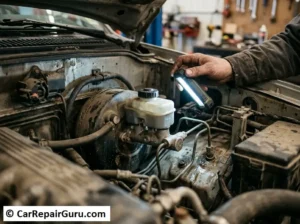
The most effective repair depends on identifying the underlying fault. Replacing brake pads, changing fluid, or installing a new master cylinder without proper diagnosis may leave the problem unresolved.
1. Air in the Brake Lines
Most conventional hydraulic braking systems rely on brake fluid to transfer force from the pedal to the brakes at each wheel. Because liquid is difficult to compress under normal operating conditions, the system can build the pressure needed to apply the brakes.
Air behaves differently. It compresses when pressure is applied, which can make the pedal feel spongy and reduce the effectiveness of the hydraulic system.
Air may enter the brake lines when:
- A brake hose, caliper, or hydraulic line is opened during repairs.
- The brake fluid reservoir runs too low during servicing.
- A leak allows fluid to escape and air to enter the system.
- The brakes are not bled correctly after maintenance.
If the pedal becomes soft immediately after brake work, the repair procedure and hydraulic system should be checked.
The solution may involve bleeding the brakes using the correct procedure for the vehicle. However, bleeding alone will not solve the problem if a leak or another defective component remains.
Some vehicles also require a scan tool to activate the ABS hydraulic unit during bleeding when air has entered its internal passages.
For more information, see this guide on how to bleed your brakes.
2. Brake Fluid Problems or Overheating
Brake fluid transfers pressure through the hydraulic system and must withstand the high temperatures generated during braking.
Over time, glycol-based brake fluids such as DOT 3, DOT 4, and DOT 5.1 absorb moisture. As the moisture content increases, the fluid’s boiling point decreases.
Under heavy braking, repeated braking on long descents, or other high-temperature conditions, the fluid may overheat and form vapor bubbles. Because vapor is compressible, these bubbles can interfere with hydraulic pressure and cause the pedal to feel soft.
This problem can be especially dangerous because it may develop when the brakes are already under significant thermal stress.
Brake fluid that has deteriorated or become contaminated can also contribute to corrosion and damage inside the braking system. However, fluid color alone cannot reliably establish its moisture content or boiling point.
What should you do?
If the pedal becomes soft after heavy braking, stop in a safe location and arrange an assessment. Do not pour water onto hot brake components or open a hot brake fluid reservoir to investigate the problem.
Brake fluid replacement intervals vary by vehicle. Follow the manufacturer’s maintenance schedule and use only the specified fluid.
For further guidance, read how to replace brake fluid.
3. A Failing Master Cylinder
The master cylinder converts force from the brake pedal into hydraulic pressure. Internal seals help maintain that pressure as brake fluid moves through the braking circuits.
If these seals wear or fail, fluid can bypass them internally. The pedal may then gradually sink while you hold it down, even when there is no obvious fluid puddle beneath the vehicle.
This type of failure can be difficult to identify because internal bypass does not necessarily produce a visible external leak.
However, a sinking brake pedal does not automatically prove that the master cylinder is faulty. External leaks and other hydraulic problems can produce similar symptoms.
A qualified technician should inspect the system, check for leaks, and perform the appropriate pressure-related tests before deciding whether the master cylinder needs replacement.
If the pedal is sinking or braking performance has changed, do not continue driving while waiting for a diagnosis.
4. Leaking or Damaged Brake Lines and Hoses
Brake lines carry fluid between hydraulic components, while flexible brake hoses accommodate movement between the vehicle body, suspension, and wheels.
Corrosion, physical damage, deteriorated hoses, or loose connections can cause fluid leaks. As fluid escapes, the system may struggle to maintain the pressure required for reliable braking.
Possible warning signs include:
- A brake pedal that suddenly feels soft or travels too far.
- A brake fluid level below the specified range.
- Wet areas around a wheel, brake caliper, or hydraulic connection.
- A fluid leak beneath the vehicle.
- Reduced braking performance.
Not every leak is visible from outside the vehicle. Some occur behind components or underneath the car.
You can look for obvious signs of fluid around the parked vehicle, but do not crawl underneath a car supported only by a jack or attempt to inspect hot brake components.
If you suspect a brake fluid leak, do not drive the vehicle. Arrange professional inspection and towing as needed.
Learn more about brake line leaks, their symptoms, and repair considerations.
5. Other Brake-System Problems
Not every soft pedal is caused by air, fluid condition, or a failing master cylinder.
Depending on the vehicle, other possibilities include:
- A problem with a brake caliper or wheel cylinder.
- Excessive movement at a wheel brake.
- A faulty component within the ABS hydraulic unit.
- A problem introduced during recent brake repairs.
- A combination of faults affecting hydraulic pressure.
For example, a soft pedal that appears after replacing brake pads may be related to air entering the hydraulic system during service. It could also have another cause that needs investigation.
An ABS warning light alone does not prove that the ABS hydraulic unit is responsible for the soft pedal. The fault codes, symptoms, and physical inspection must be considered together.
For related information, see this guide to testing a car’s ABS system.
What You Can Safely Check
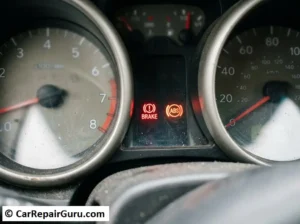
You do not need to diagnose the entire braking system yourself. A few observations can help you explain the problem to a mechanic without putting yourself at risk.
Check the Brake Warning Lights
Note whether the red brake warning light or ABS warning light is illuminated. Consult your owner’s manual to understand the specific warning for your vehicle.
A brake warning light may indicate different problems depending on the vehicle. If it appears alongside a soft pedal, reduced braking performance, or suspected fluid loss, do not ignore it.
Look for an Obvious Fluid Leak
With the vehicle parked safely, look at the ground beneath it and around the inside of the wheels for signs of fluid.
Do not touch hot brake components, reach underneath the vehicle, or remove parts to investigate.
If the brake fluid reservoir is accessible, you may visually check the level according to your owner’s manual. The level should remain within the manufacturer’s specified range.
A low level can indicate a leak or another brake-system issue. Topping up the reservoir does not repair the underlying problem, and a normal fluid level does not guarantee that the system is safe.
Note When the Pedal Became Soft
The timing of the problem can help the technician narrow down the possible causes.
Consider whether the symptom began:
- Immediately after brake pad, caliper, or brake line work.
- After a brake fluid change or bleeding procedure.
- Following heavy braking or a long downhill drive.
- Gradually over several days or weeks.
- Suddenly while driving, accompanied by reduced braking performance.
Share these details with the repair shop. Do not repeatedly press the pedal or take the vehicle onto the road to reproduce the problem.
How a Mechanic Diagnoses a Soft Brake Pedal
A proper diagnosis begins with the reported symptoms and the vehicle’s service history. The mechanic then follows the appropriate inspection and testing procedure for the specific braking system.
Inspecting the Hydraulic System for Leaks
The technician checks the brake lines, flexible hoses, calipers, wheel cylinders where fitted, connections, and master cylinder area for fluid loss or damage.
Any leak must be repaired before the braking system is returned to service. The system should then be bled and tested according to the manufacturer’s procedure when required.
Checking the Master Cylinder and Brake Fluid
The mechanic evaluates the pedal behavior and performs suitable tests to determine whether the master cylinder maintains hydraulic pressure.
The inspection may also include the brake fluid level, fluid condition, evidence of contamination, and signs of overheating.
A master cylinder should not be replaced simply because the pedal feels soft. The diagnosis should establish whether the component is faulty and rule out other likely causes.
Determining Whether the ABS System Needs Attention
Some vehicles have an ABS hydraulic control unit with internal passages and valves that can retain air during certain repair procedures.
If air enters these areas, the manufacturer’s procedure may require a diagnostic scan tool to activate the ABS pump or valves during bleeding.
The precise procedure depends on the vehicle. An ABS fault code can provide useful diagnostic information, but clearing a code alone does not fix a hydraulic problem.
How a Soft Brake Pedal Is Fixed
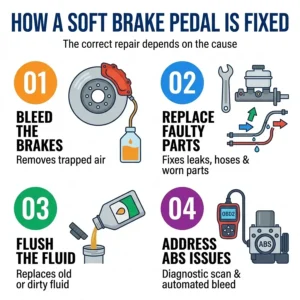
The correct repair depends on the underlying cause. A solution that works for trapped air will not repair a leaking brake line or a failing master cylinder.
Bleeding the Brakes When Air Is Present
When air is confirmed in the hydraulic system, the mechanic bleeds the brakes using the correct fluid and procedure for the vehicle.
The process may require specific wheel-by-wheel steps or an ABS service function. The fluid reservoir must be maintained at the required level throughout the procedure so that more air does not enter the system.
After bleeding, the technician checks pedal feel, verifies that the system is free of leaks, and confirms correct braking operation before returning the vehicle to service.
Repairing Leaks or Replacing Faulty Components
If a damaged line, hose, caliper, master cylinder, or other component is responsible, the faulty part must be repaired or replaced using suitable components and approved procedures.
The technician should then bleed the system when required and verify that the brakes work correctly.
Simply adding fluid or pumping the pedal does not correct an underlying leak.
Replacing Brake Fluid When Necessary
If the fluid has deteriorated or the manufacturer specifies replacement, the system may need a brake fluid change or flush.
The correct fluid specification matters. Do not introduce engine oil, power steering fluid, or other petroleum-based products into the brake fluid reservoir. These substances can damage hydraulic seals and lead to extensive brake-system repairs.
Follow the manufacturer’s recommendations for fluid replacement rather than relying on a universal mileage or time estimate.
Addressing ABS-Related Problems
If air has entered the ABS hydraulic unit or a fault has been identified in its components, additional diagnostic work may be necessary.
Depending on the vehicle, the repair may require an automated bleeding procedure, component repair, or replacement of a confirmed faulty part.
The system must be tested after the repair to verify that normal braking performance has been restored.
How to Help Prevent Brake Problems
Regular maintenance can help identify brake-system problems before they become more serious. It cannot guarantee that a component will never fail, but it can reduce the risk of avoidable faults.
- Follow the maintenance schedule. Use the brake fluid type and replacement interval specified in your owner’s manual.
- Pay attention to pedal changes. A pedal that suddenly feels softer, sinks farther than usual, or requires different pressure deserves prompt attention.
- Investigate warning lights. Do not ignore brake or ABS warnings, especially when braking behavior has changed.
- Check for visible leaks. If you notice fluid around the wheels or beneath the vehicle, arrange an inspection.
- Have brake work checked properly. After repairs involving the hydraulic system, ensure the brakes are bled when required and tested before the vehicle is driven.
- Use qualified repair procedures. ABS-equipped vehicles and some newer braking systems may require manufacturer-specific tools or service steps.
Never wait for a scheduled maintenance visit if the brake pedal feels abnormal. A new braking symptom needs attention when it appears, regardless of when the last service took place.
What to Do Next
A soft brake pedal can result from trapped air, brake fluid problems, leaks, a failing master cylinder, or another brake-system fault. The symptom alone cannot tell you which component is responsible.
If the pedal feels unusually soft, sinks toward the floor, or your braking performance has changed, do not keep driving to see whether it improves. Arrange a professional inspection and make sure the braking system is working correctly before returning the vehicle to the road.
When it comes to brakes, identifying the actual fault and correcting it properly is far more important than guessing which part needs replacing.
Frequently Asked Questions
Can I drive with a soft brake pedal?
No. If the pedal feels unusually soft, sinks toward the floor, or braking performance has changed, stop in a safe place and arrange professional inspection or towing. Do not rely on pumping the pedal to keep driving.
Why does my brake pedal go to the floor?
A pedal that travels toward the floor can indicate a serious hydraulic problem, such as fluid loss or internal master cylinder bypass. Other faults are possible, so the system needs professional diagnosis before the vehicle is driven again.
Why is my brake pedal soft after changing brake pads?
Possible causes include air entering the hydraulic system during service, a low fluid reservoir, or another problem that became apparent during the repair. Replacing brake pads alone should not normally make a correctly functioning brake pedal remain soft. Have the system inspected before driving.
Can air in brake lines go away on its own?
No. Air trapped in the hydraulic system generally needs to be removed using the correct bleeding procedure. If air entered because of a leak, that underlying problem must also be repaired.
How much does it cost to fix a soft brake pedal?
The cost depends on the cause, vehicle, parts required, and local labor rates. Bleeding the brakes may cost less than replacing a master cylinder or repairing corroded brake lines. Ask the repair shop to identify the fault and provide an estimate before authorizing repairs.
Can old brake fluid cause a spongy pedal?
Yes. Moisture absorbed by brake fluid can lower its boiling point, potentially allowing vapor bubbles to form under high-temperature conditions. However, trapped air, leaks, and other hydraulic faults can also cause a spongy pedal, so fluid condition alone should not be assumed to be the cause.
Does a soft brake pedal always mean the master cylinder is bad?
No. A failing master cylinder is one possible cause, particularly when the pedal gradually sinks under steady pressure. Air in the lines, fluid leaks, and other brake-system faults can produce similar symptoms. Proper diagnosis is necessary before replacing parts.
About the Author