Marco Riley
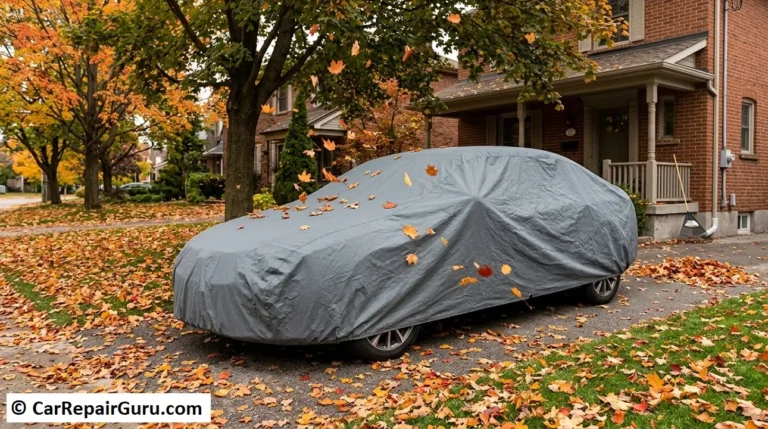
We’ve all been there – walking up to your car on a crisp autumn morning only to notice a wet, heavy sheet of maple leaves plastered across the hood. It looks harmless, but underneath those vibrant colors, a silent chemical reaction is starting to compromise your clear coat.
As an ASE-certified technician, I see the aftermath of autumn every spring: etched paint, mildewed interiors, and expensive electrical damage from clogged drains. Parking outdoors during the fall requires a tactical defensive strategy, starting with the right physical barrier. To keep your vehicle in prime condition, combining your cover with a broader fall car maintenance routine is highly recommended.
- Why Autumn is Secretly the Hardest Season on Your Car
- The Chemical Threat – Leaves, Tannins, and Acidic Sap
- The Silent Killer – Clogged Cowl Drains and Cabin Leaks
- The Anatomy of a High – Performance Autumn Car Cover
- Material Science – Synthetic Polymers vs Woven Fabrics
- Wind Security – Preventing the Sandpaper Effect
- Paint Preparation – What to Do Before Installing Your Cover
- Maintaining Your Autumn Cover – Cleaning and Sap Removal
- Quick Alternatives for the Daily Driver
- Final Thoughts
- FAQ – Common Autumn Car Cover Questions
- Will a car cover scratch my paint
- How does a breathable cover prevent mold and mildew
- Can I wash my autumn car cover in a washing machine
- How do I remove sticky tree sap from the cover
- Is a custom-fit cover worth the extra cost over a universal fit
Why Autumn is Secretly the Hardest Season on Your Car
Most drivers assume that the blistering heat of summer or the freezing salt-strewn roads of winter pose the greatest threats to their vehicles. In the garage, however, mechanics understand that autumn brings a far more deceptive combination of physical and chemical hazards.
During this transitional season, your paint is subjected to organic decay, fluctuating diurnal temperatures, and aggressive windstorms. The damage often goes unnoticed because it happens slowly, molecule by molecule, beneath what looks like a scenic layer of foliage. Understanding how to protect your car from falling leaves is essential for preventing this underlying chemical decay.
Before you touch anything, do this – examine the daily temperature swings. Autumn is characterized by warm, sunny days followed by cool, damp nights. This constant rise and fall in temperature causes your vehicle’s metal panels to expand and contract. This physical movement makes your paint clear coat highly vulnerable to any debris resting on its surface.
Crucial Paint Warning: Applying a protective cover over a vehicle that has spent hours under a shedding tree can trap acidic morning dew directly against your clear coat, accelerating paint degradation.
| Autumn Threat | Primary Vehicle Damage Type | Preventative Cover Feature Required |
|---|---|---|
| Wet Foliage Decay | Acidic Clear Coat Etching | Multi-layered Polypropylene Shell |
| Diurnal Temp Swings | Condensation and Mildew Growth | Microporous Breathable Membrane |
| High Gusts and Wind | Surface Swirls and Micro-scratches | Under-belly Gust Straps & Custom Fit |
The Chemical Threat – Leaves, Tannins, and Acidic Sap
When wet leaves gather on your hood, trunk, or roof, they do not just sit there. They begin to decompose. This decomposition process releases tannins, sap, and organic acids. Under the warmth of the autumn sun, your car’s clear coat expands, absorbing these acidic compounds.
When the temperature drops at night, the paint pores contract, locking these chemicals inside. This cyclical process leaves permanent, ghost-like leaf prints etched into the clear coat, which often cannot be washed away and require aggressive paint correction to fix.
If that doesn’t solve it, don’t panic – but preventing the contact in the first place is always simpler than attempting to polish out deep chemical burns later. Tree sap is another major culprit. Unlike leaves, which can sometimes blow away when dry, sap acts as a natural glue, bonding to your paint and attracting dust, dirt, and grit.
Common Mechanic Mistake to Avoid: Never use household dish soap or abrasive household scrubbers to remove dried leaf residue or sap before putting on your cover. This strips the clear coat’s essential oils and sacrificial wax layers, leaving the paint naked to subsequent chemical etching.
- Wet leaves generate highly acidic tannic compounds during natural decomposition.
- Day-to-night temperature swings expand and contract clear coat pores, trapping acids.
- Neglected organic residue leads to permanent structural clear coat damage.
The Silent Killer – Clogged Cowl Drains and Cabin Leaks
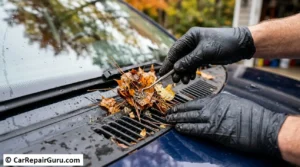
Many of the issues that mechanics resolve in late autumn do not occur on the outside of the vehicle, but deep within its interior footwells. Modern cars feature ventilation cowls at the base of the windshield to allow fresh air into the cabin while routing rainwater safely down drainage channels behind the front fenders.
Pine needles, leaf stems, and seed pods are the perfect size to slip past plastic grates and settle in these hidden channels. Once these cowl drains become blocked, water has nowhere to go. During heavy fall downpours, it backs up over the cabin air intake and floods your floorboards, ruining electronics and breeding black mold.
But here is the real catch – clean drains are critical to your car’s electrical health. A flooded cowl can submerge main wiring harnesses or your blower motor, resulting in thousands of dollars in diagnostic and repair costs. Using a physical barrier to block these tiny pathways is the most reliable way to avoid this scenario.
Important Safety Step: Always check the carpet underneath your driver and passenger floor mats for dampness after heavy autumn rains. If it feels wet, your cowl drains are likely already clogged and must be cleared immediately.
- Inspect the base of your windshield weekly and manually clear any visible debris.
- Run low-pressure water down the cowl to verify that it drains freely behind the front wheels.
- Use a high-quality weatherproof car cover to shield this entire intake area from fine debris.
The Anatomy of a High – Performance Autumn Car Cover
Selecting a defensive barrier requires an understanding of fabric design. A cheap, single-layer plastic cover will fail to protect your paint. To withstand the varied stresses of autumn, a cover needs a multi-layer composite design. It must protect your vehicle from impact – such as falling acorns or twigs – while remaining soft enough on the inside to protect the delicate clear coat.
This is exactly why multi-layer technology exists. High-performance covers use a sandwich design. The outermost layer is tough and UV-resistant, the middle layer is a specialized membrane, and the inner layer is non-abrasive. This ensures that the cover resists physical tearing while shielding your paint from scratches.
Pro-Tip: Look for covers that specify ultrasonically welded seams rather than traditional needle stitching. Stitched seams create thousands of tiny holes that let water leak through over time.
| Fabric Layer | Primary Material Used | Core Protective Function |
|---|---|---|
| Outer Layer | Heavy-duty Polypropylene | Blocks physical debris, sap, and UV rays |
| Middle Layer | Microporous Breathable Film | Allows trapped moisture vapor to escape out |
| Inner Layer | Non-abrasive Fleece or Cotton | Cushions paint, preventing micro-scratches |
Material Science – Synthetic Polymers vs Woven Fabrics
The debate between synthetic polymers like spunbond polypropylene and traditional woven materials like Oxford cloth comes down to molecular behavior. Spunbond polypropylene is engineered to resist rot, mildew, and chemical degradation. It does not absorb water; instead, it repels it.
Conversely, many woven cotton or canvas fabrics act like sponges, absorbing heavy autumn rainfall. If temperatures drop below freezing overnight, this absorbed water will freeze, potentially sticking the fabric directly to your paintwork.
The breathability of synthetic membranes is achieved using a microporous film. This film contains millions of tiny pores that are too small for liquid water droplets to pass through, but large enough to allow evaporated water vapor to escape. This dynamic keeps your vehicle dry underneath, even during humid transitions.
Important Material Warning: Avoid using untreated or single-layer canvas covers for outdoor storage in high-humidity areas, as they quickly become a breeding ground for mold and mildew prevention issues.
- Spunbond polypropylene provides exceptional resistance to organic acids and moisture rot.
- Microporous film layers allow air circulation while maintaining a solid water barrier.
- Non-woven synthetics maintain structural integrity without shedding fibers on your vehicle.
Wind Security – Preventing the Sandpaper Effect
Autumn is known for sudden, strong windstorms. When wind gets underneath a loose-fitting car cover, it transforms the fabric into a sail. If there is a fine layer of dust on your paint, a flapping cover will grind those microscopic grit particles against your clear coat. This wind-buffeting acts like sandpaper, leaving your paint covered in fine scratches and hazing.
While you can follow our guide on removing car scratches if damage occurs, securing the cover firmly to the chassis is the best way to prevent the issue entirely. Securing the cover firmly to the chassis is paramount to avoiding paint damage during windy periods.
Before you touch anything, do this – check the security of your strap system. Reliable covers do not rely solely on elastic hems. They utilize heavy-duty, under-car gust straps positioned at the center of the wheelbases to keep the material completely taut against the body lines.
Crucial Step Warning: Never use aftermarket bungee cords or makeshift bricks to secure a loose cover. These items can easily slip in high winds, causing severe physical damage to your body panels.
- Position the cover evenly over the roof, hood, and trunk.
- Pull the elasticized front and rear hems snugly under both bumpers.
- Thread the integrated central gust strap underneath the frame and buckle it securely.
Paint Preparation – What to Do Before Installing Your Cover
Putting a car cover on a dirty vehicle is one of the quickest ways to damage your finish. Before you wrap your vehicle for the autumn, you must establish a clean, slick surface. Taking the time to properly wash and wax your car creates a sacrificial buffer. If the cover shifts slightly under wind pressure, it rubs against this protective layer rather than your actual clear coat.
If that doesn’t solve it, don’t panic – just make cleaning a regular habit. Putting a cover on a car that has road grime on it is equivalent to rubbing a scrubbing pad over the paint. Taking twenty minutes to prep the surface will save you hours of polishing work in the spring.
Important Prep Step: Always perform a final wipe-down with a dedicated quick detailer spray and a clean microfiber towel to remove light settling dust immediately before deploying the cover.
- Wash the vehicle thoroughly to remove all surface grit, road film, and organic contaminants.
- Apply a high-grade synthetic paint sealant or ceramic wax to create a slick surface.
- Treat rubber weatherstripping and tire walls to protect them from damp ground moisture.
Maintaining Your Autumn Cover – Cleaning and Sap Removal

After weeks of shielding your vehicle, your cover will accumulate its own layer of mud, bird droppings, and sticky tree sap. If you leave these contaminants on the fabric, they will clog the microporous pores, reducing its breathability and trapping moisture inside. Keeping the cover clean is just as important as keeping the car clean.
The easiest way to clean a cover is while it is still installed on the vehicle. This gives you a flat, solid surface to wash against. Avoid using harsh chemical detergents that can degrade the water-repellent treatments applied to the outer layers of the fabric.
Crucial Maintenance Step: Never throw a multi-layer outdoor cover into a household tumble dryer. High heat will melt the micro-porous waterproof membrane, rendering the cover useless.
| Contaminant Type | Safe Cleaning Agent | Application Method |
|---|---|---|
| Organic Dirt / Mud | Mild pH-neutral Car Soap | Hose down and gently scrub with a soft sponge |
| Sticky Tree Sap | Isopropyl Alcohol (70%) | Dab gently with a saturated microfiber cloth |
| Bird Droppings | Enzymatic Fabric Cleaner | Spray, let sit for two minutes, and rinse thoroughly |
Quick Alternatives for the Daily Driver
For those who use their vehicle multiple times a day, installing and removing a full-size outdoor cover can become tedious. If a full cover does not fit your daily schedule, you can still protect the most vulnerable areas of your vehicle using streamlined alternatives. These options focus strictly on the cabin greenhouse, windshield, and cowl area, keeping debris out of critical drainage systems without requiring a full installation process.
Half covers are lightweight, compact, and anchor to your mirrors and door handles. They keep the sun out, stop sap from sticking to your glass, and prevent leaves from entering your windshield ventilation cowl. This makes them a highly practical compromise for daily commuters.
Daily Driver Pro-Tip: When parking outdoors without a cover, try to park away from the drip-line of large trees, as dew drops falling from high branches carry concentrated acids and dirt directly onto your paint.
- Half covers protect only the windows and cowl, deploying in under a minute.
- Windshield covers shield wiper blades and cowl drains from pine needles and leaf accumulation.
- Temporary pop-up carports offer physical protection without contacting the paint surface.
Final Thoughts
Protecting your vehicle during the autumn transition does not require a commercial garage or expensive equipment. By understanding the chemical behavior of decaying organic matter and the physical challenges of shifting temperatures, you can establish a simple, highly effective defense system.
Investing in a high-quality, breathable multi-layer cover and taking the time to properly secure it will keep your vehicle’s clear coat protected, your ventilation drains clear, and your cabin dry. A little preparation now ensures your paint remains in excellent condition when the spring driving season arrives.
FAQ – Common Autumn Car Cover Questions
Will a car cover scratch my paint
Only if applied over a dirty surface or allowed to flap violently in the wind. Dust acts as an abrasive, so washing your vehicle first and securing the gust straps tightly is essential to prevent movement.
How does a breathable cover prevent mold and mildew
It features a microporous film with microscopic holes that are large enough to let evaporated moisture vapor escape out, but small enough to block liquid water droplets from passing through.
Can I wash my autumn car cover in a washing machine
No. Most multi-layer covers are too bulky and can be damaged by a washing machine’s agitator. Hand-washing the cover while it is installed on the vehicle is the safest method.
How do I remove sticky tree sap from the cover
Spot-treat the sap using a clean microfiber cloth saturated with 70% isopropyl alcohol. Dab the spot gently rather than rubbing, which can smear the sap deeper into the fabric fibers.
Is a custom-fit cover worth the extra cost over a universal fit
Yes. A custom-fit cover is sewn to the exact dimensions of your vehicle, minimizing loose fabric that can flap in the wind and cause micro-scratches on your clear coat.
About the Author