Marco
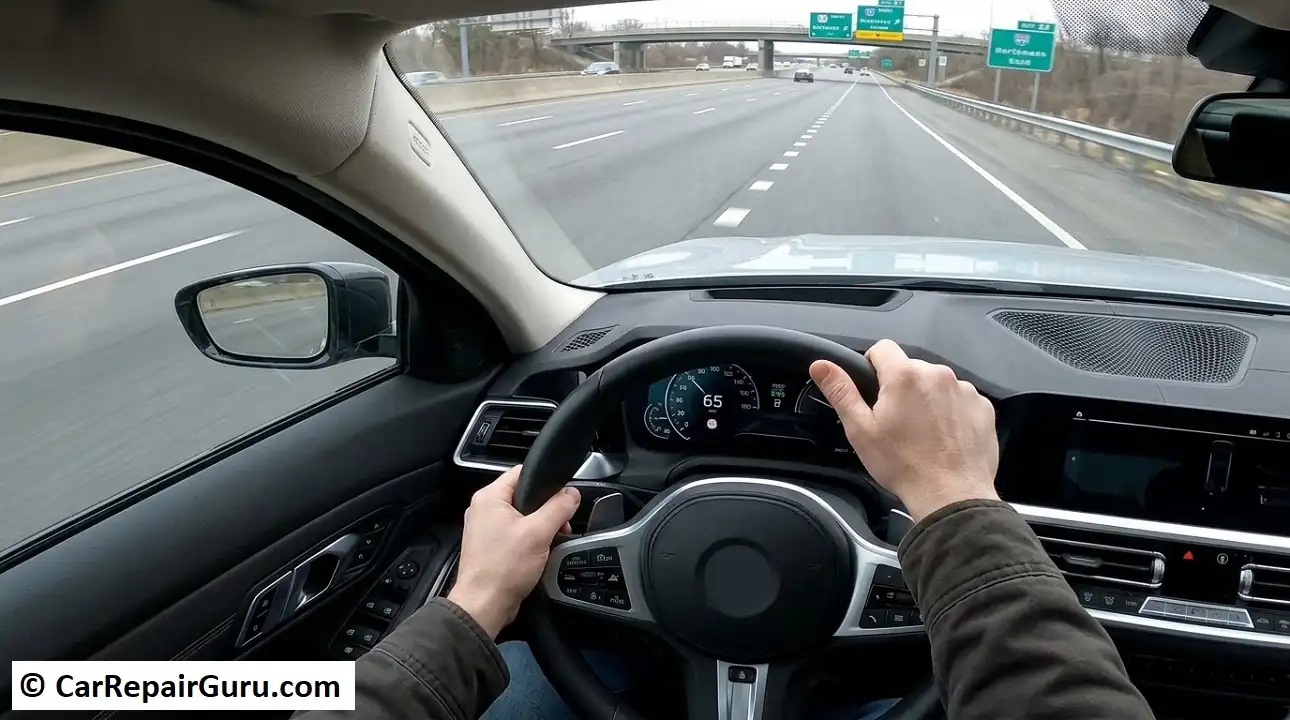
If your car keeps drifting to the left or right while you’re trying to drive straight, don’t assume it needs a wheel alignment. Uneven tire pressure, worn tires, brake problems, and damaged steering or suspension parts can all cause a vehicle to pull to one side.
The most useful clue is when the pulling happens. If it occurs during normal driving, start by checking the tires. If it happens mainly when braking or accelerating, the problem may involve the brakes or drivetrain. A sudden or severe pull needs immediate attention because it can affect your ability to control the vehicle.
Here are seven possible causes of a car pulling to one side, what you can safely check, and when to have a mechanic inspect it.
- 1. Uneven Tire Pressure
- Signs of Uneven Tire Pressure
- How to Fix It
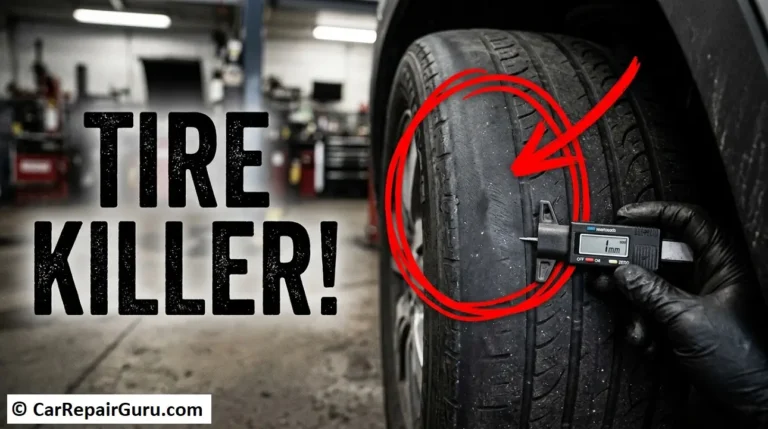
- 2. Uneven Tire Wear or a Damaged Tire
- What to Look For
- Can a New Tire Make Your Car Pull?
- 3. Incorrect Wheel Alignment
- How Alignment Can Cause Pulling
- How to Fix an Alignment Problem
- 4. Brake Problems
- Sticking Brake Caliper
- Restricted Brake Hose
- What Should You Do?
- 5. Worn Steering or Suspension Parts
- Common Components That Can Cause Pulling
- Signs of a Suspension or Steering Problem
- 6. Torque Steer or Drivetrain Problems
- What Is Torque Steer?
- Could a Worn CV Axle or Engine Mount Cause It?
- 7. Road Slope, Crosswinds, or Uneven Loading
- How to Tell Whether the Road Is Causing the Drift
- How to Diagnose a Car That Pulls to One Side
- Why Does My Car Still Pull After an Alignment?
- How Much Does It Cost to Fix a Car That Pulls to One Side?
- Is It Safe to Drive a Car That Pulls to One Side?
- What to Do Next
- Frequently Asked Questions
- Can low tire pressure cause a car to pull to one side?
- Why does my car pull to the right but not to the left?
- Why does my car pull only when I brake?
- Why does my car pull when I accelerate?
- Can bad wheel alignment cause a car to pull after new tires are installed?
- Should I get an alignment if my car pulls to one side?
1. Uneven Tire Pressure
Uneven tire pressure is one of the first things to check when your car pulls to one side. A tire with too little air can create more rolling resistance and change how the vehicle responds to steering inputs.
For example, if the front left tire is significantly underinflated, the car may pull toward the left. However, the direction and severity of the pull depend on the vehicle, the tires, and the size of the pressure difference.
Signs of Uneven Tire Pressure
- The car drifts to one side while driving straight.
- One tire looks lower or softer than the others.
- The tire pressure warning light comes on.
- The vehicle feels less stable or responds differently when steering.
How to Fix It
Check the pressure in all four tires with a reliable tire pressure gauge. For an accurate reading, check the tires when they are cold, ideally before driving or after the vehicle has been parked for at least three hours.
Use the recommended pressure listed on the driver’s door-jamb label or in your owner’s manual. Do not use the maximum pressure printed on the tire sidewall as your target.
The National Highway Traffic Safety Administration’s tire safety guidance explains how to check tire pressure and why proper inflation matters.
If a tire is noticeably low, inspect it for visible damage. A tire that repeatedly loses air may have a puncture, a leaking valve, or another problem that needs professional attention.
2. Uneven Tire Wear or a Damaged Tire
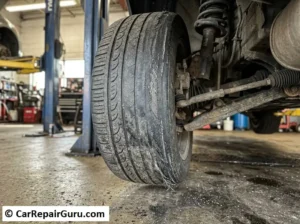
Your tires affect how your car tracks down the road. If one tire has uneven tread wear, internal damage, or a manufacturing defect, it may produce more rolling resistance than the other tires and cause the vehicle to pull.
Uneven wear can also indicate a separate problem, such as incorrect wheel alignment, worn suspension parts, or an inflation issue.
What to Look For
- Uneven tread depth: One tire is much more worn than the tire on the opposite side.
- Inside or outside edge wear: One edge of the tread has worn faster than the rest.
- Feathered tread: The tread blocks feel noticeably smoother in one direction than the other.
- Visible damage: You notice a bulge, deep cut, exposed cords, or another unusual change in the tire.
A bulge in the sidewall or exposed tire cords can indicate serious structural damage. Do not continue driving on a tire with these signs. Arrange a safe tire replacement or roadside assistance.
Can a New Tire Make Your Car Pull?
Yes. A tire can sometimes cause a directional pull because of an internal construction variation known as tire conicity. The tire behaves slightly like a cone instead of rolling straight, creating a sideways force.
This can happen even when the tire is new and the wheel alignment is within specifications. If the pulling started immediately after new tires were installed, tell the tire shop when the symptom appeared and ask for an inspection.
A technician can check whether the tire is responsible by using an appropriate tire diagnostic procedure. Do not swap tires randomly because some vehicles have directional tires, different front and rear tire sizes, or specific rotation requirements.
For more information about tire condition and maintenance, see our guide to avoiding common car tire problems.
3. Incorrect Wheel Alignment
Wheel alignment describes the angles at which your wheels sit in relation to the road and the vehicle. When those angles are outside the manufacturer’s specifications, your car may pull to one side, the steering wheel may sit crooked, or the tires may wear unevenly.
Alignment problems can develop after hitting a pothole or curb. They can also result from worn steering or suspension components that allow the wheel angles to change.
How Alignment Can Cause Pulling
Three alignment angles are especially important.
- Camber: The inward or outward tilt of a wheel when viewed from the front of the vehicle. A difference between the left and right sides can contribute to a pull.
- Caster: The angle of the steering pivot when viewed from the side. Unequal caster can affect directional stability and cause the vehicle to pull.
- Toe: Whether the front edges of the tires point slightly inward or outward when viewed from above. Incorrect toe commonly causes uneven tire wear and can affect steering behavior.
The exact effect of these angles depends on the vehicle’s suspension design and alignment specifications. A mechanic should check the measurements rather than guessing which angle is responsible.
How to Fix an Alignment Problem
A professional alignment service measures the wheel angles and adjusts the settings that are designed to be adjustable. Before making adjustments, the technician should check for damaged or worn steering and suspension parts.
If a component is bent or has excessive play, an alignment alone may not solve the problem. The underlying fault may need repair first.
Learn more about wheel alignment angles and how they affect handling.
4. Brake Problems
If your car tracks straight during normal driving but pulls strongly when you press the brake pedal, have the braking system inspected promptly.
Braking depends on the wheels receiving the appropriate braking force. If one side applies noticeably more or less force than the other, the vehicle may veer during braking.
Sticking Brake Caliper
A brake caliper squeezes the brake pads against the rotor to slow the wheel. If the caliper piston or sliding mechanism sticks, the brake may apply unevenly or fail to release properly.
A dragging brake may produce a burning smell, unusual brake dust, reduced fuel economy, or excessive heat around one wheel. These signs do not prove that the caliper is faulty, but they are reasons to arrange an inspection.
Restricted Brake Hose
A damaged brake hose can sometimes restrict the flow of brake fluid and prevent a brake from releasing normally. Other hydraulic or mechanical faults can produce similar symptoms, so the hose should not be replaced without proper diagnosis.
What Should You Do?
If the vehicle pulls sharply when braking, the brake pedal feels unusual, you notice smoke, or you smell a strong burning odor near a wheel, stop in a safe place and arrange professional assistance. Do not touch the brake rotor or wheel components to check their temperature.
Because brake problems can affect stopping distance and directional control, avoid continuing to drive a vehicle with significant brake-pulling symptoms.
5. Worn Steering or Suspension Parts
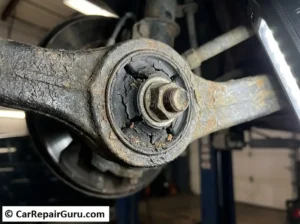
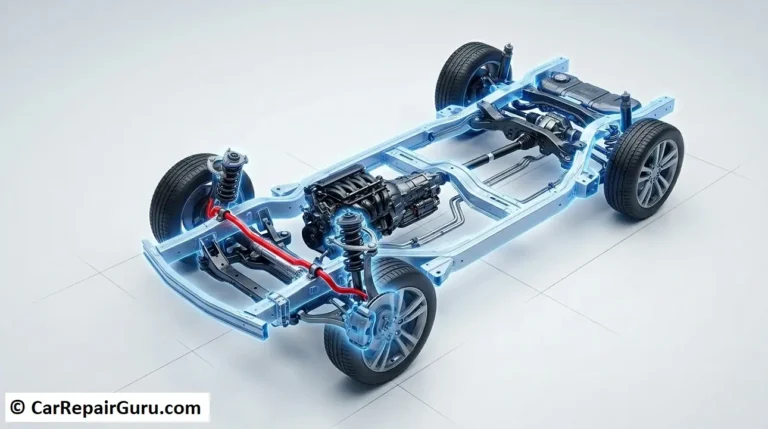
Your steering and suspension systems keep the wheels positioned correctly and help the vehicle respond predictably to steering inputs. When a joint, bushing, or other component wears out, the wheel alignment can change or become unstable while driving.
Unlike a simple tire pressure problem, worn mechanical parts usually require a proper inspection and repair.
Common Components That Can Cause Pulling
- Control arm bushings: Worn rubber bushings can allow unwanted movement in the suspension, particularly during braking or acceleration.
- Ball joints: Excessive wear can affect wheel positioning and steering control.
- Tie rods: These connect the steering system to the wheels. Excessive wear or damage can cause loose steering and alignment changes.
- Struts or springs: Damaged struts or a broken or weakened spring can affect ride height and handling.
- Steering components: Binding or damaged parts can prevent the steering from moving or returning smoothly.
Signs of a Suspension or Steering Problem
Pay attention to clunking noises over bumps, loose or unusually stiff steering, a vehicle that sits lower on one corner, or a pull that changes when you brake or accelerate.
These symptoms can have several causes. For example, a clunk does not automatically mean a ball joint has failed, and a car that sits low on one side does not necessarily have a damaged strut.
A mechanic can inspect the steering and suspension for looseness, damage, and binding before recommending replacement parts. Avoid driving if the steering feels unstable or a wheel appears to be moving abnormally.
For more details, read our guide to common car suspension problems and their warning signs.
6. Torque Steer or Drivetrain Problems
If your car pulls to one side mainly when you accelerate, the problem may be related to torque steer or a fault in the drivetrain or suspension.
What Is Torque Steer?
Torque steer is a pulling sensation that can occur in front-wheel-drive vehicles when engine power is delivered to the front wheels. Differences in axle geometry, suspension design, and the forces acting on the front tires can contribute to the effect.
A mild tendency to pull under hard acceleration may be characteristic of some vehicles. However, a sudden change, a strong pull, unusual vibration, or a clunk should not be dismissed as normal torque steer.
Could a Worn CV Axle or Engine Mount Cause It?
A damaged CV axle, worn drivetrain component, or failed engine mount may produce symptoms during acceleration. The exact cause depends on the vehicle and the other symptoms present.
For example, a clunk during acceleration or when shifting between drive and reverse may point toward a drivetrain mount or another loose component. Clicking during tight turns can indicate a CV joint problem, although other faults can cause similar noises.
If the car pulls strongly whenever you accelerate, arrange an inspection instead of repeatedly testing it with hard acceleration. A technician can check the axles, mounts, suspension, and steering system as needed.
7. Road Slope, Crosswinds, or Uneven Loading
Not every slight drift means something is broken. Roads are often built with a slope to help rainwater drain away, and that slope can cause a vehicle to drift toward the lower side of the road.
Crosswinds can also push a vehicle sideways, particularly on exposed highways. Heavy or uneven cargo may affect ride height and handling, especially if the vehicle is carrying more weight than intended.
How to Tell Whether the Road Is Causing the Drift
Notice whether the pulling changes with the road surface, wind direction, or lane position. A mild drift that changes when the road slopes in the opposite direction may be related to road conditions.
However, do not assume that every pull is caused by the road. A persistent pull on different road surfaces, a crooked steering wheel, or uneven tire wear may indicate a tire, alignment, or mechanical problem.
Keep your hands on the steering wheel and maintain control of the vehicle while observing its behavior. Do not let go of the steering wheel to test whether the car tracks straight.
How to Diagnose a Car That Pulls to One Side
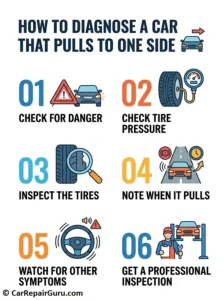
You can perform a few basic checks without taking the vehicle apart. These checks may help you describe the problem accurately, but they cannot confirm every possible cause.
- Check for immediate danger. If the pull is sudden or severe, the steering feels unstable, a tire looks damaged, or the brakes behave abnormally, stop somewhere safe and arrange assistance.
- Check tire pressure. Measure all four tires when cold and compare the readings with the vehicle manufacturer’s recommended pressures.
- Inspect the tires visually. Look for uneven tread wear, cuts, bulges, or objects lodged in the tread. Do not drive on a visibly damaged tire.
- Pay attention to when the pull occurs. Note whether it happens during normal driving, braking, acceleration, or after hitting a pothole or having the tires replaced.
- Look for other symptoms. Record any unusual noises, vibration, burning smells, warning lights, or changes in steering effort.
- Arrange a professional inspection. If the pull remains after correcting tire pressure, or if you notice other concerning symptoms, have the tires, alignment, brakes, and steering or suspension inspected as appropriate.
Do not jack up the vehicle and shake the wheels unless you have the proper equipment, know the manufacturer’s lifting points, and can secure the vehicle safely. A professional can perform these checks without putting you at unnecessary risk.
Why Does My Car Still Pull After an Alignment?
If your car still pulls after a wheel alignment, the alignment may not be the only problem. The cause could include tire-related forces, an incorrect or incomplete alignment, worn steering or suspension parts, or the effect of road slope.
Start by reviewing the alignment report with the shop. Ask whether the measured angles were within the manufacturer’s specifications and whether any worn or damaged parts prevented the alignment from being completed correctly.
If the alignment readings look correct but the vehicle still pulls, the technician may need to check the tires for uneven wear or directional pull and inspect the steering, suspension, and brakes.
A second alignment without further diagnosis may not solve the problem if the actual cause lies elsewhere.
How Much Does It Cost to Fix a Car That Pulls to One Side?
The cost depends on the cause, the vehicle, the parts required, and local labor rates. Checking tire pressure may cost nothing, while replacing damaged tires, repairing a brake problem, or replacing suspension components can cost considerably more.
Wheel alignment is generally less expensive than major suspension or drivetrain repairs, but an alignment should not be treated as the automatic solution to every steering problem.
Before approving repairs, ask the shop to explain the diagnosis, identify any damaged components, and provide an estimate that separates parts and labor. If a tire or suspension component is damaged, ask whether it is safe to drive the vehicle until the repair is completed.
Is It Safe to Drive a Car That Pulls to One Side?
A mild, gradual drift caused by road slope is different from a sudden or strong pull caused by a mechanical problem. However, you should not ignore a persistent change in steering behavior.
Stop driving as soon as you can do so safely if the car suddenly pulls hard, the steering becomes difficult to control, a tire is visibly damaged, or the brakes produce smoke or a strong burning smell. Arrange roadside assistance or towing when necessary.
If the pull is mild but continues on different roads, schedule an inspection promptly. A tire, brake, steering, or suspension problem can become more serious if left unresolved.
What to Do Next
If your car pulls to one side, start by checking tire pressure and looking for visible tire damage. Pay attention to whether the problem occurs during normal driving, braking, or acceleration, because that information can help a mechanic narrow down the cause.
Do not assume that every pull needs an alignment or that a particular symptom proves one part has failed. If the problem persists, have the appropriate systems inspected and repair the confirmed cause before it affects your control of the vehicle.
Frequently Asked Questions
Can low tire pressure cause a car to pull to one side?
Yes. Uneven tire pressure can change rolling resistance and handling, which may cause the car to pull. Check all four tires when cold and inflate them to the manufacturer’s recommended pressures.
Why does my car pull to the right but not to the left?
A consistent pull in one direction may be related to tire pressure, tire condition, wheel alignment, road slope, or a mechanical problem. The direction alone is not enough to identify the cause. If the pull persists on different road surfaces, arrange an inspection.
Why does my car pull only when I brake?
Pulling during braking can indicate uneven braking force, a sticking caliper, a hydraulic problem, or a tire-related issue. Because the problem can affect stopping control, have the brakes and tires inspected promptly.
Why does my car pull when I accelerate?
A pull that appears mainly during acceleration may be related to torque steer, axle geometry, worn drivetrain components, or suspension movement. A strong or newly developed pull, especially with vibration or clunking, needs professional diagnosis.
Can bad wheel alignment cause a car to pull after new tires are installed?
Yes, but new tires can also reveal a tire-related pulling problem. If the symptom started after tire replacement, have the tire installation, tire condition, inflation pressure, and wheel alignment checked before replacing additional parts.
Should I get an alignment if my car pulls to one side?
An alignment check may be appropriate, particularly if the steering wheel is crooked or the tires show uneven wear. However, the shop should also inspect the tires and relevant steering and suspension components. If the car pulls during braking, the brakes need attention too.
About the Author