Marco Riley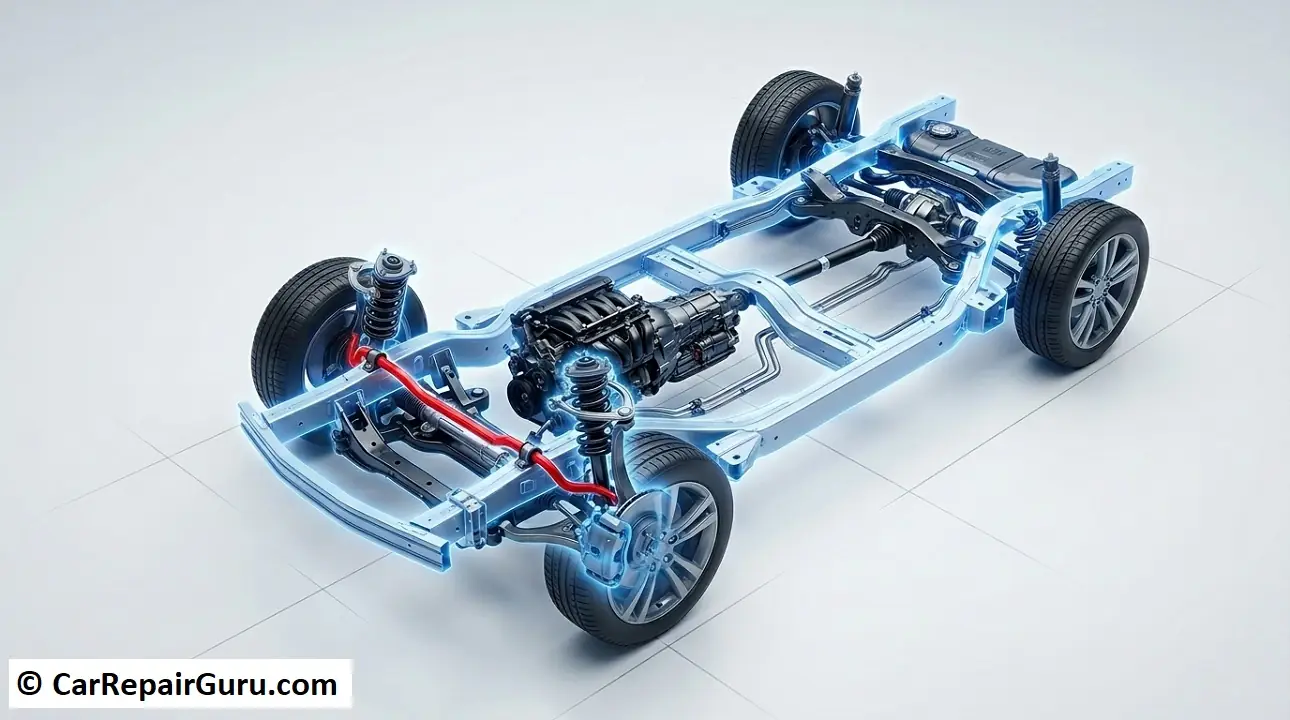
We’ve all been there. You’re driving down the highway, you take an off-ramp a little faster than usual, and suddenly the whole car feels like it’s tipping over. You find yourself leaning hard against the door, gripping the steering wheel tight, waiting for the car to settle down.
That sensation is called body roll. It’s the enemy of good handling, and it kills your confidence behind the wheel.
While shocks and springs get all the glory in suspension discussions, the unsung hero of keeping your car flat and planted is the Sway Bar. Whether you are a daily commuter looking for a safer ride, an off-road enthusiast needing more articulation, or a track-day junkie chasing lap times, understanding this metal bar is the key to unlocking your vehicle’s potential.
In this guide, we’re going to break down exactly what a sway bar is, how it transforms your suspension tuning, and why it might be the best “bang-for-your-buck” upgrade you can make.
- What is a Sway Bar?
- How Does a Sway Bar Work?
- The Benefits of Upgrading Your Sway Bars
- 1. Drastically Reduce Body Roll
- 2. Improved Cornering Grip
- 3. Faster Steering Response
- Tuning Handling – Oversteer vs. Understeer
- Understanding the Balance
- How to Tune with Sway Bars
- The Magic of Adjustable Sway Bars
- Can a Sway Bar Be Too Stiff?
- Sway Bars vs. Lowering Springs – Which Should You Buy First?
- Important Components – Links and Bushings
- Sway Bar End Links
- Bushings
- Off-Road Special – The Sway Bar Disconnect
- Sway Bar vs. Strut Bar – What’s the Difference?
- Final Thoughts
- Frequently Asked Questions
What is a Sway Bar?
Let’s clear up the confusion immediately: Sway Bar, Anti-Roll Bar, and Stabilizer Bar are all different names for the exact same part.
Visually, it is a simple U-shaped metal bar that spans the width of your car, connecting the left side of your suspension to the right side. You will typically find one on the front suspension and, in most modern vehicles, one on the rear suspension as well.
While springs hold the weight of the car up, the sway bar has a very specific job: it acts as a torsion spring. It does absolutely nothing when you are driving straight down a smooth road. It only wakes up and goes to work when you turn the steering wheel or hit a bump on just one side of the car.
How Does a Sway Bar Work?
To understand the sway bar, you have to understand basic physics. When you turn your car to the left, centrifugal force pushes the car’s weight to the right. This causes the suspension on the right (outside) to compress/squat, while the suspension on the left (inside) lifts/extends.
This weight transfer is what causes the car to lean.
The sway bar fights this. Because the bar is connected to both wheels, when the outside wheel moves up (compresses) and the inside wheel tries to move down, the bar is forced to twist.
Think of twisting a wet towel. The bar resists this twisting motion. It tries to lift the compressed side and pull down the lifted side, effectively forcing the car to remain level. By tying the left and right sides together, the anti-roll bar redistributes the energy, keeps the body flat, and ensures your tires maintain a better contact patch with the pavement.
The Benefits of Upgrading Your Sway Bars
If your car already has sway bars from the factory, why would you spend money upgrading them?
Factory sway bars are generally designed for comfort. They are thin and flexible, allowing for a soft ride but resulting in significant lean during corners. Upgrading to a thicker, stiffer aftermarket sway bar offers three massive benefits:
1. Drastically Reduce Body Roll
This is the main event. A stiffer bar resists twisting more effectively, keeping the cabin level. This makes the car feel more stable and responsive.
2. Improved Cornering Grip
When a car leans heavily, the tires roll onto their sidewalls, losing grip. By keeping the car flat, an upgraded stabilizer bar spreads the weight more evenly across all four tires. More rubber on the road equals more grip in the turn.
3. Faster Steering Response
Have you ever turned the wheel and felt a delay before the car actually changed direction? That “slop” is often the suspension compressing before the car turns. A stiffer sway bar tightens up that reaction time, making the steering feel sharper and more direct.
Tuning Handling – Oversteer vs. Understeer
This is where things get technical—and fun. Sway bars are the primary tool enthusiasts use to “balance” a car’s handling. By changing the stiffness of the front bar relative to the rear bar, you can change how the car behaves at the limit.
Understanding the Balance
- Understeer (The “Push”): You turn the wheel, but the car keeps going straight. This is how most factory cars are tuned because it is safer for the average driver.
- Oversteer (The “Loose” Feeling): You turn the wheel, and the back end slides out (drift). This is dangerous on the street but desirable for drifting or tight track racing.
How to Tune with Sway Bars
You can alter this balance by changing the stiffness of your bars:
- Stiffen the Front Bar: This usually increases understeer. It plants the rear end but might make the front tires lose grip faster.
- Stiffen the Rear Bar: This increases oversteer. It helps a Front-Wheel Drive (FWD) car rotate better in corners, eliminating that annoying factory “push.”
The Golden Rule: If your car feels like it “plows” in corners (understeer), a stiffer rear sway bar is usually the best first upgrade. If the back end feels unstable and happy to slide, you may need a stiffer front sway bar.
The Magic of Adjustable Sway Bars
If you start shopping for aftermarket parts, you will notice that many performance sway bars are advertised as adjustable. But how do you adjust a solid piece of metal?
It all comes down to leverage.
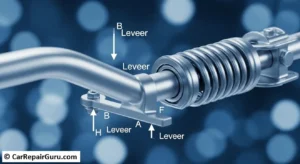
Adjustable sway bars feature multiple mounting holes on the ends of the bar (the arms) where the end links attach. By moving the end link to a different hole, you change the length of the lever arm.
- Soft Setting: Attaching the link to the hole furthest from the main bar creates a longer lever. This gives the suspension more leverage over the bar, making it easier to twist.
- Stiff Setting: Attaching the link to the hole closest to the main bar creates a shorter lever. This makes the bar much harder to twist.
This is a game-changer for track enthusiasts. It allows you to drive to the track on a softer setting for comfort, and then stiffen the rear bar in the paddock to help the car rotate better through corners—all without buying new parts.
Can a Sway Bar Be Too Stiff?
There is a tendency in the car community to assume that “stiffer is always better.” When shopping, it is tempting to simply buy the thickest bar available (e.g., jumping from a 19mm stock bar to a 26mm race bar).
Proceed with caution. Bigger is not always better.
If a sway bar is too stiff for your specific vehicle setup, it can actually hurt performance.
- Loss of Independence: If the bar is too rigid, hitting a bump on the left side will violently jolt the right side. The suspension loses its ability to react to the road independently.
- Lifting a Wheel: In extreme cases, a massive rear sway bar can be so stiff that it physically lifts the inside rear tire off the ground during a sharp turn (often called “tripoding”). While it looks cool in photos, a tire in the air provides zero grip.
- Skittishness: On a bumpy road or in the rain, an overly stiff setup can make the car feel “skittish” or nervous, causing it to slide suddenly rather than gripping progressively.
Always choose a bar diameter recommended for your specific use case (Street, Canyon, or Track) rather than just buying the biggest metal pipe you can find.
Sway Bars vs. Lowering Springs – Which Should You Buy First?
A common debate among car enthusiasts is the “Order of Operations” for suspension upgrades. Should you lower the car first, or install sway bars?
While lowering springs or coilovers look cool because they reduce the wheel gap, sway bars are often the better first modification for handling.
Here is why:
- Ride Quality: Lowering springs often require stiffer spring rates to prevent the car from bottoming out, which can make your daily commute bouncy and harsh. Sway bars, as mentioned earlier, have a minimal impact on straight-line comfort.
- Independence: You can upgrade sway bars without changing your ride height. This is crucial for drivers who deal with steep driveways, speed bumps, or snow and cannot afford to lower their vehicle.
- Cost: A high-quality set of sway bars is usually cheaper than a high-quality set of coilovers.
If your goal is looks, go with springs. If your goal is flat, stable cornering with no compromise to daily comfort, start with the sway bars.
Important Components – Links and Bushings
A sway bar system isn’t just a metal rod; it relies on two other critical components that often wear out.
Sway Bar End Links
The “links” are the small rods that connect the ends of the sway bar to your suspension control arms. They have ball joints that allow movement.
- Sign of failure: If you hear a “clunk” or “rattle” when going over speed bumps or driveways, 90% of the time it is a broken or worn-out sway bar link.
Bushings
The sway bar rotates inside rubber mounts called bushings, which are bolted to the car’s frame.
- Rubber Bushings: Standard on most cars. They are quiet and comfortable but flex a lot.
- Polyurethane Bushings: Common in aftermarket kits. They are much stiffer, offering better performance, but they require grease. If not lubricated properly, they will squeak loudly.
Off-Road Special – The Sway Bar Disconnect
If you drive a Jeep or a dedicated 4×4, you might have a love/hate relationship with your stabilizer bar.
On the highway, you need the bar to prevent the Jeep from feeling like a wobbly boat. However, when you go rock crawling, you want the opposite. You want the wheels to move independently so they can drop deep into holes or climb over boulders (articulation) while keeping the other tires on the ground.
A sway bar limits this articulation.
This is why sway bar disconnects are popular. These are special end links that allow you to unhook the sway bar physically when you hit the trail, giving you maximum suspension flex. Modern luxury off-roaders often have “electronic disconnects” that do this with the push of a button inside the cabin.
Sway Bar vs. Strut Bar – What’s the Difference?
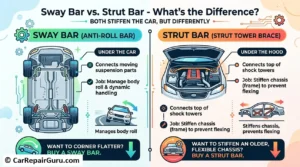
This is a very common point of confusion. Both bars stiffen the car, but they do it differently.
- Sway Bar (Anti-Roll Bar): Located under the car. It connects the moving suspension parts. Its job is to manage body roll and dynamic handling.
- Strut Bar (Strut Tower Brace): Located under the hood. It connects the top of the shock towers. Its job is to stiffen the chassis (frame) to prevent the metal body of the car from flexing.
If you want to corner flatter, buy a sway bar. If you want to stiffen an older, flexible chassis, buy a strut bar.
Final Thoughts
Upgrading your sway bars is one of the most effective ways to change the personality of your vehicle. It transforms a sloppy, leaning daily driver into a planted, confidence-inspiring machine without ruining the ride comfort.
Whether you are looking to fix the understeer on your hatchback or stop the wobble in your lifted truck, a stabilizer bar upgrade is almost always the right answer.
Frequently Asked Questions
Will a stiffer sway bar ruin my ride quality?
Generally, no. Unlike stiff springs, which make every bump feel harsh, a sway bar moves freely when both wheels hit a bump at the same time (like a highway expansion joint). However, you might feel a bit more “jostle” when hitting a pothole with just one wheel, as the bar transfers some of that impact to the other side.
Should I get a solid or hollow bar?
Hollow bars are lighter and, thanks to engineering physics, can be just as stiff as solid bars if the diameter is larger. Solid bars are heavier and cheaper to make. Unless you are building a dedicated race car where every ounce matters, a solid bar is usually fine.
Can I install them myself?
Yes! Sway bars are often considered a “bolt-on” modification. You usually only need a basic socket set, a jack, and jack stands.
- Pro Tip: When tightening the sway bar end links, make sure the car’s weight is on the wheels (use ramps or jack up the suspension). If you tighten them while the wheels are hanging in the air, you will preload the bushings and they will fail prematurely.
Why is my aftermarket sway bar squeaking?
This usually happens when polyurethane bushings dry out; applying a liberal amount of silicone or marine-grade grease to the bushings will eliminate the noise instantly.
Do sway bars reduce ground clearance?
Generally no, as they tuck up closely against the chassis and axles, but you should always check clearances if you have a significantly lowered car or a lifted off-roader.
About the Author