Marco
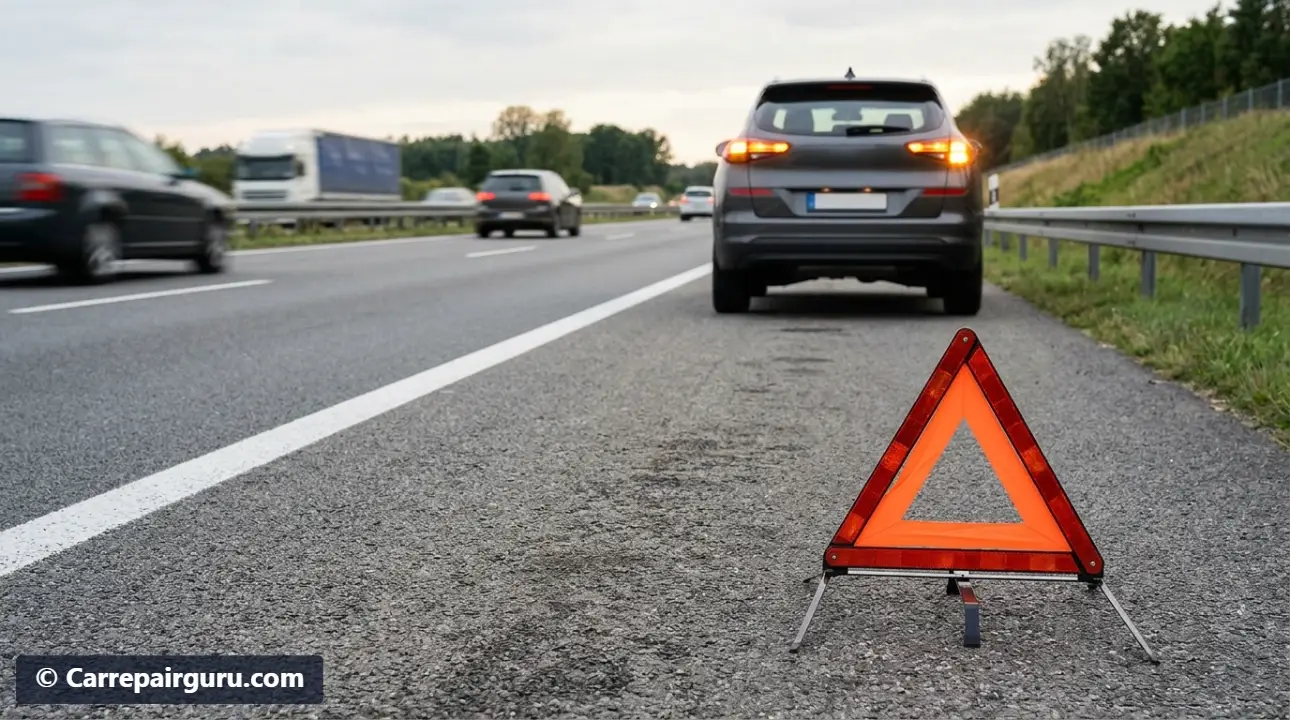
A car breakdown on the highway can turn an ordinary drive into a stressful situation in seconds. Your engine may lose power, a tire may fail, or a warning light may appear while traffic is moving at high speed. The most important thing is to protect yourself and your passengers before trying to figure out what went wrong.
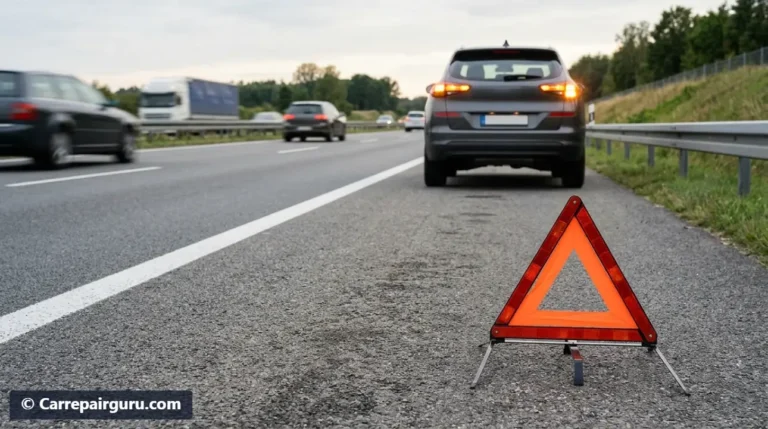
If your car starts failing, stay calm, signal your intentions, and try to reach the safest available stopping place without making sudden movements. Once stopped, turn on your hazard lights and assess whether it is safer to remain inside the vehicle or leave it. That decision depends on where your car is stopped and the risks around you.
These seven safety actions can help you respond to a highway breakdown, contact the right help, and avoid taking unnecessary risks while waiting.
If your car breaks down right now
- Turn on your hazard lights.
- Move away from moving traffic if you can do so safely.
- If you are stopped in a live lane or face an immediate danger, call 911 in the United States.
- If the car is safely off the roadway, contact roadside assistance.
- If you see smoke or flames, leave the vehicle as soon as you can do so safely and move away from traffic.
- 1. Stay Calm and Signal Your Breakdown
- 2. Get to the Safest Available Stopping Place
- 3. Decide Whether to Stay Inside or Exit
- When staying inside may be safer
- When leaving the vehicle may be safer
- If you see smoke or flames
- 4. Make Your Vehicle Visible Without Taking Risks
- 5. Call for the Right Kind of Help
- Call 911 when there is immediate danger
- Contact roadside assistance for a routine breakdown
- 6. Handle Flat Tires and Other Dangerous Situations Safely
- If you have a flat tire
- If the engine overheats
- If the engine stops or the battery fails
- If the breakdown happens at night or in bad weather
- 7. Keep Passengers Safe While Waiting for Help
- Protect children and other passengers
- Keep pets under control
- Prepare for heat and cold
- What to Keep in Your Highway Emergency Kit
- How to Reduce the Risk of a Highway Breakdown
- Final Safety Reminder
- Frequently Asked Questions
- Should I stay inside my car if it breaks down on the highway?
- Should I call 911 or roadside assistance?
- Can I change a flat tire on the highway shoulder?
- What should I do if my car breaks down at night?
- Is it safe to drive slowly to the next exit with a damaged tire?
1. Stay Calm and Signal Your Breakdown
When a vehicle suddenly loses power, it is natural to panic. However, abrupt braking, sharp steering, or sudden lane changes can make the situation more dangerous. Focus on keeping control of the car and communicating with other drivers.
- Turn on your hazard lights. This alerts drivers that your vehicle has a problem or is moving unusually slowly.
- Keep a firm grip on the steering wheel. If the engine stalls, steering assistance may become harder to use. Brake assistance may also be reduced after the stored assistance is used, so the pedals can feel different.
- Ease off the accelerator. Slow down gradually where possible, and avoid sudden movements.
- Watch the traffic around you. Check your mirrors and surroundings before moving toward the shoulder or another stopping place.
If a tire suddenly blows out, hold the steering wheel firmly and avoid slamming on the brakes. Ease off the accelerator and slow down as the vehicle remains under control. Once you have reduced speed enough to move safely, steer toward a suitable stopping place.
Do not focus on diagnosing the problem while the car is still moving. Your first goal is to get out of the path of traffic as safely as possible.
2. Get to the Safest Available Stopping Place
If the vehicle still responds, try to reach the nearest safe exit, rest area, service station, or shoulder. Do not attempt to reach an exit if doing so would require unsafe driving or crossing traffic suddenly.
On a typical US highway, the right shoulder is often the best available option when you cannot safely reach an exit. Move as far from moving traffic as the road and ground conditions allow, without steering onto an unstable surface or into a ditch.
If your vehicle loses power in a traffic lane, do not try to push it across active lanes. Turn on the hazard lights, keep control of the vehicle if possible, and call 911 when you are creating an immediate traffic hazard or cannot reach safety.
Once stopped, avoid standing directly in front of or behind the vehicle. A driver approaching from behind may not see the stopped car in time, and your vehicle could be pushed forward in a collision.
For more guidance, AAA’s guide to what to do when a car breaks down explains how to choose a safer stopping place and respond to different roadside risks.
3. Decide Whether to Stay Inside or Exit
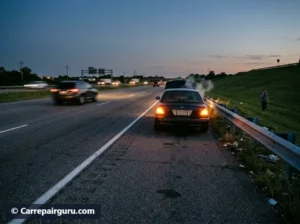
One of the most important decisions after a highway breakdown is whether to remain in the vehicle. There is no single rule that is safest in every situation. Your location, traffic speed, visibility, and the condition of the car all matter.
When staying inside may be safer
If your car is fully off the roadway in a relatively safe location and there is no smoke, fire, or other immediate threat, it is often safer to remain inside with your seat belt fastened while you wait for help. Keep your doors locked if you feel unsafe, and tell the roadside assistance dispatcher if you are concerned about traffic or your surroundings.
When leaving the vehicle may be safer
If the car is stopped in a live lane, is exposed to a serious risk of being struck, or cannot be moved away from traffic, remaining inside may put you in danger. If you can identify a safe exit route away from traffic, leave carefully and move well away from the vehicle. A barrier or a protected area beyond the shoulder may offer better protection where one is available.
Do not step out if you would have to walk directly into moving traffic. If you cannot exit safely, stay belted in, keep the hazard lights on, and call 911 for instructions.
If you see smoke or flames
Leave the vehicle as soon as possible if you can do so safely. Take passengers with you, move away from the car and traffic, and call 911. Do not open the hood if you suspect a fire, and do not return to the vehicle to retrieve belongings.
Never wait directly behind or in front of a disabled vehicle. If you leave the car, choose a safe place away from the roadway rather than standing beside the traffic-facing side.
4. Make Your Vehicle Visible Without Taking Risks
Other drivers may approach quickly and have little time to react to a stopped vehicle. Your hazard lights are the first step in making the car more visible, especially at night, in rain, or in fog.
- Keep your hazard lights on. Use them to warn approaching drivers that your vehicle is disabled or creating a hazard.
- Use your parking or sidelights when appropriate. In low visibility, additional vehicle lighting may help others see you, provided it does not create confusion or conflict with local road rules.
- Use reflective equipment only if it is safe. A reflective vest can help you remain visible if you must leave the vehicle. Do not walk alongside fast traffic to place a warning triangle or flare.
- Do not stand near the traffic lane to signal drivers. Your safety matters more than trying to direct traffic around the car.
Do not assume that opening the hood is necessary or safe in every situation. If there is smoke, steam, a suspected fire, or a risk from moving traffic, avoid opening it. Never use a flare if you suspect a fuel leak.
Highway rules and safe procedures vary by location. On some roads, placing warning triangles or walking along the shoulder is not safe. Follow emergency service instructions and do not use visibility equipment if reaching the placement point would expose you to traffic.
5. Call for the Right Kind of Help
Once you are in the safest place available, contact the appropriate service. Calling for help early can prevent you from taking unnecessary risks trying to repair the car yourself.
Call 911 when there is immediate danger
In the United States, call 911 if your vehicle is stopped in an active traffic lane, a collision has occurred, someone is injured, the vehicle is on fire, or you face another immediate safety threat. Tell the dispatcher if your car is obstructing traffic or if you cannot get to a safe place.
Contact roadside assistance for a routine breakdown
If your vehicle is safely off the roadway and there is no immediate emergency, call your roadside assistance provider, motor club, or towing company. Explain what happened and whether the car can move.
Be ready to provide:
- Your highway or road name and direction of travel.
- The nearest exit, mile marker, or recognizable landmark.
- Your vehicle’s make, model, color, and license plate if requested.
- The symptoms you noticed, such as a flat tire, loss of power, overheating, smoke, or a warning light.
- The number of passengers and any safety concerns, including children, pets, or extreme weather.
If you are unsure of your exact location, use your phone’s map application if it is safe to do so. Look for a mile marker, exit sign, or other road sign. Do not walk along the highway to find a sign or improve your phone signal.
Ask the dispatcher what you should do while waiting. Tell them if your vehicle is in a dangerous position, and follow any instructions from emergency responders or highway authorities.
6. Handle Flat Tires and Other Dangerous Situations Safely
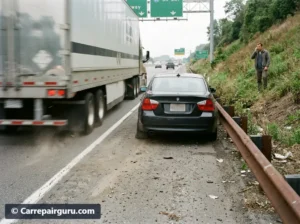
Some breakdowns create additional risks. A flat tire, overheating engine, electrical failure, or fuel leak may require a different response. Do not attempt a roadside repair if your location exposes you to moving traffic.
If you have a flat tire
Hold the steering wheel steadily, slow down gradually, and move to a safe stopping place if the vehicle remains controllable. Once stopped, assess your location before doing anything else.
Changing a tire on a narrow highway shoulder can be extremely dangerous. If traffic is passing close to your car, the shoulder is narrow, the ground is uneven, or visibility is poor, stay away from the traffic side and call roadside assistance. Do not drive on a flat tire to reach the next exit. Doing so can damage the wheel and make the vehicle harder to control.
If the engine overheats
If the temperature gauge rises into the danger zone or you see steam, pull over as soon as it is safe. Turn off the engine and let it cool. Do not remove the radiator cap or open a hot cooling system because pressurized coolant can cause severe burns.
If steam or smoke continues, you suspect a fire, or you cannot stop in a safe place, prioritize getting away from traffic and contacting emergency services as needed. Arrange for professional help rather than continuing to drive an overheating vehicle.
If the engine stops or the battery fails
Turn on your hazard lights and move to a safe stopping place if possible. A failed battery may prevent the car from restarting, but a loss of engine power can have other causes, including fuel delivery, electrical, or mechanical problems.
Do not repeatedly try to restart the engine if you smell fuel, see smoke, or hear unusual mechanical noises. Tell the roadside assistance provider what you noticed and let a qualified technician determine the cause.
If the breakdown happens at night or in bad weather
Reduced visibility makes it harder for other drivers to see a stopped vehicle. Keep your hazard lights on and avoid walking on the shoulder unless you have a safe route away from traffic.
In extreme heat, cold, rain, or snow, consider the risks of remaining in the car as well as the risks of leaving it. If you are in a safe location, staying inside may provide protection from the weather. If the vehicle is exposed to traffic, move to a safer place only if you can do so without entering the roadway.
During a snowstorm, check that snow is not blocking the exhaust pipe before running the engine. Exhaust can contain carbon monoxide, a poisonous gas that you cannot see or smell. If you cannot safely check the tailpipe, do not run the engine until you can get appropriate help.
7. Keep Passengers Safe While Waiting for Help
A breakdown becomes more complicated when children, older passengers, people with disabilities, or pets are in the vehicle. Make decisions based on the actual danger around you, rather than following a blanket rule that everyone must always stay inside or always get out.
Protect children and other passengers
- Keep everyone seated and belted if the vehicle is safely off the roadway and remaining inside is the safer option.
- If you must leave because of traffic danger, smoke, or fire, help passengers exit only when there is a safe route away from traffic.
- Do not let children walk or play on the shoulder.
- Tell the dispatcher if a passenger needs mobility assistance, medical attention, or help getting to a safe location.
Keep pets under control
Do not let a pet roam freely near the highway. If it is safe to remain in the vehicle, keep the animal secured. If you must leave because of an immediate danger, take the pet only if you can do so without delaying your escape or exposing yourself to traffic. Keep it leashed or in a carrier and move to a safe area.
Prepare for heat and cold
If you are stranded in extreme temperatures, monitor passengers for signs of heat illness or cold stress. Keep drinking water, suitable clothing, and emergency supplies in your car when practical. If someone becomes confused, faint, severely weak, or has difficulty breathing, seek emergency medical help.
What to Keep in Your Highway Emergency Kit
A small roadside emergency kit can make a breakdown easier to manage, but equipment should never tempt you to take risks near moving traffic. Keep the kit accessible and learn how to use it before you need it.
- Charged phone and charging cable. A power bank can be useful if the vehicle’s electrical system fails.
- Reflective vest and flashlight. These can improve visibility when you must move in a safe area at night.
- First-aid kit. Keep basic supplies available for minor injuries while waiting for help.
- Drinking water and nonperishable snacks. These can help if the wait is longer than expected.
- Warm clothing and an emergency blanket. Useful in cold weather or when temperatures drop after dark.
- Basic vehicle supplies. Keep the owner’s manual, tire pressure gauge, and any vehicle-specific emergency tools you know how to use safely.
- Reflective warning equipment. Carry it if appropriate for your location, but use it only when placing it does not put you in danger.
The National Highway Traffic Safety Administration’s roadside emergency kit recommendations include a phone and charger, first-aid supplies, a flashlight, water, food, and other useful items. Adapt your kit to your climate, travel habits, and vehicle.
How to Reduce the Risk of a Highway Breakdown
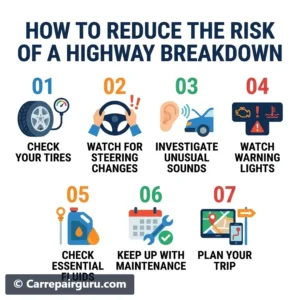
You cannot prevent every breakdown, but regular maintenance and a few checks before a long drive can reduce the chance of trouble on a busy road.
- Check your tires. Inspect tire pressure and tread condition, and look for visible damage before a long trip.
- Pay attention to steering changes. Excessive play, unusual vibration, or clunking can signal a problem that needs inspection. Read more about the signs of worn tie rods if you notice steering looseness or unusual front-end behavior.
- Investigate unusual sounds. A new squeal, whine, or whistling sound should not be ignored, especially if it changes with speed or engine operation. Our guide to common causes of car whistling sounds can help you understand what to investigate.
- Watch warning lights and temperature readings. Do not ignore a serious warning light or an engine that is overheating.
- Check essential fluids. Follow your owner’s manual for safe checks of engine oil, coolant, and other service items. Never open a hot cooling system.
- Keep up with scheduled maintenance. Follow the maintenance schedule for your specific vehicle, and have persistent symptoms checked by a qualified technician.
- Plan the trip. Check weather and road conditions, keep your phone charged, and make sure you have a way to contact roadside assistance.
If your car has recently developed a new noise, steering problem, overheating issue, or repeated loss of power, arrange an inspection before taking it on a long highway trip whenever possible.
Final Safety Reminder
A car breakdown on the highway is stressful, but you do not need to solve the mechanical problem immediately. Focus first on reaching the safest available stopping place, making the vehicle visible, and deciding whether staying inside or leaving offers better protection in your specific situation.
Call emergency services if you are in immediate danger, and use roadside assistance for a routine breakdown when you are safely away from traffic. Avoid roadside repairs in dangerous locations, and never risk walking through active traffic to reach help or place warning equipment.
Once you and your passengers are safe, a qualified technician can inspect the vehicle and determine what caused the breakdown.
Frequently Asked Questions
Should I stay inside my car if it breaks down on the highway?
If your vehicle is safely off the roadway and there is no immediate threat, staying inside with your seat belt on is often the safer choice. If the car is in a live lane or at serious risk of being struck, leave only if you can reach a safe area without entering moving traffic.
Should I call 911 or roadside assistance?
Call 911 in the United States if there is an immediate danger, a collision, an injury, a fire, or a vehicle blocking an active lane. For a routine breakdown in a safe location, contact roadside assistance or a towing provider.
Can I change a flat tire on the highway shoulder?
Only consider it if you are in a genuinely safe location and can work away from moving traffic. A narrow shoulder or fast-moving traffic makes a tire change dangerous. In those conditions, call roadside assistance instead.
What should I do if my car breaks down at night?
Turn on your hazard lights, move to the safest available stopping place, and contact help. Stay inside if the car is safely off the road and the cabin is safe. If you must exit, use a safe route away from traffic and move to a protected location where possible.
Is it safe to drive slowly to the next exit with a damaged tire?
No. Driving on a flat tire can damage the wheel and affect control of the vehicle. Stop as safely as possible and arrange roadside assistance rather than continuing on the damaged tire.
About the Author