Marco
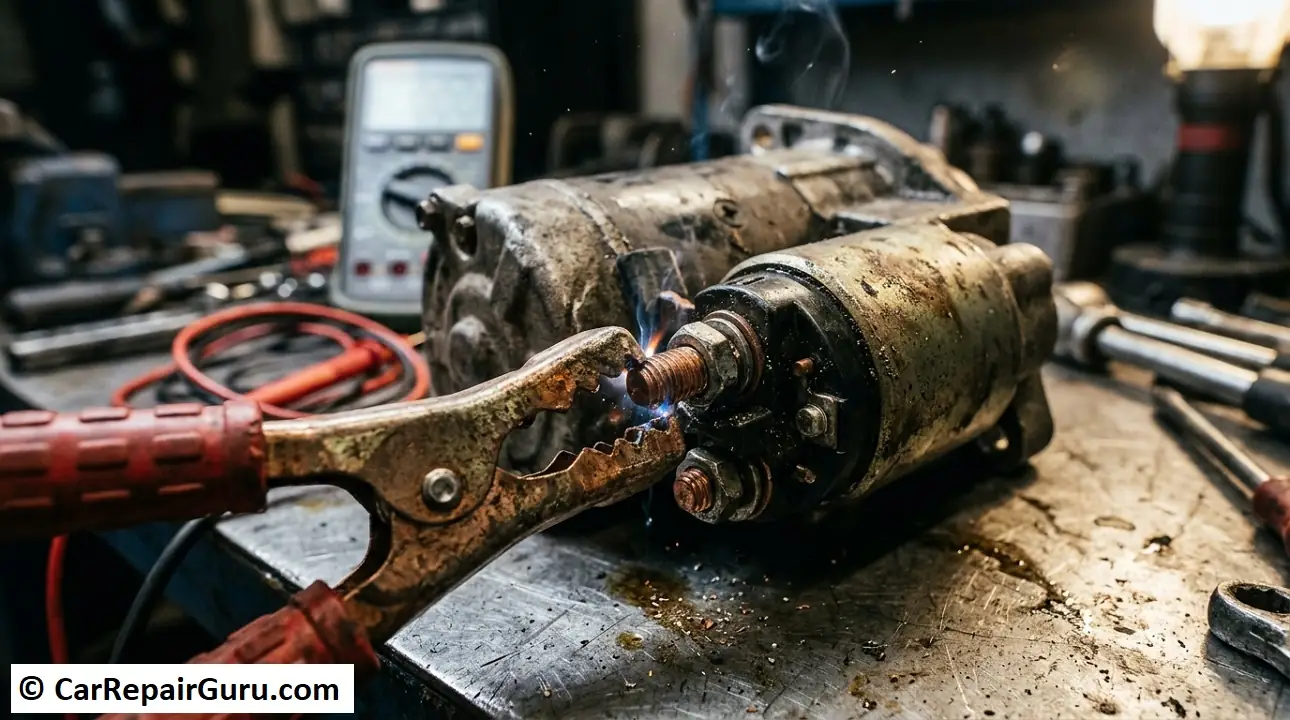
Your car’s dashboard lights come on, but the engine won’t crank. You turn the key again and hear a single click. Or perhaps the starter makes a grinding noise instead of turning the engine over.
These symptoms can point to a faulty starter motor, but they can also come from a weak battery, corroded battery connections, damaged wiring, or a problem in the starting circuit. Replacing the starter before checking these possibilities can waste money and leave the original problem unfixed.
This guide explains how to recognize bad starter motor symptoms, distinguish starter problems from battery faults, perform a few safe checks, and decide when the starter needs professional testing or replacement.
- Symptoms of a Faulty Starter Motor
- 1. A Single Click When You Try to Start the Car
- 2. Rapid Clicking When You Turn the Key
- 3. Dashboard Lights Work but the Engine Does Not Crank
- 4. Slow or Weak Engine Cranking
- 5. Grinding or Metal-on-Metal Noise
- 6. A Whirring Sound Without Engine Cranking
- 7. Smoke or a Burning Smell
- How the Starter Motor Works
- Is It the Starter, Battery, or a Connection Problem
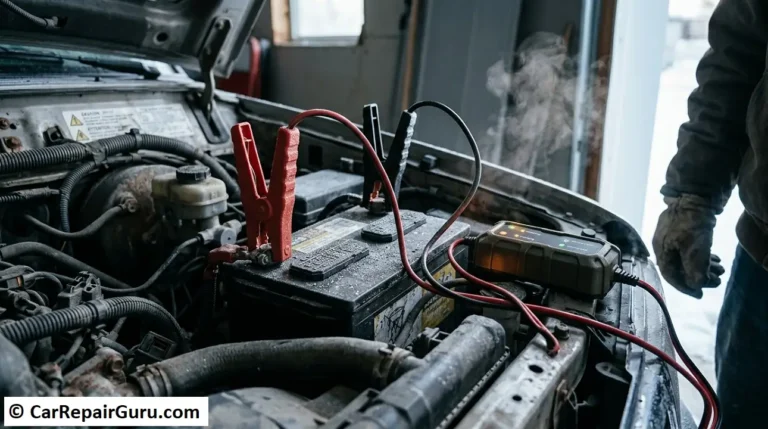
- Check the Battery and Its Connections
- Understand the Role of Battery Cables and Grounds
- How to Diagnose a Starter Problem
- Step 1 – Make Sure the Vehicle Is Safe
- Step 2 – Observe What Happens When You Try to Start the Engine
- Step 3 – Check the Battery Terminals
- Step 4 – Check the Starting Interlocks
- Step 5 – Have the Starting Circuit Tested
- When to Stop Trying to Start the Car
- Repair or Replace the Starter Motor
- When Starter Repair May Be Appropriate
- Choosing a Replacement Starter
- Starter Motor Replacement Cost
- How to Reduce Starter Motor Wear
- What to Do Next
- Frequently Asked Questions
- Can a jump start fix a bad starter?
- Can a car start intermittently with a faulty starter?
- Can the dashboard lights work if the battery is too weak to start the car?
- Where is the starter motor located?
- What causes a starter motor to fail?
- How do I know whether the starter or alternator is faulty?
Symptoms of a Faulty Starter Motor
The starter motor uses electrical power from the battery to turn the engine until it can run on its own. When the starter or another part of the starting system develops a problem, you may notice one or more of the following symptoms.
1. A Single Click When You Try to Start the Car
If you turn the key or press the start button and hear one solid click, but the engine does not turn over, the starter solenoid may be engaging without the starter motor spinning.
However, a single click does not automatically mean the starter is bad. A weak battery, loose battery cable, poor engine ground, damaged solenoid contacts, or another electrical fault can produce similar symptoms.
What to do Check the battery connections for looseness or visible corrosion. If the connections look sound, have the battery and starting circuit tested before replacing the starter.
2. Rapid Clicking When You Turn the Key
Rapid clicking usually means the starter solenoid is repeatedly engaging and disengaging because the electrical supply cannot remain stable. A weak or discharged battery is a common cause.
Loose battery terminals, corroded cables, or a poor ground connection can cause the same problem.
What to do Check the battery terminals and battery condition. If the battery is discharged, recharge and test it or use a suitable jump-start procedure if the battery and vehicle manufacturer permit it. If the clicking continues, have the connections and starting circuit checked.
3. Dashboard Lights Work but the Engine Does Not Crank
Your dashboard, radio, and interior lights may work even when the engine refuses to turn over. This happens because these electrical systems generally need much less current than the starter motor.
A battery can have enough power to operate the lights but not enough to crank the engine. A faulty starter, damaged cable, starter relay, ignition switch, or starting interlock can also prevent cranking.
What to do Do not use bright dashboard lights as proof that the battery is healthy. Check the battery condition and connections first, then investigate the starter and its control circuit if the battery passes testing.
4. Slow or Weak Engine Cranking
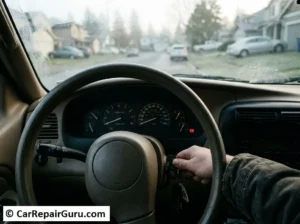
If the engine turns over more slowly than usual, the problem may involve the battery, starter motor, electrical connections, or engine itself.
A weak battery may struggle to provide enough current. Corroded cables can restrict current flow, while a worn starter or excessive mechanical resistance can also slow the engine.
What to do Check for loose or corroded battery connections and arrange a battery load test if needed. If the battery and cables pass testing, further diagnosis can help determine whether the starter is drawing too much current or failing to turn the engine properly.
5. Grinding or Metal-on-Metal Noise
A grinding noise during starting can mean the starter’s drive gear is not engaging correctly with the engine’s flywheel or flexplate. Damaged teeth, a worn starter drive, loose mounting hardware, or incorrect starter installation can contribute to the problem.
Repeated grinding can damage the starter gear or the engine’s ring gear, making the repair more expensive.
What to do Stop trying to start the engine if you hear repeated grinding. Arrange an inspection to identify the cause before attempting another start.
6. A Whirring Sound Without Engine Cranking
If you hear the starter motor spinning quickly but the engine itself does not turn, the starter drive may not be engaging the flywheel or flexplate.
This can happen because of a faulty starter drive mechanism or damaged engagement components. The exact cause depends on the starter design and vehicle.
What to do Avoid repeated starting attempts and have the starter and its engagement components inspected.
7. Smoke or a Burning Smell
A burning electrical smell or smoke near the starter or engine bay may indicate overheated wiring, a short circuit, a starter that is drawing excessive current, or a starter that remains engaged.
What to do Stop cranking immediately. Switch off the ignition if it is safe to do so. If smoke continues or a fire appears to be developing, move away from the vehicle and contact emergency services. Do not touch hot or damaged electrical components.
How the Starter Motor Works
The starter motor is an electric motor that turns the engine during startup. Once the engine begins running on its own, the starter should disengage.
The main components include the following.
- Starter motor Converts electrical energy from the battery into rotational force.
- Solenoid Operates the starter engagement mechanism and switches high electrical current to the motor in many starter designs.
- Drive gear Engages the engine’s ring gear to turn the crankshaft.
- Battery cables and ground connections Carry the large electrical current needed to operate the starter.
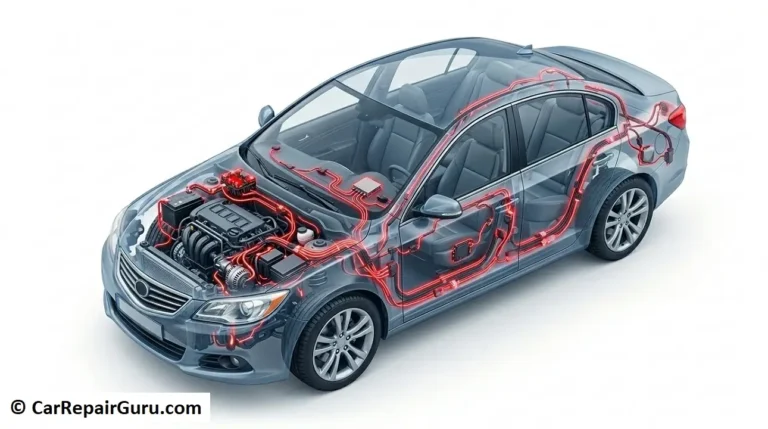
- Starter control circuit Includes the components that authorize and command starting, which may include a relay, ignition switch, clutch switch, transmission range switch, or electronic control module.
Because these components work together, a car that will not crank does not necessarily have a defective starter. The battery, cables, ground connections, control circuit, and mechanical condition of the engine may all need to be considered.
Is It the Starter, Battery, or a Connection Problem
Before buying a replacement starter, check the simpler possibilities first. The symptoms can provide clues, but proper testing is needed to identify the faulty component.
| What you notice | Possible causes | Next step |
|---|---|---|
| Rapid clicking | Weak battery, poor connection, or electrical supply problem | Check battery condition and terminals. |
| One solid click | Starter, solenoid, battery cables, ground, or control circuit fault | Test the battery and starting circuit. |
| Slow cranking | Weak battery, excessive cable resistance, faulty starter, or engine resistance | Test the battery and check voltage drop. |
| Lights work but no cranking | Battery unable to supply starter current, starter fault, relay, wiring, or interlock issue | Test the battery and starting circuit. |
| Grinding during starting | Starter drive, ring gear, mounting, or engagement problem | Stop repeated attempts and arrange an inspection. |
| Engine cranks normally but does not start | Fuel, ignition, engine management, or other engine fault | Follow a no-start diagnostic process rather than replacing the starter automatically. |
If your car cranks normally but does not start, the starter is already turning the engine. You may need a different diagnostic approach. See our guide to common reasons a car won’t start for other possible causes.
Check the Battery and Its Connections
With the engine off, inspect the battery terminals for visible corrosion, loose connections, damaged cables, or signs of leakage. Do not touch a leaking, swollen, cracked, or unusually hot battery. Have it inspected safely.
If you have a multimeter and know how to use it, you can measure the battery’s resting voltage across its terminals. A fully charged conventional 12-volt lead-acid battery often reads around 12.6 volts at rest, although the exact reading varies with battery type, temperature, and condition.
A low resting voltage can indicate that the battery needs charging. A normal reading does not prove that the battery can supply enough current to start the engine. A battery load or conductance test is more useful for assessing its ability to deliver starting power.
For more detailed instructions, see our guide on how to check your car battery at home.
Understand the Role of Battery Cables and Grounds
The starter draws a large amount of current. Even when the battery is charged, corrosion, loose terminals, damaged cables, or a poor engine ground can prevent enough current from reaching the starter.
A voltage-drop test checks how much voltage is lost through the positive and ground sides of the starting circuit while the circuit is under load. Excessive voltage drop can point to a cable, connection, or other resistance problem.
These tests require the correct equipment, safe probe placement, and the vehicle manufacturer’s specifications. If you are not trained to test a high-current starting circuit, have a qualified technician perform the checks.
The DENSO starter system diagnosis guide explains why the battery, cables, connections, control circuit, and starter should be assessed together before a component is replaced.
How to Diagnose a Starter Problem
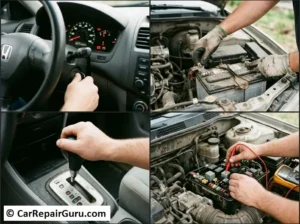
You can perform a few basic checks without removing the starter. More advanced electrical tests should be left to someone with the right tools and experience.
Step 1 – Make Sure the Vehicle Is Safe
- Park on a level surface and apply the parking brake.
- Keep the transmission in Park or Neutral, as appropriate, and follow the vehicle’s starting instructions.
- Keep hands, clothing, tools, and test leads away from belts, fans, and other moving parts.
- Do not reach underneath a vehicle while another person attempts to start it.
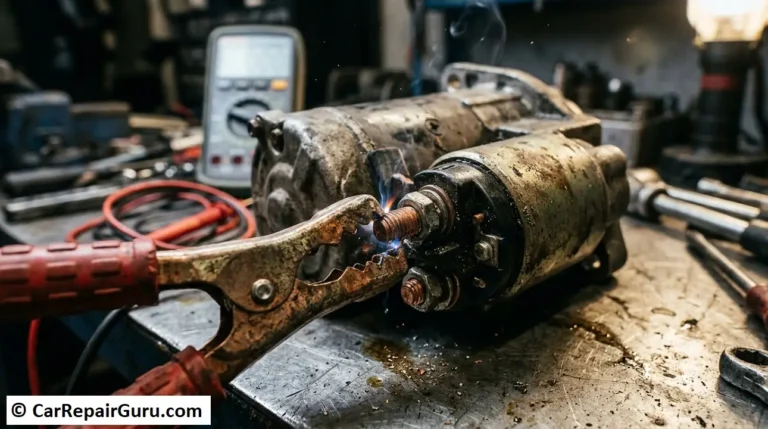
- Never bridge starter terminals with a tool or attempt to bypass the starting circuit.
If the vehicle has a hybrid or electric powertrain, follow its specific service procedures. High-voltage components require additional precautions.
Step 2 – Observe What Happens When You Try to Start the Engine
With the vehicle secured, try the normal starting procedure and pay attention to the result.
- Does the engine remain completely silent?
- Do you hear one click or rapid clicking?
- Does the engine crank slowly?
- Does the starter spin without turning the engine?
- Does the engine crank normally but fail to start?
These observations help narrow down the possibilities, but none of them alone confirms a failed starter.
Step 3 – Check the Battery Terminals
Look for obvious looseness, corrosion, damaged insulation, or broken cable connections. Do not disconnect the battery while the vehicle is running. If cleaning or tightening is necessary, follow the vehicle manufacturer’s battery-disconnection procedure and precautions.
If the battery is weak, charge and test it before drawing conclusions about the starter. If the battery passes testing and the connections are sound, move on to the starting circuit.
Step 4 – Check the Starting Interlocks
Automatic vehicles generally require the transmission to be in Park or Neutral before the engine can crank. Manual vehicles commonly use a clutch-start switch that prevents cranking unless the clutch pedal is pressed.
If the vehicle does not crank in Park, you can try the manufacturer’s normal starting procedure in Neutral, provided the vehicle is safely secured and the owner’s manual permits it. Keep your foot on the brake and the parking brake applied.
If the engine responds differently, a transmission range switch, clutch switch, adjustment, wiring, or related control issue may be involved. This does not prove that any one switch is faulty.
Step 5 – Have the Starting Circuit Tested
If the battery and connections pass their checks but the engine still does not crank, a technician can test the starter control signal, battery cable voltage drop, ground circuit, and starter performance.
Finding the correct test points and interpreting the results often requires a wiring diagram and vehicle-specific service information. A reading of battery voltage at a control terminal, by itself, is not enough to confirm that the starter motor has failed.
If the starter receives the correct command and electrical supply but fails its performance test, replacement or repair may be justified. If the starter passes, the diagnosis should continue through the rest of the starting system.
For further technical background, Fluke’s guide to starter-circuit voltage-drop testing explains how excessive resistance can affect starter operation. The actual test procedure and acceptable readings should follow the vehicle manufacturer’s service information.
When to Stop Trying to Start the Car
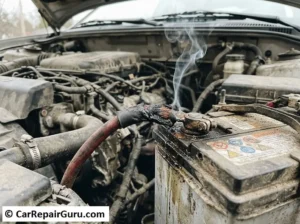
Repeated attempts will not fix a damaged starter or a poor electrical connection. They can also overheat the starter and cables.
Stop trying to crank the engine if you notice any of the following.
- Smoke or a burning electrical smell.
- Repeated grinding or a harsh metal-on-metal noise.
- The starter continues running after the engine starts.
- Battery cables become unusually hot or show signs of melting.
- The battery is damaged, leaking, swollen, or unusually hot.
If the starter remains engaged after the engine starts, switch off the engine if it is safe to do so and arrange professional assistance. Do not continue driving until the cause has been checked.
If the vehicle is stranded and will not crank, roadside assistance or towing may be safer than attempting an improvised repair.
Repair or Replace the Starter Motor
Once testing confirms that the starter itself is faulty, the next decision is whether to repair the existing unit or replace it.
When Starter Repair May Be Appropriate
Some starters can be repaired by replacing serviceable parts such as worn brushes, solenoid contacts, bushings, or the drive mechanism. Whether this makes sense depends on the starter design, the extent of the damage, the availability of parts, and the cost of labor.
A qualified repair shop can determine whether rebuilding the unit is practical or whether replacement is the better option.
Choosing a Replacement Starter
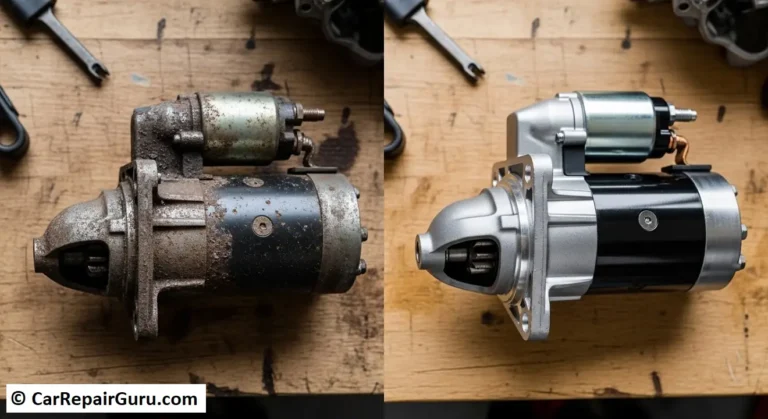
- New starter A new unit may be available from the original equipment manufacturer or an aftermarket supplier. Confirm that it matches the vehicle’s engine and configuration.
- Remanufactured starter A previously used unit has been rebuilt and tested to the supplier’s specifications. Quality and warranty coverage vary, so check the supplier’s terms.
- Used starter A used unit may cost less initially, but its remaining service life and condition can be uncertain.
Before buying a starter, confirm the correct part number and investigate why the original unit failed. A poor connection, oil contamination, heat exposure, or another unresolved problem can affect the replacement as well.
If testing confirms that replacement is necessary, follow our car starter motor replacement guide for a more detailed overview of the repair process.
Starter Motor Replacement Cost
The cost of replacing a starter depends on the vehicle, the type of replacement part, local labor rates, and how easily the starter can be reached.
On some vehicles, the starter is relatively accessible. On others, surrounding components may need to be removed before a technician can reach it. This can make labor costs substantially different even when the replacement part is similar.
When comparing estimates, ask whether the price includes the starter, labor, diagnostic testing, taxes, and any additional parts or repairs. A remanufactured unit may reduce the parts cost, but warranty coverage and fitment should also be considered.
Do not replace the starter solely because the engine will not crank. Confirming the fault first helps avoid paying for a part that does not solve the problem.
How to Reduce Starter Motor Wear
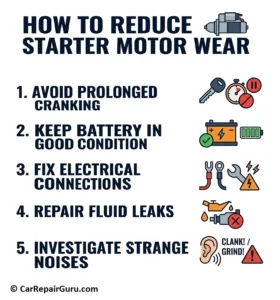
A starter is a wear component, and no maintenance routine can prevent every failure. A few sensible habits can help avoid unnecessary strain.
- Avoid prolonged cranking. Follow the vehicle manufacturer’s recommended starting intervals. If the engine does not start, pause between attempts rather than holding the starter on continuously.
- Keep the battery in good condition. A discharged or weak battery can contribute to slow cranking and repeated starting attempts.
- Address electrical connection problems. Have loose, damaged, or corroded terminals and cables repaired correctly.
- Fix relevant fluid leaks. If oil or another fluid reaches the starter, have the leak and any resulting contamination assessed.
- Investigate unusual starting noises early. Grinding, slow cranking, or intermittent starting may indicate a problem that needs attention before further damage occurs.
What to Do Next
If your car will not crank, start by observing the symptoms and checking the battery and its connections. If those checks do not identify the problem, have the starting circuit tested before buying a replacement starter.
Stop attempting to start the vehicle if you notice smoke, a burning smell, or repeated grinding. A careful diagnosis can help you avoid replacing good parts and get the right repair done safely.
Frequently Asked Questions
Can a jump start fix a bad starter?
A jump start can help if a weak battery is the reason the engine will not crank. It will not repair a mechanically damaged starter or a failed solenoid. If the battery is healthy and the engine still does not crank, further diagnosis is needed.
Can a car start intermittently with a faulty starter?
Yes. A worn starter, failing solenoid, loose connection, or another starting-system fault can cause intermittent problems. A vehicle that starts again after several attempts may still have an underlying fault, so arrange testing rather than assuming the problem has disappeared.
Can the dashboard lights work if the battery is too weak to start the car?
Yes. Dashboard lights and other accessories need much less current than the starter motor. The battery may power those systems but still fail to provide enough current to crank the engine.
Where is the starter motor located?
The starter is usually mounted near the point where the engine meets the transmission, but its exact location depends on the vehicle. It may be accessible from above or below, or hidden behind other components. Consult the owner’s manual or vehicle-specific service information before attempting removal.
What causes a starter motor to fail?
Possible causes include normal wear, damaged internal components, failed solenoid contacts, excessive heat, fluid contamination, and problems affecting the electrical supply. Testing helps determine whether the starter itself has failed or whether another part of the starting system is responsible.
How do I know whether the starter or alternator is faulty?
The starter turns the engine during startup. The alternator generates electrical power while the engine is running and helps recharge the battery. A no-crank problem can involve the starter or battery, while a charging problem may involve the alternator, wiring, battery, or charging controls. Symptoms can overlap, so proper testing is needed to identify the cause.
About the Author