Marco Riley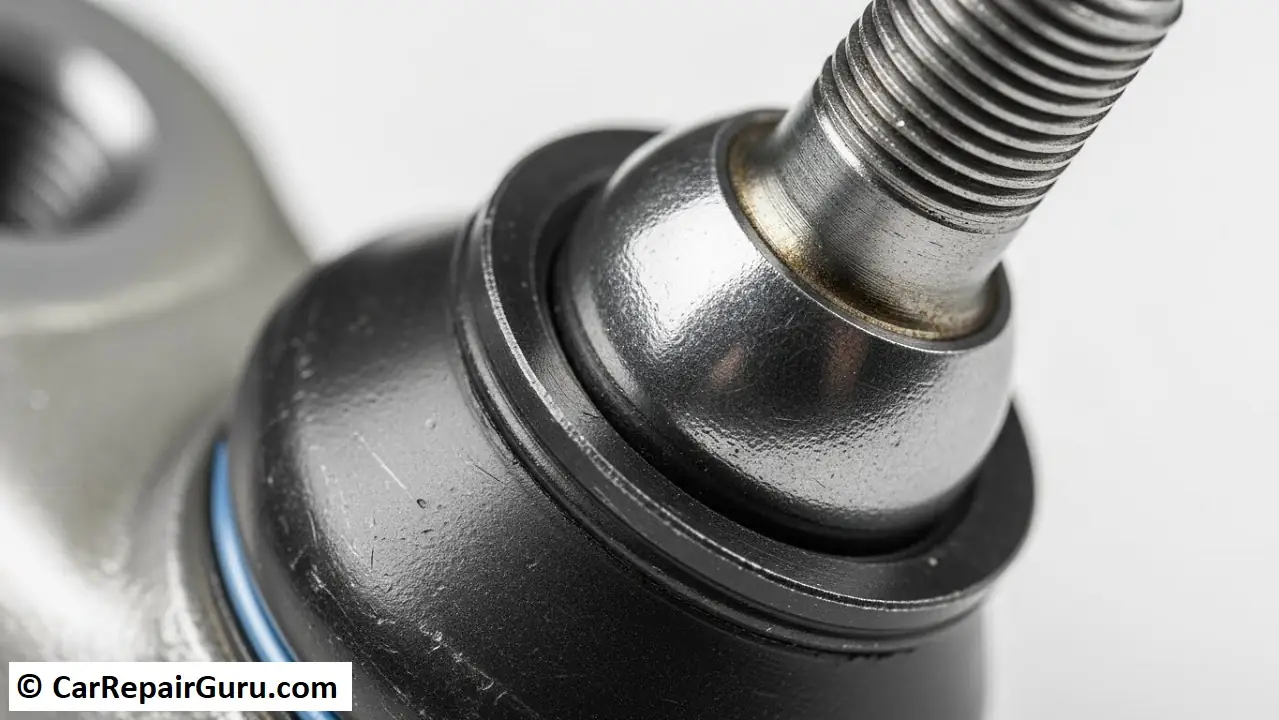
That mysterious ‘clunk’ you hear when you go over a speed bump, or the new vibration you feel in your steering wheel—it isn’t just annoying. It could be a warning sign from a critical, and often overlooked, part of your car’s suspension: the ball joint.
These small but mighty components are the unsung heroes of your car’s steering and suspension system, working tirelessly to keep your ride smooth and your steering precise. But when they fail, they can cause serious problems.
In this comprehensive guide, we’ll cover everything you need to know about ball joints. We’ll explore what they do, the 7 telltale symptoms of failure, how much a replacement costs, and why you should never, ever ignore the warning signs.
- What is a Ball Joint and What Does It Do?
- 7 Telltale Symptoms of a Bad or Failing Ball Joint
- 1. Clunking or Knocking Noises
- 2. Vibrations in the Steering Wheel or Floor
- 3. Vague or Wandering Steering
- 4. Uneven or Premature Tire Wear
- 5. Squeaking or Creaking Sounds
- 6. Shaky or Loose-Feeling Front End
- 7. Wheel Play or Movement
- What Causes Ball Joints to Fail?
- How to Check Your Ball Joints (A Simple Guide)
- The “Wiggle Test”
- Understanding the Different Types of Ball Joints
- Sealed vs. Greaseable Ball Joints
- Load-Carrying vs. Follower Ball Joints
- Ball Joint Replacement – Costs and What to Expect
- Ball Joint Replacement Cost Breakdown –
- Don’t Ignore the Clunk
- Frequently Asked Questions about Ball Joints
- Can you drive with a bad ball joint?
- What’s the difference between an upper and a lower ball joint?
- How long do ball joints last?
- Should I replace ball joints in pairs?
What is a Ball Joint and What Does It Do?
Think of a ball joint like the hip or shoulder joint in the human body. It’s a flexible ball-and-socket design that forms the critical pivot point between your wheels and your car’s suspension system.
Specifically, a ball joint connects the vehicle’s control arms to the steering knuckles (the part that holds your wheels). This clever design allows it to do two crucial jobs at once:
- It lets your wheels move up and down, absorbing bumps and keeping the ride smooth.
- It allows the steering knuckles to pivot left and right, so you can steer the car.
Without them, your car couldn’t steer or absorb bumps in the road. This makes them absolutely essential for safe vehicle control. A worn-out ball joint is a serious safety hazard because a complete failure can cause the wheel to partially detach from the suspension, leading to a total loss of steering control.
7 Telltale Symptoms of a Bad or Failing Ball Joint
A failing ball joint will almost always give you warning signs before it breaks completely. Learning to recognize these symptoms can save you from a dangerous situation and more expensive repairs down the road.
1. Clunking or Knocking Noises
This is the most common and recognizable bad ball joint noise. You’ll typically hear a distinct clunking or knocking sound coming from a corner of your vehicle, especially when driving slowly over bumps, potholes, or speed bumps. This sound is caused by the worn, loose stud knocking around inside the joint’s socket.
2. Vibrations in the Steering Wheel or Floor
As a ball joint wears, it develops excessive “play.” This looseness can translate into a subtle (or sometimes not-so-subtle) vibration that you feel in the steering wheel or through the floor of the car. The vibration may get worse as you accelerate or turn.
3. Vague or Wandering Steering
Does your car seem to have a mind of its own? If you find yourself constantly making small corrections to the steering wheel just to keep the car driving straight, a bad ball joint could be the culprit. The looseness in the joint prevents the suspension from holding a precise alignment, causing the vehicle to wander.
4. Uneven or Premature Tire Wear
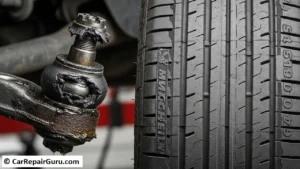
Your wheels need to be perfectly aligned to meet the road correctly. A worn ball joint allows the wheel to wobble and tilt, throwing off the alignment. This often results in accelerated wear on the inside or outside edge of your tires. If you see “scalloped” or “feathered” patterns on your tires, have your suspension checked immediately.
5. Squeaking or Creaking Sounds
Imagine the sound of a rusty old door hinge. A dry, worn-out ball joint can make a similar squeaking or creaking noise. You’ll most likely hear it when you turn the steering wheel or as the suspension moves up and down while driving. This is the sound of metal rubbing against metal, a clear sign the internal lubrication has failed.
6. Shaky or Loose-Feeling Front End
A general feeling of instability from the front of the car is a strong indicator of a worn suspension component. If the front end feels “loose,” shaky, or less responsive than usual, worn ball joints are a primary suspect.
7. Wheel Play or Movement
This is the definitive physical sign. While not something you’d notice while driving, a mechanic (or you, if you’re careful) can check for it. It involves wiggling the wheel to feel for looseness that shouldn’t be there.
What Causes Ball Joints to Fail?
Ball joints are designed to be durable, but they don’t last forever. They are wear-and-tear items, and several factors can cause them to fail prematurely.
- Lack of Lubrication (The Primary Culprit): The joint is filled with grease to allow the ball to pivot smoothly within the socket. Over time, this grease can break down or be forced out, leading to friction and rapid wear.
- Torn or Damaged Dust Boot: Every ball joint is protected by a small rubber boot. Its job is to seal the grease in and keep contaminants like water, dirt, and road salt out. If this boot tears, contaminants get in and act like sandpaper, destroying the joint from the inside out.
- Age and Normal Wear: After tens of thousands of miles of pivoting and supporting the vehicle’s weight, the metal components simply wear down. This is an unavoidable part of a vehicle’s life cycle.
- Impact from Road Hazards: Hitting a deep pothole, a curb, or a large piece of debris can cause a sudden, forceful impact that damages the internal workings of a ball joint.
- Aftermarket Suspension Modifications: Installing lift kits or lowering springs changes the suspension geometry. This can place the ball joints at more extreme angles, putting additional stress on them and causing them to wear out much faster.
How to Check Your Ball Joints (A Simple Guide)
If you’re experiencing any of the symptoms above, you can perform a basic physical check.
Disclaimer: This test requires safely jacking up your vehicle. If you are not 100% confident in your ability to do this safely with proper jack stands, leave this inspection to a professional mechanic. Safety is paramount.
The “Wiggle Test”
- Park your car on a flat, level surface and engage the parking brake.
- Safely lift the front of the vehicle with a jack and secure it firmly on jack stands. The wheel you’re testing should be off the ground.
- Grab the tire at the top (12 o’clock) and bottom (6 o’clock).
- Try to rock the wheel in and out by pushing with one hand while pulling with the other.
- Feel and listen for any movement, play, or clunking sounds. A healthy ball joint will allow for almost no movement. If you feel a noticeable “clunk” or see the wheel wiggling, you likely have a bad ball joint.
If this test reveals any play, it’s time to see a professional for a definitive diagnosis.
Understanding the Different Types of Ball Joints
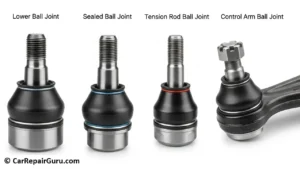
While all ball joints serve the same basic function, there are a few distinctions worth knowing.
Sealed vs. Greaseable Ball Joints
- Sealed (Non-Serviceable): These are the most common type on modern cars. They are “greased for life” at the factory and have no provision for adding new grease. They are maintenance-free, but once the internal grease fails, the entire joint must be replaced.
- Greaseable (Serviceable): Often found on trucks, older vehicles, and as premium aftermarket parts, these joints have a small “zerk” fitting. This allows you to pump fresh grease into the joint with a grease gun, flushing out old grease and contaminants and extending its lifespan.
Load-Carrying vs. Follower Ball Joints
- Load-Carrying: This joint bears the majority of the vehicle’s weight. On most cars, this is the lower ball joint. Because it’s under constant stress, it is the one that typically wears out first.
- Follower: This joint (usually the upper ball joint) acts mainly as a pivot point and does not support the main vehicle load. It endures less stress and often lasts longer than its load-carrying counterpart.
Ball Joint Replacement – Costs and What to Expect
If you’ve confirmed you have a bad ball joint, the next question is usually about cost. The ball joint replacement cost can vary significantly based on your vehicle and local labor rates.
Ball Joint Replacement Cost Breakdown –
- Parts Cost: The ball joint itself can range from $50 to $200 per joint. Premium or heavy-duty parts will be at the higher end of that range.
- Labor Cost: This is where the cost adds up. Replacement is a labor-intensive job that can take a mechanic 1-3 hours per side. Expect labor costs to be between $200 and $500 or more.
- Total Estimated Cost: On average, you can expect to pay between $250 and $700 per side for a ball joint replacement.
Crucial Post-Repair Step: Wheel Alignment
After a ball joint is replaced, a four-wheel alignment is mandatory. The new part will have different tolerances than the old, worn one, and your vehicle’s alignment will be off. Skipping the alignment will lead to poor handling, crooked steering, and will quickly ruin your tires, wasting hundreds of dollars.
Don’t Ignore the Clunk
Your car’s ball joints are fundamental to its safety and stability. The clunks, vibrations, and steering issues they cause when worn are not just annoyances—they are direct warnings that a critical component needs attention.
By understanding what to look and listen for, you can address the problem before it becomes a dangerous failure.
Hearing strange noises from your front end? Don’t wait for a breakdown.
Schedule a professional suspension inspection with our certified technicians today and drive with confidence!
Frequently Asked Questions about Ball Joints
Can you drive with a bad ball joint?
No. It is extremely dangerous and not recommended. While a slightly worn ball joint might just make noise, it will only get worse. A complete failure will cause the suspension to separate from the wheel. This will make the wheel collapse, leading to an immediate and total loss of steering control, which can be catastrophic, especially at speed.
What’s the difference between an upper and a lower ball joint?
As mentioned above, the primary difference is their role. The lower ball joint is typically the “load-carrying” joint that supports the vehicle’s weight and sees the most wear. The upper ball joint is usually a “follower” joint that acts as a pivot point.
How long do ball joints last?
There’s no single answer, but a typical lifespan is between 70,000 to 150,000 miles. This depends heavily on driving conditions. A car that frequently drives on rough, pothole-filled roads will wear out its ball joints much faster than one driven exclusively on smooth highways.
Should I replace ball joints in pairs?
Yes, it is highly recommended. If the ball joint on one side has failed due to age and mileage, the one on the other side has endured the exact same conditions and is likely not far from failing itself. Replacing them in pairs ensures balanced handling and saves you money on a separate labor bill and a second wheel alignment in the near future.
About the Author