Marco Riley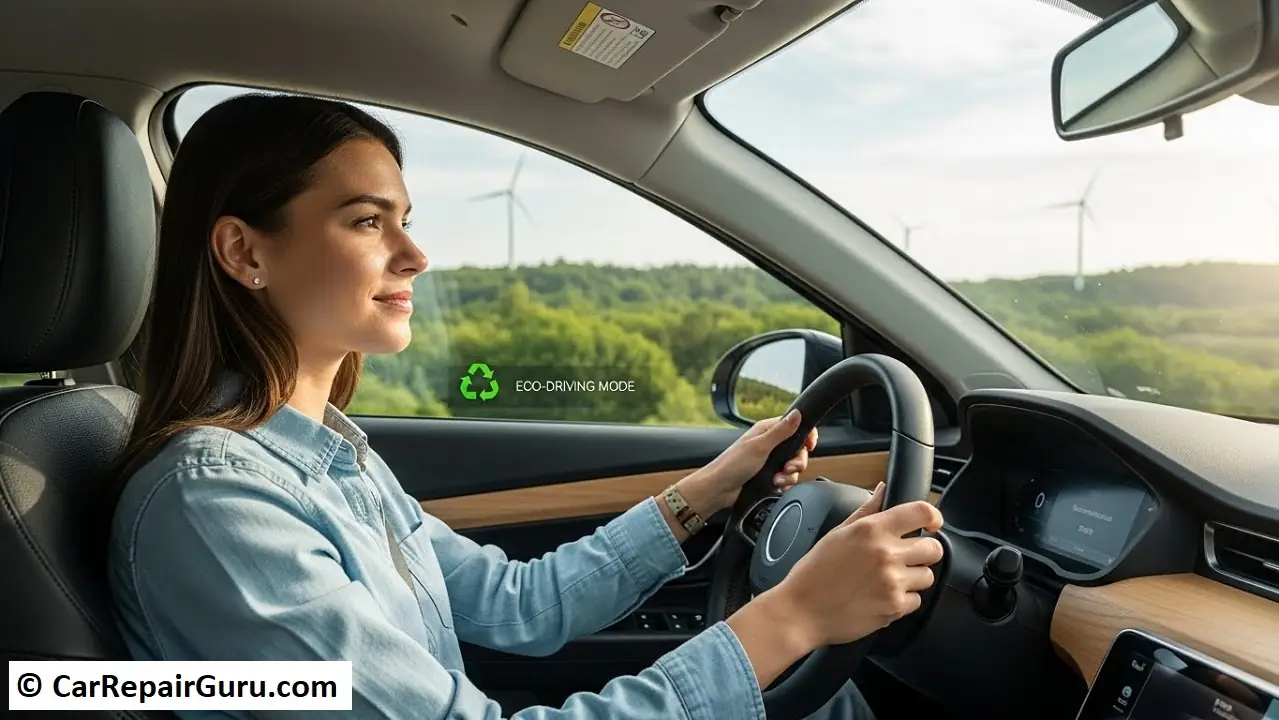
Let’s be honest: watching the numbers climb at the gas pump is painful. At the same time, many of us are looking for simple, effective ways to reduce our environmental impact. What if you could tackle both of these problems every time you get behind the wheel?
That’s exactly what eco-friendly driving habits are all about.
Eco-driving isn’t about buying a fancy new electric car (though that’s an option!). It’s a smart set of driving techniques and simple maintenance checks that can significantly boost your fuel efficiency, reduce your car’s emissions, and even extend the life of your vehicle. It’s about driving smarter, not harder.
The best part? These green driving tips are easy for anyone to learn and start using today. By making a few small adjustments, you’ll be doing a huge favor for your wallet and the planet. This guide will walk you through everything you need to know, from on-the-road techniques to busting common fuel-saving myths.
- On the Road – Smarter Driving Techniques for Maximum Fuel Efficiency
- 1. Drive Smoothly – Avoid Rapid Acceleration and Braking
- 2. Maintain a Steady Speed & Use Cruise Control
- 3. Obey the Speed Limit for Optimal Efficiency
- 4. Anticipate Traffic Flow and Coast More
- 5. Avoid Excessive Idling
- 6. Reduce Aerodynamic Drag
- Pre-Drive Prep – Setting Your Car Up for Success
- 7. Lighten Your Load
- 8. Check Your Tire Pressure Regularly
- 9. Stick to a Regular Maintenance Schedule
- 10. Plan and Combine Your Trips
- 11. Use Air Conditioning Wisely
- Leveraging Your Car’s Technology for Greener Miles
- 12. Understand and Use “Eco Mode”
- 13. Pay Attention to Your Trip Computer
- 14. Let Auto Start-Stop Technology Do Its Job
- 15. Follow the Gear Shift Indicator
- Eco-Driving Myths vs. Facts – What Really Works?
- The Bigger Picture – Long-Term Eco-Friendly Choices
- 16. Choose a Fuel-Efficient Vehicle
- 17. Consider Alternatives to Driving
- 18. Educate Yourself on Sustainable Fuel Options
- The Bottom Line – Benefits of Green Driving
- Start Your Eco-Driving Journey Today
- Frequently Asked Questions (FAQ)
- What is the most fuel-efficient speed to drive?
- Does turning the AC off really save a lot of gas?
- Is it better to idle or restart your car?
- How much money can I really save by eco-driving?
On the Road – Smarter Driving Techniques for Maximum Fuel Efficiency
The biggest changes start the moment you put your car in drive. These on-the-road habits focus on being smooth, steady, and strategic.
1. Drive Smoothly – Avoid Rapid Acceleration and Braking
Think of your gas and brake pedals as having an egg underneath them. If you stomp on them, you’ll crack the shell. This “egg-shell” mindset is the core of fuel-efficient driving. Aggressive driving—like jackrabbit starts from a stoplight and slamming on the brakes—is the single biggest fuel-waster. It can lower your gas mileage by 15-30% in stop-and-go traffic. Instead, accelerate gently and brake gradually.
2. Maintain a Steady Speed & Use Cruise Control
Your engine uses the most fuel when it’s forced to speed up. Constantly fluctuating your speed—speeding up, slowing down, speeding up again—burns through gas unnecessarily. On the highway, your car’s best friend is cruise control. It’s far better at maintaining a consistent speed than your foot is, which directly translates to better MPG and a less stressful drive.
3. Obey the Speed Limit for Optimal Efficiency
That lead foot is costing you more than just a potential speeding ticket. Most vehicles reach their peak fuel efficiency between 45-55 mph. As your speed increases beyond that, your fuel economy plummets. According to the U.S. Department of Energy, every 5 mph you drive over 50 mph is like paying an extra $0.25 per gallon for gas. Slowing down a little won’t add much time to your trip, but it will definitely save you money.
4. Anticipate Traffic Flow and Coast More
This is one of the most effective hypermiling techniques. Instead of focusing only on the car directly in front of you, look far down the road. See a red light ahead? A traffic jam forming? Take your foot off the gas early and let the car coast. Your car uses zero fuel when it’s coasting with the engine on. This reduces wear on your brakes and saves gas you would have burned just to stop a few seconds later.
5. Avoid Excessive Idling
An idling car gets 0 miles per gallon. It’s a common myth that restarting your engine uses more fuel than letting it idle. For a modern car, the break-even point is around 30 seconds. If you’re going to be stopped for longer than that—waiting for a train, picking someone up, or stuck in a non-moving line—it’s far more efficient to turn off the engine.
6. Reduce Aerodynamic Drag
Your car was designed to slice through the air, but anything you add to the outside can create drag and force the engine to work harder. If you have a roof rack or cargo box, remove it when you’re not using it. A rooftop cargo box can reduce fuel economy by anywhere from 2% to 17%. Similarly, driving with your windows down at highway speeds creates significant drag. In that scenario, it’s actually more fuel-efficient to use your A/C.
Pre-Drive Prep – Setting Your Car Up for Success
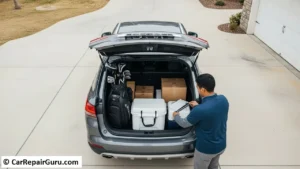
Eco-driving starts before you even turn the key. A little bit of planning and basic maintenance can make a world of difference.
7. Lighten Your Load
The heavier your car is, the more energy it takes to move it. It’s a simple matter of physics. Take a look in your trunk or back seat. Are you hauling around old sports equipment, bags of sand, or tools you haven’t used in months? Remove any unnecessary items. For every 100 pounds of extra weight you carry, you reduce your MPG by about 1%.
8. Check Your Tire Pressure Regularly
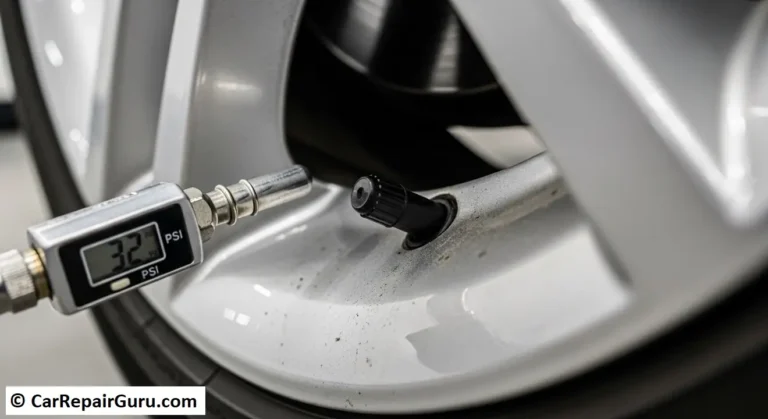
This is one of the easiest and most important things you can do. Under-inflated tires have more rolling resistance, meaning your engine has to work harder to move the car. Think of it like trying to ride a bicycle with flat tires. You should check your tire pressure at least once a month (and before any long trips). Properly inflated tires can improve your gas mileage by up to 3%. Find the correct pressure on the sticker inside your driver-side door jamb, not on the tire itself.
9. Stick to a Regular Maintenance Schedule
A happy car is an efficient car. Following your vehicle’s recommended maintenance schedule ensures it runs at its best. This includes:
- Regular Oil Changes: Using the manufacturer’s recommended grade of motor oil.
- Clean Air Filters: A clogged air filter can reduce acceleration and waste fuel.
- Engine Tune-Ups: Ensuring your spark plugs are in good shape helps your engine burn fuel efficiently.
A well-maintained engine uses less gas and produces fewer harmful emissions.
10. Plan and Combine Your Trips
Several short trips taken from a cold start can use twice as much fuel as one longer, multi-purpose trip covering the same distance. Your engine is least efficient when it’s cold. So, try to group your errands together. Plan your route to be as efficient as possible, using a GPS app to avoid traffic jams and unnecessary backtracking.
11. Use Air Conditioning Wisely
Your car’s air conditioner is a major power drain on the engine, and it can be one of the biggest drags on fuel economy. On hot days, try to park in the shade. When you first get in, roll down the windows for a minute to let hot air escape before turning on the A/C. At low speeds (around town), open your windows. At high speeds (on the highway), using the A/C is better due to the aerodynamic drag from open windows.
Leveraging Your Car’s Technology for Greener Miles
Most modern cars come equipped with features designed specifically to help you save fuel. It’s time to learn what they do and use them!
12. Understand and Use “Eco Mode”
If your car has a button labeled “ECO,” “Econ,” or with a little green leaf, use it! Activating eco mode adjusts your car’s performance to prioritize fuel efficiency. It typically does this by:
- Dulling the throttle response (making acceleration smoother).
- Shifting the transmission into higher gears sooner.
- Reducing the power of the air conditioning system.
It’s most effective for calm city and suburban driving.
13. Pay Attention to Your Trip Computer
Your dashboard is a powerful tool. Many cars have an “instantaneous fuel economy” display that shows your real-time MPG. Watching this meter provides immediate feedback on your driving habits. You’ll see exactly how hard acceleration tanks your MPG and how coasting sends it soaring. It’s like a video game where the high score is saving money.
14. Let Auto Start-Stop Technology Do Its Job
This feature, common in newer vehicles, automatically shuts off the engine when you come to a complete stop and seamlessly restarts it when you lift your foot off the brake. It’s designed to reduce fuel consumption during idling. While some drivers find it odd at first, the system is built to handle the extra starts and is a highly effective way to save gas in city traffic.
15. Follow the Gear Shift Indicator
If you drive a manual transmission, look for a small light or arrow on your dashboard that tells you when to shift up or down. This indicator is calibrated to recommend the most fuel-efficient gear for your current speed and load, helping you keep the engine in its optimal RPM range.
Eco-Driving Myths vs. Facts – What Really Works?
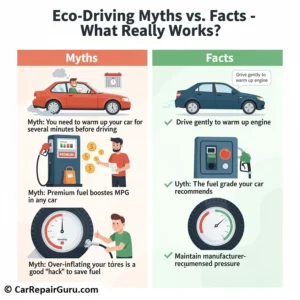
There are a lot of old wives’ tales about saving gas. Let’s separate the fuel saving myths from reality.
- Myth: You need to warm up your car for several minutes before driving.
- Fact: This is a holdover from the days of carbureted engines. Modern fuel-injected cars only need about 30 seconds. The best way to warm up your engine and its components is to drive away gently. Extended idling in the winter just wastes fuel and creates unnecessary emissions.
- Myth: Premium fuel boosts MPG in any car.
- Fact: Unless your car’s manufacturer specifically requires high-octane premium fuel (usually for high-performance engines), using it provides zero benefit to your fuel economy. You’re just paying more for no reason. Stick to the octane level recommended in your owner’s manual.
- Myth: Cruise control is always the most efficient option.
- Fact: It’s a champion on flat, open highways. However, on hilly terrain, cruise control can be wasteful. It will aggressively accelerate up hills to maintain a set speed, burning more fuel than a driver who would naturally ease off the throttle. In hilly areas, manual control is often better.
- Myth: Over-inflating your tires is a good “hack” to save fuel.
- Fact: This is dangerous. While it might slightly decrease rolling resistance, it also reduces your tires’ contact patch with the road, leading to poor traction, a harsh ride, and uneven wear. Always inflate your tires to the pressure listed on your driver-side door jamb.
The Bigger Picture – Long-Term Eco-Friendly Choices
While driving habits are key, a few bigger-picture decisions can have an even greater impact.
16. Choose a Fuel-Efficient Vehicle
When it’s time for a new car, your choice has the biggest long-term impact on your fuel costs and carbon footprint. Research the MPG ratings of different models and consider hybrids, plug-in hybrids (PHEVs), or fully electric vehicles (EVs).
17. Consider Alternatives to Driving
The most eco-friendly mile is the one you don’t drive. For shorter trips, could you walk or ride a bike? For your commute, is public transportation or carpooling an option? Reducing the number of times you use your car is the ultimate way to save fuel and reduce emissions.
18. Educate Yourself on Sustainable Fuel Options
Depending on where you live and what you drive, you may have access to biofuels or renewable natural gas. As technology evolves, staying informed about sustainable fuel alternatives can open up new ways to reduce your environmental impact.
The Bottom Line – Benefits of Green Driving
Adopting these eco-friendly driving habits is a win-win-win situation. The benefits are clear:
- Financial Savings: By improving your fuel economy by 10-30%, the average driver can save several hundred dollars every year.
- Environmental Impact: You will significantly reduce car emissions, including CO2 and other pollutants that contribute to smog and climate change.
- Vehicle Longevity: Smooth driving is gentle driving. It reduces wear and tear on your engine, transmission, brakes, and tires, saving you money on future repairs.
- Increased Safety: Many of these habits—like looking ahead, maintaining a safe following distance, and driving smoothly—are also core principles of defensive driving, making you a safer driver.
Start Your Eco-Driving Journey Today
You don’t have to master all these habits overnight. The journey to becoming a greener, more efficient driver starts with a single step.
Pick one or two tips from this list—like checking your tire pressure this weekend or focusing on smooth acceleration on your next commute. As you turn these actions into habits, you’ll see a real difference in your fuel consumption and feel great knowing you’re saving money while helping the planet.
What’s your favorite eco-driving tip? Share it in the comments below
Frequently Asked Questions (FAQ)
What is the most fuel-efficient speed to drive?
While it varies slightly by vehicle, most cars are most efficient between 45-55 mph. Fuel economy drops off significantly at speeds above this range due to increased wind resistance.
Does turning the AC off really save a lot of gas?
Yes, it can. The A/C compressor puts a significant load on the engine, reducing fuel consumption by as much as 25% in some conditions, particularly in hot weather and city driving.
Is it better to idle or restart your car?
For any modern car, it is better to turn off the engine if you anticipate being stopped for more than 30 seconds. Restarting uses a small burst of fuel, but letting it idle for longer wastes much more.
How much money can I really save by eco-driving?
By consistently applying these habits, the average driver can improve their fuel economy by 10-40%. If you spend $200 a month on gas, a 20% improvement means $40 back in your pocket every month—that’s nearly $500 a year!
About the Author