Marco Riley
That little yellow light on your dashboard—the one that looks like a flat tire with an exclamation mark—flickers on. Your heart sinks a little. It’s the Tire Pressure Monitoring System (TPMS) telling you one of your tires is low.
When you pull into a tire shop, you see a sign: “Fill Your Tires With Nitrogen! Improve Performance & Fuel Economy.” You’ve always just used the free air pump at the gas station. Now you’re faced with a choice. Is this nitrogen thing just clever marketing, or is it a genuinely better option for your car?
For decades, compressed air has been the standard. Now, nitrogen is presented as a premium upgrade. But what’s the real story behind it? This guide will cut through the hype, break down the science, and give you a clear, honest answer on whether nitrogen is a worthwhile investment for your vehicle.
- What is Nitrogen Tire Inflation?
- The Claimed Benefits of Nitrogen in Tires
- More Stable Tire Pressure
- Slower Pressure Loss
- Reduced Wheel and TPMS Sensor Corrosion
- Potential for Improved Fuel Economy and Tire Life
- The Downsides and Realities of Nitrogen
- The Cost Factor
- Availability and Convenience
- Marginal Gains for the Average Driver
- Nitrogen vs. Air – A Head-to-Head Comparison
- The Verdict – Is Nitrogen in Tires Worth It for You?
- YES, It’s Likely Worth It If You Are
- NO, You Can Probably Skip It If You Are
- Final Thoughts – The Bottom Line on Nitrogen
- Frequently Asked Questions (FAQ)
- Can you mix nitrogen and air in a tire?
- How do I know if my tires have nitrogen?
- Do I need special tires to use nitrogen?
- How often do you need to refill nitrogen tires?
What is Nitrogen Tire Inflation?
Before we can compare, let’s understand what we’re working with. The regular, compressed air you’ve been using your whole life isn’t just “air.” It’s a mix of gases.
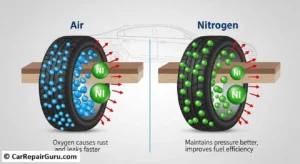
Standard Compressed Air: Roughly 78% nitrogen, 21% oxygen, and 1% other gases, including a significant variable: water vapor (moisture).
That’s right—the air you’ve been putting in your tires is already mostly nitrogen.
Nitrogen Tire Inflation: This service uses a specialized generator to produce nitrogen that is 93% to 95%+ pure.
The key takeaway isn’t just about adding more nitrogen; it’s about what’s being removed. The process purges the oxygen and, most importantly, the moisture from your tires. As you’ll see, that pesky oxygen and water vapor are the main culprits behind most common tire pressure problems.
The Claimed Benefits of Nitrogen in Tires
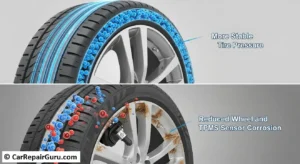
Proponents of nitrogen inflation point to several key advantages that stem from its pure, dry, and inert properties. Let’s break down each claim.
More Stable Tire Pressure
Have you ever noticed your tire pressure light comes on during the first cold snap of winter? That’s because the moisture in standard air expands and contracts significantly with temperature changes. As the air cools, the pressure drops.
Nitrogen, being a dry gas, is far less affected by temperature swings. This means the pressure inside your tires remains much more consistent, whether you’re driving on hot asphalt in August—conditions where you want to prevent a tire blowout—or through a freezing December morning. For performance drivers, this stability is crucial for predictable handling, but even for daily commuters, it means fewer false alarms from your TPMS.
Slower Pressure Loss
All tires naturally lose pressure over time. The rubber is technically porous, and gas molecules slowly seep through a process called permeation.
Here’s where a little physics comes in handy. Nitrogen molecules are physically larger than oxygen molecules. Think of it like trying to shake sand versus pebbles through a strainer—the smaller sand (oxygen) will pass through much more easily. Because of this, nitrogen-filled tires typically lose pressure at a rate that is 2-3 times slower than air-filled tires. This means less frequent top-ups and a better chance of your tires remaining at their optimal pressure for longer.
Reduced Wheel and TPMS Sensor Corrosion
This is one of the most undeniable benefits of nitrogen. The two corrosive elements in a standard air-filled tire are oxygen and moisture. Together, they create the perfect environment for rust and oxidation.
Over time, this moisture can cause rust on steel wheels and corrosion on expensive aluminum alloy wheels from the inside out. It can also damage the delicate electronic sensors of your TPMS, leading to a costly repair. Since pure nitrogen is an inert (non-reactive) and completely dry gas, it eliminates this internal corrosion, helping to preserve the life of both your wheels and your TPMS sensors.
Potential for Improved Fuel Economy and Tire Life
This is the benefit most often highlighted in marketing, but it comes with a major asterisk. Nitrogen itself doesn’t magically make your car more fuel-efficient.
The fuel savings and extended tire life come from maintaining the correct tire pressure. Under-inflated tires have a larger contact patch with the road, which increases rolling resistance and forces your engine to work harder, burning more fuel. They also wear out unevenly and prematurely.
Because nitrogen helps maintain optimal pressure for longer, it indirectly contributes to better fuel economy and tire longevity. However, a driver who diligently checks and tops off their air-filled tires once a month will achieve the exact same benefits.
The Downsides and Realities of Nitrogen
It’s not all upside. Before you make the switch, you need to consider the practical and financial drawbacks.
The Cost Factor
This is the biggest hurdle for most people. While compressed air is free at many gas stations and tire shops, nitrogen is not.
- Initial Fill Cost: Expect to pay anywhere from $5 to $10 per tire for a full purge and fill, meaning a total cost of $20 to $40, and sometimes up to $70+ at dealerships.
- Top-Up Cost: If you need a top-up later, you’ll need to return to a shop with a nitrogen service, which may also charge a small fee.
Availability and Convenience
Nitrogen inflation services are only available at specific tire shops, dealerships, and auto service centers. They are not nearly as common as air compressors.
Imagine you’re on a road trip and your TPMS light comes on in a small town. Your chances of finding a nitrogen station are slim. You’ll be forced to top up with regular air, diluting the nitrogen concentration and diminishing its benefits. For many, the convenience of ubiquitous, free air outweighs the marginal gains of nitrogen.
Marginal Gains for the Average Driver
Here’s the honest truth: for the person driving a sedan or SUV to work, school, and the grocery store, the difference in performance between nitrogen and well-maintained air-filled tires is practically zero. The pressure loss is so slow that a simple monthly check with a reliable pressure gauge will offer all the safety and efficiency you need.
Nitrogen vs. Air – A Head-to-Head Comparison
To make it simple, here’s a direct comparison of the key features.
| Feature | Nitrogen (93-95% Pure) | Regular Compressed Air |
|---|---|---|
| Composition | ~95% Nitrogen, ~5% Oxygen/Other | ~78% Nitrogen, ~21% Oxygen, Water Vapor |
| Pressure Stability | Excellent; less reactive to temp | Good; more affected by temp and moisture |
| Pressure Loss Rate | Slower | Faster |
| Cost | Premium Cost ($20-$70+ initial) | Free or very low cost |
| Availability | Limited to specific tire shops | Widely available everywhere |
| Wheel/TPMS Health | Excellent; prevents internal corrosion | Fair; moisture can cause corrosion over time |
The Verdict – Is Nitrogen in Tires Worth It for You?
So, we come back to the original question. The answer truly depends on who you are and what you drive.
YES, It’s Likely Worth It If You Are
- A Performance/Racing Enthusiast: You drive a high-performance car on the track or on winding roads where precise, stable tire pressure is critical for handling, grip, and safety.
- A Luxury or Classic Car Owner: You have expensive, custom, or rare wheels that you want to protect from any potential internal corrosion. The small investment is cheap insurance.
- Someone Who Stores a Vehicle: You own an RV, a classic car, or a summer sports car that sits for months at a time. Nitrogen’s slow leakage rate means the tires are less likely to develop flat spots from sitting while under-inflated.
- A Fleet Manager: You oversee a large fleet of commercial trucks. At that scale, the small improvements in fuel economy and reduced tire maintenance from consistent pressure can add up to significant savings.
NO, You Can Probably Skip It If You Are
- The Average Daily Commuter: You use your car for daily driving, errands, and family trips. The cost and inconvenience of nitrogen far outweigh the minimal benefits. Forming the simple, free habit of checking your tire pressure once a month with regular air will provide you with virtually all the same fuel economy and safety advantages.
Final Thoughts – The Bottom Line on Nitrogen
Nitrogen in tires offers scientifically proven, but marginal, advantages over regular air. Its main strengths are in maintaining a more stable pressure through temperature changes and protecting your wheels and TPMS sensors from internal corrosion.
However, for the vast majority of drivers, the extra cost and inconvenience are simply not justified. The single most important factor for your car’s safety, fuel efficiency, and tire life is not what gas is in your tire, but ensuring that it is kept at the correct pressure.
So, regardless of your choice, do this today: find a reliable tire pressure gauge, look for the sticker on your driver’s side door jamb to find the correct PSI for your vehicle, and check your tires. That simple, free habit is more valuable than any premium gas fill will ever be. If you aren’t sure where to start, check out my guide on how to inflate car tires properly.
Frequently Asked Questions (FAQ)
Can you mix nitrogen and air in a tire?
Yes, absolutely. It is 100% safe. Remember, air is already 78% nitrogen. If you have nitrogen-filled tires and need to top them up, using regular air is fine. It will just dilute the purity and reduce the benefits of the nitrogen fill. You do not need to have the tire purged and refilled.
How do I know if my tires have nitrogen?
Most auto shops that provide nitrogen inflation use signature green-colored valve stem caps to identify the tires. However, these caps can be bought by anyone or fall off, so it’s not a foolproof method. The only way to know for sure is from the vehicle’s service history.
Do I need special tires to use nitrogen?
No. Any standard passenger car or truck tire can be filled with either nitrogen or compressed air.
How often do you need to refill nitrogen tires?
While they lose pressure more slowly, nitrogen-filled tires are not “set it and forget it.” All tire and vehicle manufacturers recommend that you check your tire pressure at least once a month and before any long road trips, regardless of what’s inside them.
About the Author