Marco Riley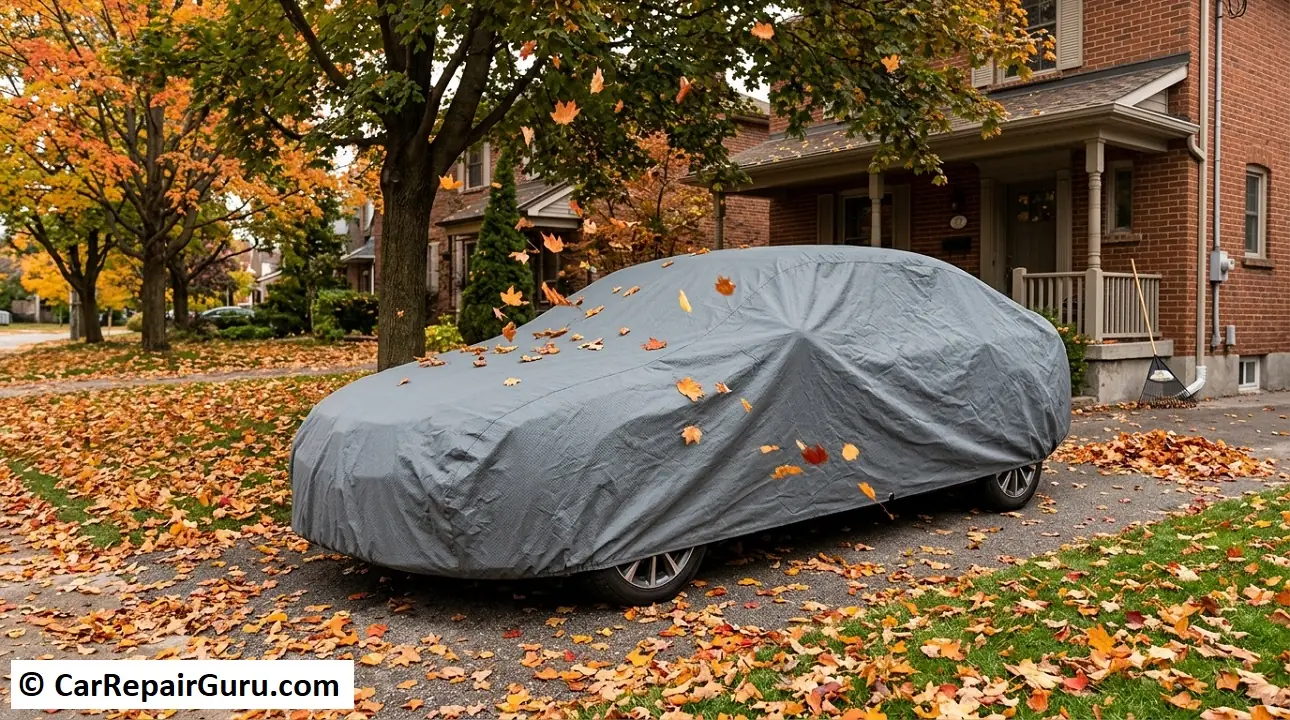
We all love the aesthetic of autumn. There’s something undeniable about the crunch of leaves under your boots and the trees turning brilliant shades of gold and crimson. But let’s be real for a second: if you’re a car owner, that beautiful foliage is a nightmare waiting to happen.
You park your car in the evening, and by morning, it looks like it’s been camouflaged for a forest expedition. While it might seem like a minor annoyance, leaving that foliage sitting on your hood is a dangerous game.
If you want to protect your car from falling leaves, it requires more than just brushing them off every few days. From acidic burns on your paint to catastrophic water leaks caused by hidden clogs, autumn leaves are deceptively destructive.
In this guide, we’re going to walk through exactly why leaves are the enemy of your car’s finish, how to prevent the damage, and the best ways to clean up the mess if you’re a little late to the party.
- Why Are Falling Leaves So Bad for Your Car?
- The Science of “Leaf Stains”
- The Rust Factor
- How to Protect Your Car From Falling Leaves
- 1. Strategic Parking (The First Line of Defense)
- 2. Invest in a Quality Car Cover
- 3. Fortify Your Paint – Wax and Ceramics
- The Hidden Danger – Leaves Clogging Car Drains
- Special Attention Required – Soft Tops and Convertibles
- The Fire Hazard – Leaves Under the Hood
- Don’t Forget the Inside – Cabin Air Filters and Floor Mats
- Best Ways to Remove Leaves Without Scratching Paint
- Damage Control – How to Remove Leaf Stains from Car
- Step 1 – Wash It
- Step 2 – Chemical Decontamination
- Step 3 – The Clay Bar
- Step 4 – Polish (The Nuclear Option)
- Final Thoughts
- Frequently Asked Questions
Why Are Falling Leaves So Bad for Your Car?
You might be thinking, “It’s just a leaf. It’s organic. How much damage can it really do?”
The answer is: a lot, and fast.
The danger lies in the chemistry. When leaves fall, they begin to decompose almost immediately. This process is accelerated by morning dew and autumn rain. As they break down, they release sap, pollen, and acids.
The Science of “Leaf Stains”
The primary culprit here is tannic acid. Different trees have different levels of tannins (oaks are notorious for high levels). When a wet leaf sits on your car’s surface, that acid leaches out and tries to bond with your clear coat.
If left too long, this creates a “leaf print”—a fossil-like silhouette etched into the paint. This isn’t just a surface stain; it’s actually a chemical burn that has eaten into the clear coat. This is practically synonymous with car paint leaf damage, and fixing it often requires professional polishing.
The Rust Factor
Beyond the chemical attack, piles of leaves act like a sponge. They trap moisture against your car’s metal components. If leaves pile up in the crevices of your trunk, hood jams, or wheel wells, that trapped water accelerates corrosion. In short: wet leaves equal rust.
How to Protect Your Car From Falling Leaves
Prevention is always cheaper than repair. You don’t need to build a hermetically sealed bubble, but you do need a strategy. Here are the most effective fall car care tips to keep your vehicle safe.
1. Strategic Parking (The First Line of Defense)
This sounds obvious, but it requires intention. If you have a garage, clear out the clutter and use it. If you rely on street parking or a driveway, look up.
- Identify the offenders: Avoid parking directly under deciduous trees like maples, oaks, and elms, which drop heavy, sap-filled leaves.
- Seek the evergreens: If you must park under a tree, pines are slightly better regarding leaf volume, though you still have to contend with needles and sap.
2. Invest in a Quality Car Cover
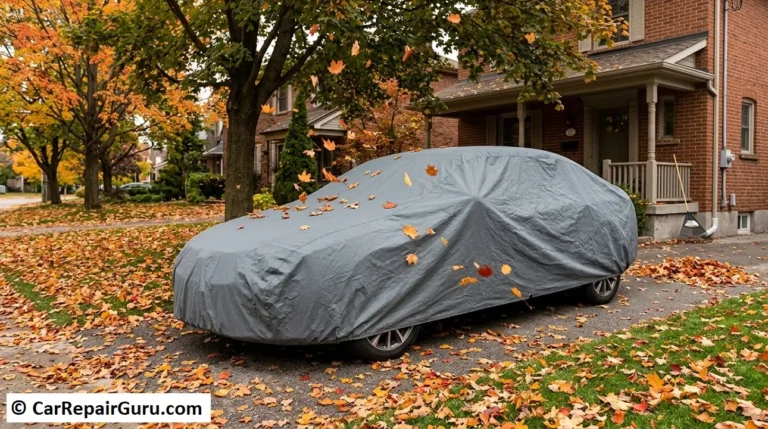
If you don’t have a garage, a car cover for autumn is your best friend. However, not all covers are created equal.
- Go Breathable: You need a cover that blocks water but allows airflow. If the cover isn’t breathable, you will trap moisture between the fabric and the paint, which can cause mildew and paint clouding.
- The “Clean Car” Rule: Never put a car cover on a dirty car. The wind will buff the cover against the dirt on your paint, acting like sandpaper.
3. Fortify Your Paint – Wax and Ceramics
Think of this as putting a shield on your car. You want to create a sacrificial layer between the leaf’s acid and your clear coat.
- Ceramic Coating: This is the gold standard. A ceramic coating creates a hydrophobic surface. Leaves (and the water they hold) will have a much harder time sticking to the surface.
- Carnauba or Synthetic Wax: If a ceramic coating is out of your budget, a good coat of high-quality wax applied in early September works wonders. It makes the surface slick, meaning many leaves will simply slide off when you start driving.
The Hidden Danger – Leaves Clogging Car Drains
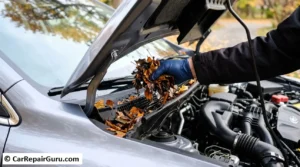
This is the part of the article that could save you thousands of dollars in electrical repairs.
Cars have drainage channels designed to funnel rainwater off the roof and windshield and down to the ground. When leaves fall, they don’t just land on the hood; they slide down into the windshield cowl (the black plastic grill area where your wipers sit).
Beneath that plastic grill is a space called the plenum chamber. This houses your air intake and often your car’s ECU (brain). If leaves pile up here, they turn into a sludge that blocks the drain holes.
What happens next?
- It rains.
- The water has nowhere to drain because of the leaf sludge.
- The water rises like a bathtub filling up.
- Eventually, it spills over into the cabin air intake.
- You wake up to soak-wet floor mats, a moldy smell, and potentially fried electronics.
The Fix: Pop your hood once a week during fall. clear the leaves out of the corners near the windshield hinges. It takes thirty seconds and saves you a massive headache.
Special Attention Required – Soft Tops and Convertibles
If you drive a convertible, autumn requires a whole different level of vigilance. While a hardtop allows leaves to slide off (mostly), a fabric soft top acts like Velcro. The texture of the canvas grabs onto leaves and pine needles, holding them in place while they decompose.
The Fabric Threat Unlike clear coat, which provides a hard barrier, your convertible top is porous. If wet leaves sit on a ragtop, the tannic acid soaks directly into the fibers. This can lead to deep, stubborn staining that is incredibly difficult to remove without harsh chemicals that might damage the waterproofing.
How to Handle It:
- The Vacuum Method: Never brush a convertible top aggressively. Instead, use a vacuum cleaner with a soft brush attachment to gently lift debris out of the fabric weave.
- Fabric Guard: Just as you wax your paint, you need to apply a fabric protectant (often called a hydrophobic spray) to your soft top before the leaves start falling. This prevents moisture and leaf dyes from penetrating the fibers.
The Fire Hazard – Leaves Under the Hood
We’ve talked about cosmetic damage and water leaks, but there is a genuine safety issue that often gets overlooked: leaves in the engine bay.
When you drive, your engine generates immense heat. The exhaust manifold and catalytic converter can reach temperatures high enough to ignite dry, combustible materials. Leaves that slip through your front grille or drift into the engine bay while the hood is open can settle in nooks and crannies near these hot components.
The “Crispy” Risk While wet leaves cause rust, dry leaves are tinder. As your engine heats up, those trapped leaves dry out completely and can essentially catch fire or smolder, damaging wiring harnesses and belts.
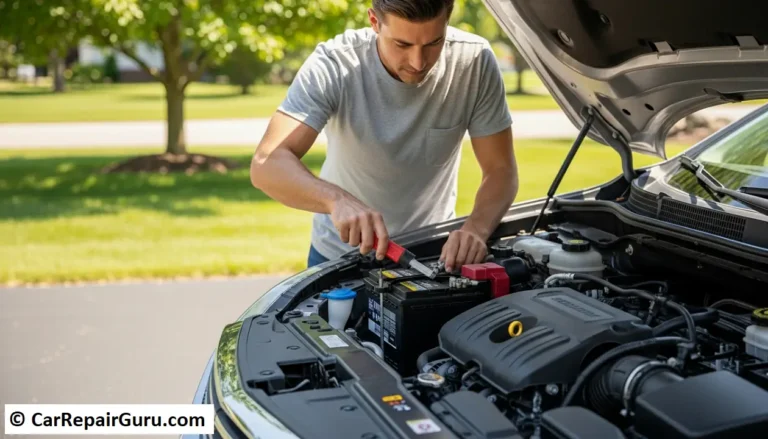
The Maintenance Check: Every time you fill up your gas tank during autumn, take two minutes to pop the hood. Look for piles of leaves gathering in the corners near the firewall, around the battery, or tucked behind the headlights. A quick clear-out by hand (when the engine is cool!) ensures your daily commute doesn’t turn into a roadside emergency.
Don’t Forget the Inside – Cabin Air Filters and Floor Mats
While we focus heavily on the exterior, protecting your car from falling leaves also involves the interior. Leaves have a nasty habit of following you inside.
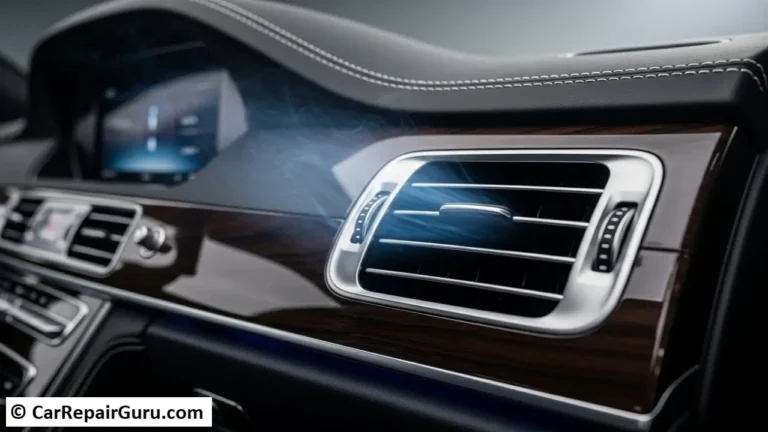
The Cabin Air Filter Remember that “Plenum Chamber” we mentioned earlier? That is where your car draws in fresh air. As leaves disintegrate in that area, tiny particles of leaf dust and mold spores get sucked into your HVAC system.
- If your AC starts smelling musty or earthy in October, your cabin air filter is likely choked with leaf debris.
- Pro Tip: Check and replace this filter (usually located behind the glove box) at the end of the fall season to ensure you aren’t breathing in mold spores all winter.
Floor Mat Defense You track in crushed leaves, mud, and “leaf mulch” on your shoes every time you get in the car. This organic matter rots quickly in the warmth of your car’s interior, leading to bad odors and potential mold growth in your carpet.
- Switch from carpeted mats to all-weather rubber floor mats during the fall. They trap the sludge and are easy to hose off, keeping the actual carpeting of your car pristine.
Best Ways to Remove Leaves Without Scratching Paint
It’s a crisp Tuesday morning, and your car is covered. How do you get them off?
Do NOT wipe them with your hand or a dry towel.
Leaves are often covered in grit, dust, and dirt. If you drag your hand across the hood to sweep them off, you are dragging that grit across your clear coat. This creates “swirl marks” (micro-scratches) that dull your paint over time.
Instead, use these methods:
- The Leaf Blower Method: This is the safest and most effective method. Use a leaf blower to blast the debris off the car. It’s touchless, meaning zero risk of scratches.
- The “Drive-Off”: If visibility isn’t impaired, driving at a moderate speed will blow most dry leaves off (thanks to that wax you applied!).
- The “Lift and Pick”: If you must use your hands, pick the leaves up vertically. Do not sweep. Lift them off the surface.
Damage Control – How to Remove Leaf Stains from Car
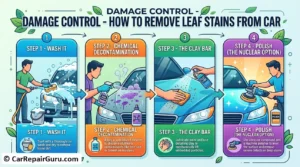
Okay, you missed the prevention step. You peeled a wet maple leaf off your hood, and now there is a ghostly outline of the leaf left behind. Don’t panic, but act fast.
Step 1 – Wash It
Start with a thorough two-bucket car wash to remove any remaining acidity or surface dirt.
Step 2 – Chemical Decontamination
Sometimes the “stain” is just sap or organic residue sitting on top of the paint. Use a dedicated bug and tar remover or a specialized sap remover. Apply it, let it dwell for a minute, and gently wipe it away with a microfiber cloth.
Step 3 – The Clay Bar
If the stain persists, the contaminants are embedded. A clay bar kit is excellent for pulling out surface contaminants. Lubricate the area with detailing spray and gently rub the clay over the stain until the surface feels smooth as glass.
Step 4 – Polish (The Nuclear Option)
If you can still see the outline after using a clay bar, the tannic acid has actually etched the clear coat. You need to level the paint surrounding the damage.
- Use a dual-action polisher and a mild polishing compound.
- This removes a microscopic layer of clear coat, essentially “erasing” the etching.
- Note: If you aren’t comfortable doing this, take it to a professional detailer.
Final Thoughts
Autumn is a beautiful season for a drive, but it requires a little extra vigilance. By taking the time to protect your car from falling leaves, keeping those drains clear, and waxing your paint, you ensure your vehicle looks as good in December as it did in August.
Don’t let the foliage fool you—keep your guard up, keep your cover on, and keep that paint protected!
Frequently Asked Questions
Does vinegar remove leaf stains from car paint?
White vinegar is acidic, which can help dissolve mineral deposits, but using it on leaf stains is risky. Since the leaf stain is already caused by acid, adding more acid isn’t always the best move. It’s safer to use a dedicated paint cleaner or polish.
How long does it take for leaves to damage car paint?
It depends on the weather. If the leaves are dry, they can sit for weeks with little issue. If the leaves are wet, tannic acid can begin etching your paint in as little as 24 to 48 hours.
Can I use a broom to sweep leaves off my car?
Absolutely not. Bristles on household brooms are too stiff for automotive paint and will leave deep scratches.
Are pine needles worse for my car than regular leaves?
Yes, their thin shape allows them to wedge deep into seals and drains where broad leaves can’t fit, plus they are often coated in sticky, hard-to-remove sap.
How often should I wash my car during peak leaf season?
Aim for a wash at least once a week to neutralize acidic residue from wet leaves and prevent debris from building up in your drainage channels before it causes leaks.
About the Author