Marco Riley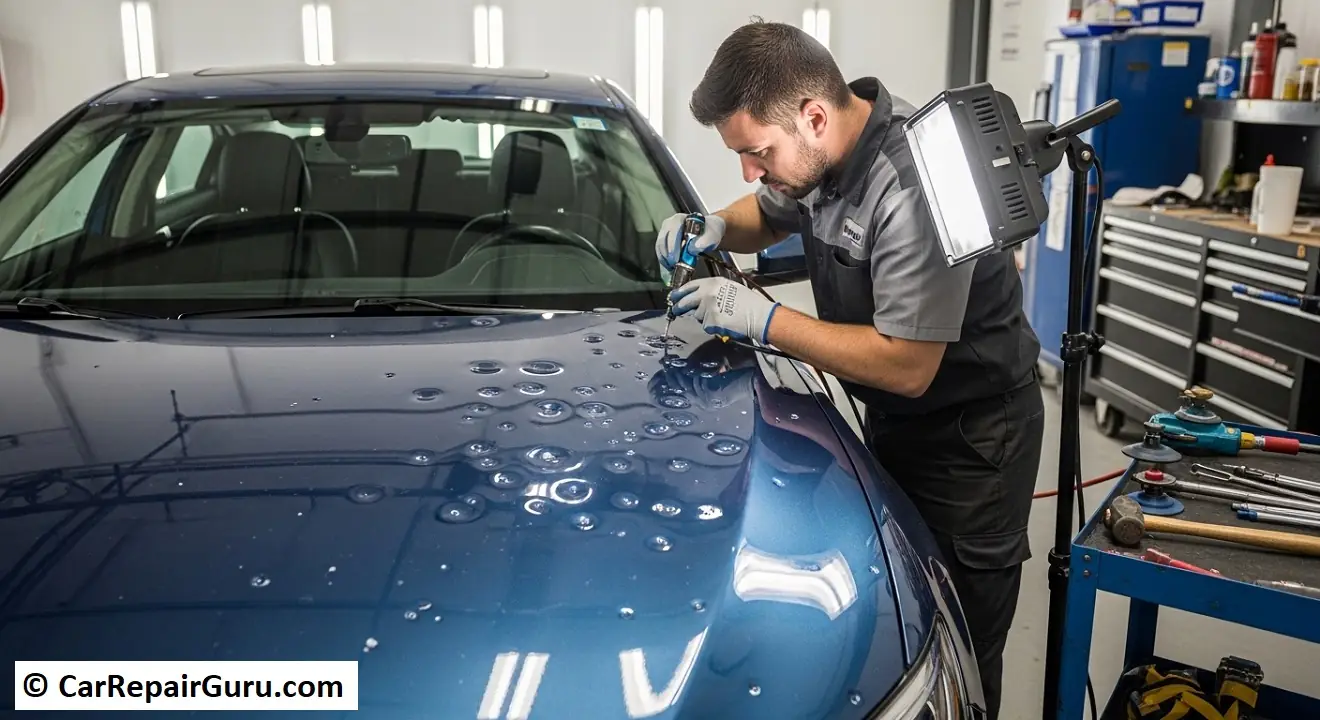
You know that sinking feeling. The sky turns a bruised shade of purple, the wind picks up, and suddenly, the deafening sound of ice pelting your roof begins. Once the storm passes, you walk out to your driveway to find your pride and joy looking like the surface of a golf ball.
It’s frustrating, heartbreaking, and frankly, a headache you didn’t need.
If you are looking to repair hail damage on your car, take a deep breath. While the dimples across your hood look terrible right now, the good news is that modern repair technology has made fixing hail damage faster and more effective than ever before. In most cases, your vehicle can be restored to its pre-storm condition without losing its original factory value.
In this guide, we’re going to walk you through everything you need to know—from accurate cost estimates and the magic of Paintless Dent Repair (PDR) to navigating the confusing world of insurance claims.
- Assessing the Damage – What to Look For
- How to Inspect Properly
- Common Impact Zones
- Best Methods to Repair Car Hail Damage
- Paintless Dent Repair (PDR) – The Gold Standard
- Traditional Auto Body Repair
- Panel Replacement
- How Much Does it Cost to Repair Hail Damage?
- The Full Vehicle Cost
- Does Car Insurance Cover Hail Damage?
- Comprehensive vs. Collision
- The Deductible
- Can a Car be Totaled by Hail?
- DIY Hail Repair – Fact vs. Fiction
- Myth 1 – The Sun and Dry Ice
- Myth 2 – The Hairdryer and Compressed Air
- Myth 3 – DIY PDR Kits (Glue Pulling)
- How to Choose a Hail Repair Shop
- Final Thoughts
- Frequently Asked Questions (FAQ)
Assessing the Damage – What to Look For
Before you start Googling body shops, you need to understand the extent of the carnage. Storms are unpredictable; one car might escape with a few nicks, while the one parked next to it gets hammered.
How to Inspect Properly
Don’t just glance at the car in the bright midday sun. Direct sunlight can actually wash out the shadows, making small dents invisible to the naked eye until it’s too late.
- Wash the Car: It sounds counterintuitive, but dirt and pollen hide imperfections. You need to properly wash and wax the car first to get a clear view of the clear coat.
- Find the Right Light: Pull the vehicle into a garage or a shaded area. If you can, look at the panels under fluorescent lighting or use a specialized PDR light board.
- Check the Reflection: Look at the reflection of a straight line (like the edge of your garage door) in the car’s paint. Where the line wavers or distorts, that’s a dent.
Common Impact Zones
While hail falls from the sky, it doesn’t always hit straight down. Wind direction plays a huge role. Be sure to check:
- The Hood and Roof: These flat surfaces usually take the brunt of the damage.
- The Trunk Lid: Often overlooked but easily damaged.
- Top of Fenders and Rails: The structural rails running above your doors are difficult to repair, so identify damage here early.
- Moldings and Glass: Don’t forget to check your windshield for chips and your plastic trim or bumper covers for cracks.
Best Methods to Repair Car Hail Damage
Not all repair methods are created equal. Depending on the severity of the storm, a technician will recommend one of two primary paths: Paintless Dent Repair (PDR) or Traditional Auto Body Repair.
Paintless Dent Repair (PDR) – The Gold Standard
If you hear the term “auto hail repair” today, 90% of the time, it refers to PDR.
What is it?
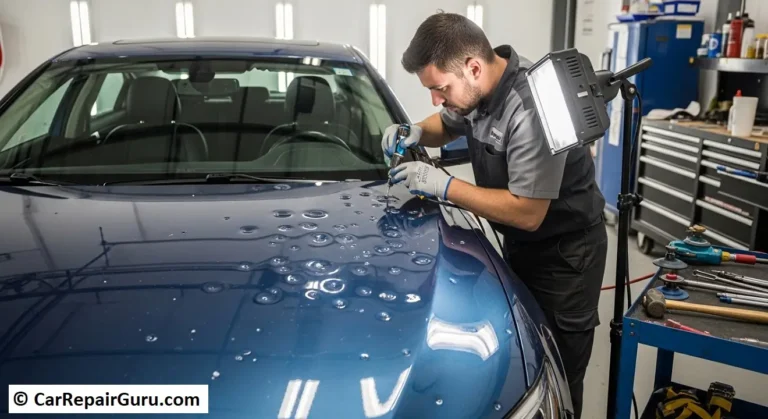
PDR is a non-invasive method where specialized technicians use long metal rods and body picks to access the back of the panel. They gently massage the metal back into its original shape, millimeter by millimeter.
Why is it better?
- Original Paint Retention: This is the biggest advantage. You keep your factory finish, which means no color matching issues and no risk of overspray.
- Value Protection: Because the original paint remains intact, the resale value of your vehicle is not diminished.
- Speed: A PDR team can often finish a car in 1–3 days, whereas a body shop might need weeks.
Traditional Auto Body Repair
Sometimes, the damage is just too severe for PDR. If the hail cracked the paint, or if the metal is stretched beyond return, traditional methods are required.
The Process:
This involves sanding the paint down to the metal, filling the dent with body filler (often called Bondo), sanding it smooth, priming, and finally repainting the panel.
The Downside:
It takes longer, costs more in labor/materials, and breaking the factory paint seal can eventually lead to clear coat peeling or mismatched colors years down the road. You may end up needing to fix chipped car paint issues later if the prep work wasn’t perfect.
Panel Replacement
In extreme cases—often with aluminum hoods which are difficult to mold—it may be cheaper to simply unbolt the damaged panel and replace it with a new one.
How Much Does it Cost to Repair Hail Damage?
This is the question everyone asks: What is the car hail damage repair cost going to be?
The honest answer is: it depends. Hail repair pricing is typically calculated using a “matrix” that accounts for the number of dents and the size of the dents (dime, nickel, quarter, or half-dollar size).
Here are some general industry averages to give you a baseline:
- Small Dents (Dime/Nickel size): $30 – $45 per dent.
- Medium Dents (Quarter size): $50 – $75 per dent.
- Large Dents (Half-Dollar+): $75 – $150+ per dent.
The Full Vehicle Cost
Because a severe storm can leave hundreds of dents across a vehicle, shops usually cap the price per panel.
- Light Damage: $2,000 – $3,000
- Moderate Damage: $3,000 – $6,000
- Severe Damage: $6,000 – $10,000+
Note: Luxury vehicles or cars with aluminum panels (like Ford F-150s or Teslas) often have a 25% surcharge due to the difficulty of working with those metals.
Does Car Insurance Cover Hail Damage?
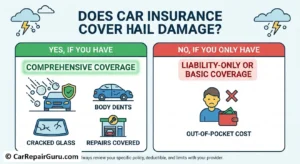
Many drivers panic after a storm, worried that filing a claim will skyrocket their premiums. Here is the reality of insurance for hail damage.
Comprehensive vs. Collision
Hail damage is not a collision. You didn’t hit anyone, and no one hit you. Therefore, it falls under Comprehensive Coverage.
- The Good News: Most full-coverage policies include comprehensive.
- The “Act of God” Clause: Insurance companies classify weather events as “Acts of God.” Because this damage was out of your control, filing a hail claim typically does not raise your individual insurance rates. However, if a massive storm wipes out a whole zip code, the base rates for everyone in that area might creep up slightly the following year.
The Deductible
You will likely have to pay your deductible (usually $500 or $1,000) before insurance kicks in. However, some specialized hail repair shops offer to cover or discount your deductible as an incentive to use their services.
Can a Car be Totaled by Hail?
Yes. If you drive an older vehicle, the cost of repair (labor + parts) might exceed the vehicle’s cash value. If the repair estimate is $5,000 but the car is only worth $4,000, the insurance company will declare it a total loss.
DIY Hail Repair – Fact vs. Fiction
In the age of TikTok and YouTube, you will inevitably see videos claiming you can fix hail dents yourself with household items.
Let’s debunk the most common DIY hail repair car myths:
Myth 1 – The Sun and Dry Ice
The Theory: Park the car in the hot sun to expand the metal, then rub dry ice on the dent to shock it with cold, causing it to pop out.
The Reality: This rarely works on modern automotive steel. At best, it might reduce a shallow dent slightly. At worst, the rapid temperature change can crack your paint and clear coat, turning a $50 dent into a $500 paint job.
Myth 2 – The Hairdryer and Compressed Air
The Theory: Similar to the ice method, using heat and cold air to shrink the metal.
The Reality: You are more likely to melt your clear coat or warp the plastic trim than you are to fix the dent.
Myth 3 – DIY PDR Kits (Glue Pulling)
The Theory: Buying a cheap Amazon kit to glue plastic tabs to the dent and pull them out.
The Reality: PDR is an art form that takes years to master. If you pull too hard, you create a “high spot” (an outward bump), which is often harder to fix than the original dent. Or, you might accidentally pull the paint right off the car. For general dings, you might look into basic car dent removal techniques, but hail is usually too extensive for a novice.
Verdict: Leave hail repair to the professionals. The risk of causing permanent damage to your vehicle’s finish outweighs the money you might save.
How to Choose a Hail Repair Shop
Not all shops are equipped to handle a hail catastrophe. When thousands of cars are damaged at once, “storm chasers” (temporary tents set up in parking lots) often flood the town. While some are legitimate, others are fly-by-night operations.
Here is how to vet a shop:
- Look for PDR Specialization: General body shops do everything (collisions, scratches, frame damage). You want a shop that specializes in auto hail repair. They are faster and usually better at the specific art of PDR.
- Check for Lifetime Warranties: Reputable shops guarantee their work for as long as you own the car. If a dent pops back in or paint peels, they should fix it for free.
- Insurance Assistance: A good shop acts as a liaison between you and your insurance adjuster. They know how to read the “matrix” and ensure the insurance company pays for every dent, not just the ones they saw in a 5-minute inspection.
- Local Reviews: Check Google reviews. Look for photos of before-and-after work.
Final Thoughts
Seeing your vehicle covered in hail dents is stressful, but it is a temporary problem. The industry has evolved, and with methods like Paintless Dent Repair, you can erase the damage completely without sacrificing your car’s original factory finish.
If you have been hit by a storm, don’t wait. The longer you leave the damage, the more likely the spots are to rust on the car body if the paint is cracked or suffer from sun damage. Contact a local hail repair specialist, verify your insurance coverage, and get your car looking brand new again.
Frequently Asked Questions (FAQ)
How long does it take to repair hail damage?
If using Paintless Dent Repair (PDR), repairs typically take 1 to 3 days. If traditional body work and painting are required, it can take 1 to 2 weeks depending on the shop’s backlog.
Can hail damage be fixed without painting?
Yes! As long as the paint surface is not cracked or scratched, PDR is the preferred method to fix dents without painting.
Should I claim hail damage on insurance?
Generally, yes. Hail damage significantly lowers your car’s resale value. Since it is a comprehensive claim, it usually won’t impact your future premiums, and the repair cost almost always exceeds the deductible.
Does unrepaired hail damage affect my car’s value?
Yes, it significantly lowers trade-in value because dealerships deduct the full cost of repairs from their offer, often losing you thousands of dollars.
Can I keep the insurance money instead of fixing the car?
If you own the car outright, yes, but future claims on those panels will be denied. If you have a loan, the bank typically requires the repairs.
About the Author