Marco Riley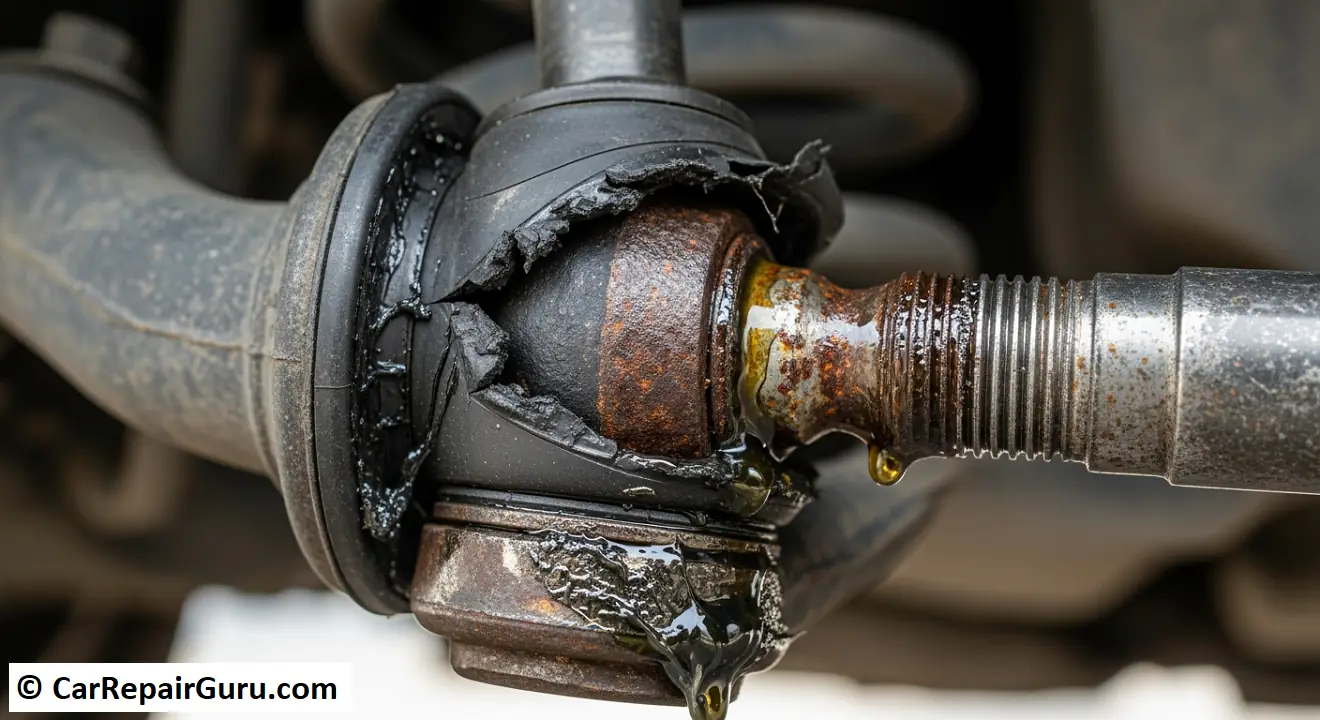
Is your steering wheel vibrating when you hit a certain speed? Does your car seem to have a mind of its own, wandering across the road even when you’re trying to drive straight? These aren’t just minor annoyances—they could be critical warning signs from your vehicle’s steering system.
More often than not, these issues point directly to worn tie rods, small but absolutely vital parts that connect your steering to your wheels.
In this guide, we’ll break down everything you need to know. We’ll cover the seven telltale symptoms of a bad tie rod, the serious dangers of ignoring them, how to test them, and exactly what you can expect to pay for a replacement. This is your complete guide to understanding the problem and ensuring a safer drive.
- What is a Tie Rod and What Does It Do?
- The Critical Link in Your Steering System
- Inner vs. Outer Tie Rods – What’s the Difference?
- 7 Telltale Symptoms of a Worn Tie Rod (The Warning Signs to Look For)
- 1. A Shaky or Vibrating Steering Wheel
- 2. Loose, “Wandering,” or Unresponsive Steering
- 3. Clunking, Popping, or Knocking Noises
- 4. Uneven and Excessive Tire Wear
- 5. A Squealing Sound When Turning
- 6. Poor Front-End Alignment
- 7. The “Dry Park” Test (How to Check for Play)
- Can You Drive with a Worn Tie Rod?
- Tie Rod Replacement – DIY vs. Professional Repair
- DIY Tie Rod Replacement – What’s Involved?
- Why Hiring a Mechanic is Often the Safest Choice
- How Much Does Tie Rod Replacement Cost?
- The Final, Crucial Step – Don’t Skip the Wheel Alignment!
- Your Steering Is Your Safety
- Frequently Asked Questions (FAQ)
- How long do tie rods last?
- Can a bad tie rod cause a “death wobble”?
- Will a bad tie rod fail a state safety inspection?
- What does a bad tie rod sound like?
What is a Tie Rod and What Does It Do?
Before we dive into the problems, let’s quickly cover what a tie rod actually is. In the simplest terms, a tie rod is the critical link between your steering wheel and your front wheels.
The Critical Link in Your Steering System
Think of tie rods as the “wrists” of your car’s steering. When you turn your steering wheel, it moves a component called the steering rack. The tie rods connect the ends of that steering rack to the steering knuckle, which is the part the wheel is mounted on. Their job is to push and pull the knuckle, forcing the wheels to turn left or right.
Without them, turning your steering wheel would do absolutely nothing. They are fundamental to controlling your vehicle.
Inner vs. Outer Tie Rods – What’s the Difference?
You’ll often hear mechanics talk about two different parts of the tie rod assembly. It’s a simple distinction:
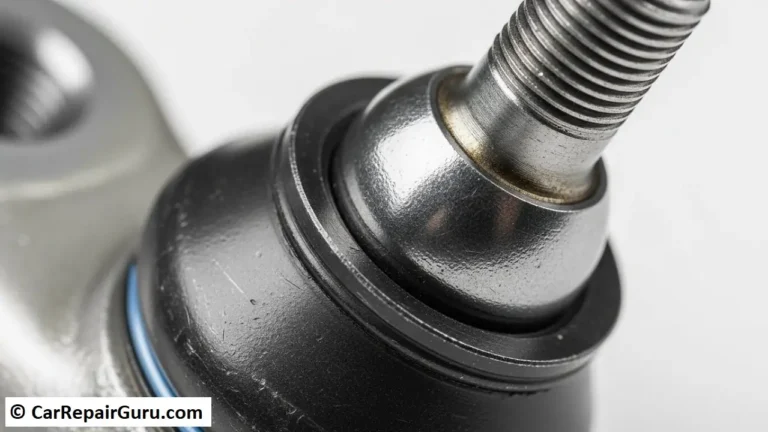
- Inner Tie Rod: This piece screws directly into the end of the steering rack. It has a ball-and-socket joint that allows it to move up and down with the suspension, absorbing bumps in the road without affecting your steering.
- Outer Tie Rod End: This is the part that connects to the steering knuckle. It also has a flexible ball joint that allows it to pivot as the wheels turn. This is the component that most commonly wears out first.
When either of these components develops excessive “play” or looseness, you start to experience problems.
7 Telltale Symptoms of a Worn Tie Rod (The Warning Signs to Look For)
A bad tie rod doesn’t usually fail silently. It gives you plenty of warning signs. If you notice any of the following symptoms, it’s time to get your steering system checked.
1. A Shaky or Vibrating Steering Wheel
This is often the first and most noticeable symptom. The vibration is caused by the looseness in the worn tie rod joint. As the wheel rotates, that “play” allows it to wobble slightly, and that vibration travels directly up the steering column to your hands. It might be a faint shudder at first but can become a violent shake as the part wears further, especially between 40-60 mph.
2. Loose, “Wandering,” or Unresponsive Steering
Does it feel like there’s a “dead spot” in your steering? You might turn the wheel slightly, but the car doesn’t respond immediately. This sensation of “play” or looseness means the worn tie rod has to move through its sloppy range of motion before it actually starts to push or pull the wheel. This can also cause your car to wander or drift in its lane, requiring constant small corrections to keep it straight.
3. Clunking, Popping, or Knocking Noises
This is a classic symptom of a bad tie rod end. The sound is most common at low speeds, especially when you’re turning the wheel to park or navigate a tight corner. The “clunk” or “pop” you hear is the sound of the metal stud inside the ball joint knocking against the inside of its housing because the worn-out socket can no longer hold it snugly.
4. Uneven and Excessive Tire Wear
If you look at your front tires and notice the very inner or outer edges are worn down much faster than the rest of the tread, a bad tie rod is a likely culprit. A worn tie rod throws your vehicle’s wheel alignment completely out of whack. Specifically, it affects the “toe” angle—whether the front of the tires point slightly inward or outward. This misalignment scrubs the tire edges against the pavement, rapidly destroying your expensive rubber.
5. A Squealing Sound When Turning
While not as common as a clunk, a high-pitched squealing or groaning sound can occur when you turn the wheel. This often happens when the protective rubber boot around the tie rod’s ball joint has torn. This allows dirt and water to get in and all the lubricating grease to get out. The sound you hear is metal-on-metal grinding from the dry, contaminated joint.
6. Poor Front-End Alignment
Have you recently had a wheel alignment done, only for the car to start pulling to one side again shortly after? While this could be due to a bad alignment job, it’s often a sign of a worn steering component. A mechanic can align the car perfectly on the rack, but as soon as you hit your first bump on the road, the loose tie rod shifts and throws the alignment right back out.
7. The “Dry Park” Test (How to Check for Play)
Here’s a simple tie rod test you can do at home. With the car parked and the engine off, have a friend get in and rock the steering wheel back and forth repeatedly (about 3-4 inches each way). Kneel down and watch the outer tie rod end closely. You shouldn’t see any vertical play or hear a clunk. If the tie rod is visibly moving up and down or making a knocking sound, it’s worn out and needs to be replaced.
Can You Drive with a Worn Tie Rod?
Let’s cut to the chase: driving with a significantly worn tie rod is extremely dangerous and is not recommended.
While a little bit of play might just be an annoyance, a tie rod is a part that can fail completely and without further warning. If the stud pulls out of the socket—an event called “tie rod separation”—the link between your steering wheel and that wheel is completely severed.
The wheel will be free to turn in any direction it wants, often flopping sideways and jamming into the wheel well. This results in a total and instantaneous loss of steering control, which can be catastrophic, especially at highway speeds.
Tie Rod Replacement – DIY vs. Professional Repair
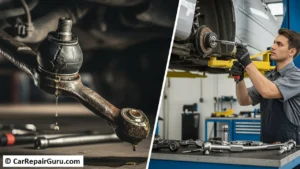
So, you’ve confirmed you have a bad tie rod. What’s next?
DIY Tie Rod Replacement – What’s Involved?
For the skilled home mechanic, replacing an outer tie rod is a manageable job. It involves jacking up the car, removing the wheel, loosening the jam nut, removing the castle nut, and using a special tool (like a tie rod puller or “pickle fork”) to separate the tie rod from the steering knuckle.
However, it requires the right tools, a good understanding of the process, and—most importantly—the knowledge that you must get a professional wheel alignment immediately after.
Why Hiring a Mechanic is Often the Safest Choice
For most drivers, this is a job best left to a professional. A certified mechanic has the experience, the specialized tools, and a vehicle lift to do the job safely and efficiently. More importantly, they have the professional alignment rack on-site to perform the final, crucial step correctly.
How Much Does Tie Rod Replacement Cost?
The tie rod replacement cost can vary depending on your vehicle and local labor rates, but it’s generally an affordable repair. Here’s a typical cost breakdown:
- Cost of Parts: An outer tie rod end is usually inexpensive, ranging from $30 to $100. An inner tie rod is slightly more, typically $50 to $150.
- Labor Costs: A mechanic will typically charge for 1-2 hours of labor. With shop rates averaging $100-$200 per hour, expect labor to be between $100 and $300.
- The Cost of Wheel Alignment: This is a mandatory part of the job. A front-end alignment typically costs between $80 and $150.
Total Estimated Cost: For a single outer tie rod replacement, you can expect the total cost to be between $200 and $500, including parts, labor, and the essential wheel alignment.
The Final, Crucial Step – Don’t Skip the Wheel Alignment!
We’ve mentioned it several times, but it’s worth its own section because it’s that important. Replacing a tie rod completely changes your steering geometry.
If you skip the alignment, your steering wheel will be crooked, your car will pull hard to one side, and you will physically ruin a brand-new set of tires in just a few hundred miles. Consider the alignment an integral part of the tie rod replacement cost, not an optional extra.
Your Steering Is Your Safety
Your car’s steering system is not something to gamble with. The warning signs of worn tie rods—a shaky steering wheel, wandering, clunking noises, and uneven tire wear—are direct messages from your car that a critical component needs attention.
Now that you know the symptoms to look for and the dangers of ignoring them, you can be a more informed and proactive car owner. If you’re experiencing any of these issues, don’t wait for the problem to get worse. Schedule an inspection with a certified mechanic today to ensure your steering is safe, solid, and reliable.
Frequently Asked Questions (FAQ)
How long do tie rods last?
There’s no set lifespan, but they can easily last 70,000 to 100,000 miles or more under normal conditions. However, hitting potholes, curbs, or driving on rough roads can cause them to wear out much faster.
Can a bad tie rod cause a “death wobble”?
Yes, absolutely. A severely worn tie rod is one of the most common contributors to the violent, uncontrolled shaking known as “death wobble,” especially in trucks and Jeeps with solid front axles.
Will a bad tie rod fail a state safety inspection?
Yes. Any detectable play in a tie rod is a major safety hazard, and it will cause your vehicle to fail a safety inspection in virtually every state that requires one.
What does a bad tie rod sound like?
The most common sound is a low-pitched “clunk,” “pop,” or “knock” when you turn the steering wheel at slow speeds. It can also cause a rattling noise when you drive over bumps.
About the Author