Marco

If your car shakes while you’re stopped at a traffic light, vibrates when you accelerate, or feels unusually rough after starting, something may be affecting how the engine runs or how its normal movement is transferred through the vehicle.
Common causes of engine vibration include worn engine mounts, ignition misfires, vacuum leaks, fuel delivery problems, and damaged engine components. However, not every shaking problem comes from the engine. Tires, wheels, brakes, axles, and transmission components can produce similar symptoms.
The best way to find the cause is to pay attention to when the vibration happens. Does it occur at idle, increase with engine speed, appear only during acceleration, or disappear once the engine warms up? These details can help narrow down the problem before you spend money replacing parts.
In this guide, you’ll learn how to recognize the common causes of engine vibration, what you can safely check yourself, and when it’s time to have a mechanic diagnose the problem.
- First, Identify When Your Car Vibrates
- Engine Vibrates at Idle or When Stopped
- Engine Shakes When Accelerating
- Vibration Increases With Engine RPM
- Engine Vibrates Only When Cold
- Engine Vibrates When the AC Is On
- 6 Common Causes of Engine Vibration
- 1. Worn or Damaged Engine Mounts
- 2. Engine Misfire From Spark Plugs or Ignition Coils
- 3. Vacuum Leaks and Air Intake Problems
- 4. Fuel Delivery or Injector Problems
- 5. Faulty Crankshaft Harmonic Balancer
- 6. Other Engine Mechanical Problems
- How to Diagnose Engine Vibration Step by Step
- Step 1 – Record When the Vibration Happens
- Step 2 – Check the Dashboard Warning Lights
- Step 3 – Inspect Visible Hoses and Engine Components
- Step 4 – Read OBD2 Trouble Codes
- Step 5 – Have the Suspected System Tested
- Is It Engine Vibration or Another Car Problem?
- Tire and Wheel Vibration
- Brake-Related Vibration
- CV Axle and Drivetrain Vibration
- Transmission Shudder
- How to Fix Engine Vibration
- When Should You Stop Driving With Engine Vibration?
- Final Advice
- Frequently Asked Questions
- Is It Safe to Drive With an Engine That Vibrates?
- Why Does My Engine Vibrate When I Turn On the AC?
- Can Bad Spark Plugs Cause Engine Vibration?
- Can Low Engine Oil Cause Engine Vibration?
- How Do I Know If Engine Mounts Are Bad?
- Why Does My Car Shake at Idle but Smooth Out When Driving?
- Can an Engine Misfire Cause Severe Shaking?
First, Identify When Your Car Vibrates
Before replacing spark plugs, engine mounts, or other components, identify the conditions that make your car shake. The timing of the vibration often provides useful clues about which system needs attention.
Engine Vibrates at Idle or When Stopped
If your car shakes while sitting in Park or at a traffic light, but becomes smoother when you start driving, the problem may involve the engine’s idle quality or the way engine movement is absorbed.
Possible causes include:
- Worn or damaged engine mounts.
- Faulty spark plugs or ignition coils.
- Vacuum leaks in the intake system.
- Dirty or malfunctioning fuel injectors.
- Throttle body or idle control problems.
- Engine compression or other mechanical problems.
Pay attention to the engine’s RPM reading. If the needle moves up and down or the engine sounds like it’s stumbling, an engine performance problem may be responsible. If the RPM stays steady but the steering wheel, seats, and dashboard vibrate, worn mounts or another vibration-related problem may be worth investigating.
These are clues rather than confirmed diagnoses. A mechanic may need to inspect the engine and its mounts to determine the actual cause.
Engine Shakes When Accelerating
If the engine runs smoothly while parked but starts shaking when you press the accelerator, the problem may appear only when the engine is under load.
Possible causes include:
- Ignition misfires under acceleration.
- Weak ignition coils or worn spark plugs.
- Fuel delivery problems.
- Air intake or boost leaks on turbocharged engines.
- Damaged CV joints or drivetrain components.
- Transmission or torque converter problems.
Notice whether the engine loses power, hesitates, or produces a jerking sensation at the same time. These symptoms can help a technician distinguish an engine misfire from a drivetrain or transmission problem.
If the check engine light flashes while the engine is shaking, reduce engine load and stop somewhere safe if the flashing continues. Avoid hard acceleration and arrange prompt professional diagnosis.
Vibration Increases With Engine RPM
Does the vibration become stronger as you rev the engine, even when the vehicle isn’t moving? This suggests that the problem may be related to engine speed or a component connected to the engine.
Possible causes include:
- Worn engine mounts.
- A damaged crankshaft harmonic balancer.
- Engine misfires.
- Damaged or unbalanced rotating engine components.
- Internal engine problems.
One useful distinction is whether the engine itself runs unevenly or whether the vibration is simply being transferred into the cabin. A mechanic can inspect the mounts, engine operation, and rotating components to narrow down the cause.
Don’t repeatedly rev a shaking engine to test it, especially if you hear knocking, grinding, or other unusual noises.
Engine Vibrates Only When Cold
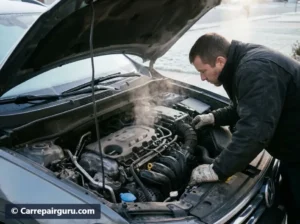
If your engine shakes during the first few minutes after starting but becomes smoother as it warms up, the problem may be related to cold-start operation.
Possible causes include:
- Worn spark plugs or weak ignition components.
- Vacuum leaks.
- Fuel delivery problems.
- Faulty engine temperature sensors.
- Carbon buildup in the intake or throttle body.
- Diesel glow plug or fuel injection problems, depending on the vehicle.
Modern engines adjust their fuel delivery and idle speed when cold. If a sensor, ignition component, or air intake system isn’t working correctly, the engine may struggle to run smoothly until it reaches operating temperature.
Don’t assume that a vibration disappearing after warm-up means the problem is harmless. If it happens repeatedly, have the cause checked.
Engine Vibrates When the AC Is On
Turning on the air conditioner adds mechanical load to the engine through the AC compressor. Most modern vehicles compensate for this additional load by adjusting engine operation.
If the engine already has an idle problem, the extra load may make the vibration more noticeable.
Possible causes include:
- Worn engine mounts.
- Existing ignition or fuel delivery problems.
- Throttle body or idle control issues.
- An AC compressor that is binding or not operating correctly.
- Problems with the belt or belt tensioner.
A slight change in engine sound or RPM when the AC switches on can be normal. However, strong shaking, repeated stalling, loud belt noises, or unusual compressor sounds deserve inspection.
6 Common Causes of Engine Vibration
1. Worn or Damaged Engine Mounts
Engine mounts connect the engine to the vehicle’s frame or supporting structure. They also help absorb the normal movement and vibration produced while the engine runs.
Most mounts use rubber or another flexible material between metal sections. Some vehicles use hydraulic mounts filled with fluid, while others have electronically controlled designs.
Over time, mounts can crack, collapse, leak, or separate. When that happens, more engine movement and vibration can reach the passenger compartment.
Common symptoms of bad engine mounts include:
- Noticeable vibration while idling.
- A clunk when shifting between Drive and Reverse.
- Excessive engine movement during acceleration.
- Vibration that becomes more noticeable when the AC is running.
- Unusual knocking or movement from the engine area.
How to check them:
With the engine switched off and cool, visually inspect accessible mounts for obvious cracks, separated rubber, damaged brackets, or fluid leakage. Don’t place your hands near moving engine components or attempt to move the engine yourself.
A mechanic can inspect the mounts under appropriate operating conditions and check whether excessive movement is coming from a damaged mount or another problem.
How to fix them:
If a mount is confirmed to be damaged, replacement is usually necessary. The correct replacement depends on the vehicle’s make, model, engine, and mount design.
Some mount replacements require supporting the engine with approved equipment and following specific lifting procedures. This isn’t a job to attempt with an improvised jack setup.
2. Engine Misfire From Spark Plugs or Ignition Coils
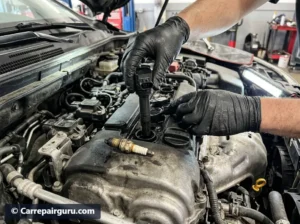
An engine needs the correct amount of air and fuel, along with proper ignition timing, to run smoothly. In a gasoline engine, spark plugs ignite the air-fuel mixture inside the cylinders.
If one cylinder doesn’t burn its mixture properly, the engine can lose its normal rhythm. This is called an engine misfire.
Misfires are a common reason for rough idling, hesitation, reduced power, and noticeable engine shaking.
Common ignition-related causes include:
- Worn spark plugs: Old or damaged plugs may produce an unreliable spark.
- Faulty ignition coils: A weak or failed coil may prevent a cylinder from receiving the spark it needs.
- Damaged ignition wires: Vehicles that use spark plug wires can develop insulation or connection problems.
- Electrical connection problems: Loose connectors or damaged wiring can interrupt ignition operation.
How to identify the problem:
Connect a compatible OBD2 scanner and check for stored, pending, and active trouble codes. Some common misfire codes include:
- P0300: Random or multiple-cylinder misfire detected.
- P0301: Misfire detected in cylinder 1.
- P0302: Misfire detected in cylinder 2.
- P0303: Misfire detected in cylinder 3.
The number in a cylinder-specific code identifies where the computer detected a misfire. It doesn’t automatically identify the failed component.
For example, a P0301 code doesn’t prove that cylinder 1 needs a new spark plug or ignition coil. The problem could also involve the injector, wiring, compression, or another engine condition.
If you want to understand the possible causes and diagnostic process in more detail, read our guide to fixing engine misfires.
How to fix it:
The correct repair depends on the diagnostic results. A technician may inspect the spark plug, test the ignition coil, check electrical connections, and perform additional tests if necessary.
If the spark plugs are worn or damaged, replace them according to the manufacturer’s specifications. If an ignition coil has failed, replace the confirmed faulty component.
For reliable information about spark plug symptoms, installation, and maintenance, see NGK’s spark plug technical guidance.
Important: If the check engine light is flashing, don’t continue driving normally. A severe misfire can damage the catalytic converter. Reduce engine load, stop safely if the flashing continues, and arrange professional inspection.
3. Vacuum Leaks and Air Intake Problems
Your engine needs a controlled amount of air to maintain proper combustion. If air enters through a damaged hose, loose connection, or leaking intake gasket, the engine may receive more air than the computer expects.
This can disturb the air-fuel mixture and cause a rough idle or hesitation.
Common signs of an intake or vacuum leak include:
- Rough or unstable idle.
- Hissing sounds from the engine compartment.
- Higher-than-normal idle speed.
- Hesitation during acceleration.
- Check engine light with lean-mixture trouble codes.
Some vehicles may also experience reduced performance or changes in fuel economy.
How to check for a vacuum leak:
With the engine switched off and cool, look for visibly disconnected, cracked, or damaged intake hoses. Check accessible connections around the air intake system.
Do not spray carburetor cleaner, brake cleaner, or other flammable chemicals around a running engine to search for leaks. This creates an unnecessary fire risk.
A mechanic can use a suitable automotive smoke machine to introduce visible smoke into the intake system and locate leaks safely.
How to fix it:
Replace damaged hoses, seals, or other confirmed faulty intake components. If the problem involves an intake gasket or another difficult-to-access component, professional repair may be necessary.
4. Fuel Delivery or Injector Problems
Your engine needs the correct amount of fuel delivered at the right time. If fuel delivery becomes inconsistent, one or more cylinders may not produce normal power.
Possible causes include:
- Clogged or malfunctioning fuel injectors.
- Low fuel pressure.
- A weak fuel pump.
- Faulty fuel pressure regulators, where fitted.
- Contaminated fuel.
Common symptoms include:
- Rough idling.
- Engine hesitation when accelerating.
- Reduced engine power.
- Difficulty starting.
- Misfire codes or other fuel-related trouble codes.
How to identify the problem:
A mechanic may check fuel pressure, inspect injector operation, examine fuel trims, and use diagnostic equipment to determine whether the engine is receiving the correct fuel supply.
Don’t assume a dirty injector is responsible just because the engine shakes. Ignition, air intake, electrical, and mechanical problems can produce similar symptoms.
How to fix it:
If testing confirms an injector problem, the appropriate solution may involve cleaning, repairing, or replacing the affected injector. If fuel pressure is too low, the technician needs to identify whether the pump, filter, regulator, wiring, or another component is responsible.
A fuel system cleaner may help with certain deposits, but it won’t repair a failing fuel pump, damaged injector, or electrical fault.
If the shaking started immediately after refueling, mention that to the mechanic. Contaminated fuel is one possible explanation, but further diagnosis may still be needed.
5. Faulty Crankshaft Harmonic Balancer
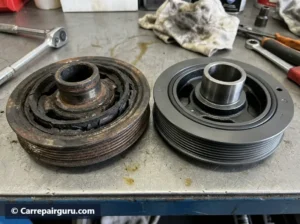
The harmonic balancer, also called the crankshaft damper, is mounted at the front of many engines. It helps reduce twisting vibrations produced by the crankshaft as the engine operates.
Many designs use a rubber layer between the inner and outer sections. With age, this material can deteriorate, crack, or separate.
When the damper becomes damaged, it may contribute to unusual vibration and can affect the operation of the accessory drive system.
Possible warning signs include:
- Visible wobbling of the crankshaft pulley.
- Unusual vibration that changes with engine speed.
- Serpentine belt movement or alignment problems.
- Unusual belt noises.
- Visible cracking or separation of the damper material.
How to check it:
With the engine switched off, a visual inspection may reveal obvious damage to the accessible outer surface. Never put your hands near the pulley or belt while the engine is running.
If the pulley appears to wobble, stop running the engine and arrange professional inspection. A damaged damper can affect other components driven by the belt, and severe failure may cause additional mechanical damage.
How to fix it:
If the harmonic balancer is confirmed to be damaged, it generally needs replacement. The job may require special tools and vehicle-specific procedures, so it’s usually best left to a qualified mechanic.
6. Other Engine Mechanical Problems
Not every vibration comes from an ignition or fuel problem. Internal engine conditions can also make an engine run unevenly.
Possible causes include:
- Low compression in one or more cylinders.
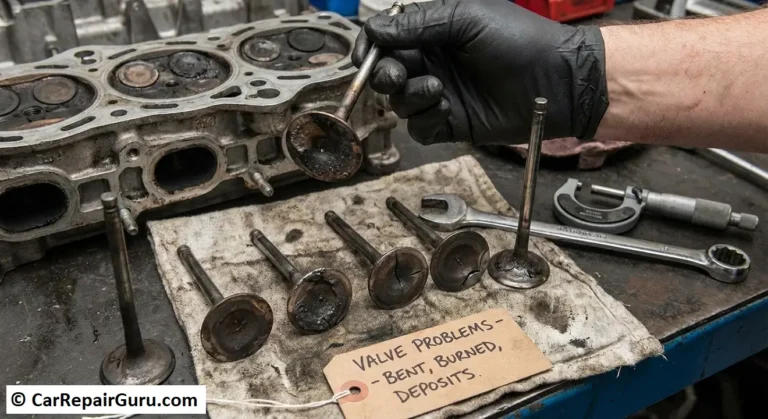
- Damaged valves or valve sealing problems.
- Incorrect valve timing.
- Timing chain or belt problems.
- Internal engine wear or damage.
These problems may cause rough idling, reduced power, unusual engine noises, or persistent misfires.
How to identify the problem:
A mechanic may perform a compression test, cylinder leak-down test, valve timing inspection, or other mechanical checks depending on the symptoms.
How to fix it:
The repair depends on the confirmed mechanical fault. Avoid replacing major engine components based only on vibration. Proper testing should come first because internal engine repairs can be expensive and vary considerably between vehicles.
For a broader overview of engine-related warning signs, see our guide to common car engine problems and their solutions.
How to Diagnose Engine Vibration Step by Step
You don’t need to start replacing parts to investigate an engine vibration problem. A few safe observations can help you provide a mechanic with useful information and avoid unnecessary repairs.
Step 1 – Record When the Vibration Happens
Start by identifying the exact conditions that produce the shaking.
- Does it happen immediately after a cold start?
- Does it continue when the engine is warm?
- Does it happen only when the vehicle is stopped?
- Does it become stronger when you accelerate?
- Does switching on the AC make it worse?
- Does the vibration follow engine RPM or vehicle speed?
Write down your observations. A clear description can help narrow down the diagnostic process.
Step 2 – Check the Dashboard Warning Lights
Look for the check engine light, oil pressure warning, temperature warning, or other dashboard alerts.
A steady check engine light means the vehicle’s computer has detected a problem that needs attention. A flashing check engine light can indicate a severe misfire that may damage the catalytic converter.
If the oil pressure warning appears, stop the engine as soon as it is safe. Do not continue driving with a low oil pressure warning.
Also pay attention to overheating, unusual knocking, smoke, or a sudden loss of engine power. These symptoms can require immediate attention.
Step 3 – Inspect Visible Hoses and Engine Components
Turn off the engine, remove the key or switch off the ignition, and allow hot components to cool before inspecting anything under the hood.
Look for:
- Disconnected or visibly damaged intake hoses.
- Loose electrical connectors that are safely accessible.
- Obvious damage to accessible engine mounts.
- Visible oil or coolant leaks.
- Cracked or separated rubber around accessible components.
Don’t touch hot components, moving belts, cooling fans, or electrical connections while the engine is operating.
Step 4 – Read OBD2 Trouble Codes
An OBD2 scanner can retrieve diagnostic trouble codes stored in your vehicle’s computer. These codes can help identify which system needs further investigation.
For example, a P0300 code indicates a random or multiple-cylinder misfire, while P0301 indicates a misfire detected in cylinder 1.
However, a trouble code is not always a direct instruction to replace a particular part. It describes a condition detected by the vehicle’s diagnostic system.
Record the codes and available freeze-frame information before clearing anything. Freeze-frame data can help show the operating conditions when a fault was detected.
If you’re unsure what a code means, have it interpreted alongside the vehicle’s symptoms and test results.
Step 5 – Have the Suspected System Tested
If the cause isn’t obvious, a professional diagnosis is the sensible next step.
Depending on the symptoms, a technician may perform:
- Engine mount inspection.
- Misfire data and ignition system testing.
- Intake system smoke testing.
- Fuel pressure and injector testing.
- Compression and leak-down testing.
- Crankshaft damper and accessory belt inspection.
These tests help identify the actual fault instead of relying on guesswork or replacing parts one by one.
Is It Engine Vibration or Another Car Problem?
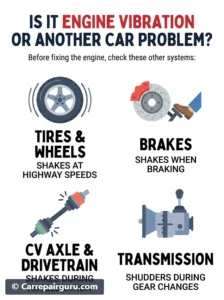
Your car can shake even when the engine itself is running normally. Before spending money on engine repairs, consider whether the vibration is coming from another system.
Tire and Wheel Vibration
If your steering wheel or the entire vehicle shakes mainly at highway speeds, the tires and wheels deserve attention.
Possible causes include:
- Incorrect wheel balancing.
- Damaged or unevenly worn tires.
- A bent wheel.
- Incorrect tire pressure.
- Suspension or steering component problems.
A vibration that appears within a particular road-speed range is often different from an engine vibration that changes with RPM.
Have damaged tires inspected promptly. If a tire has a bulge, exposed cords, or serious damage, don’t continue driving on it.
If you notice unusual tread wear as well as vibration, our guide to fixing uneven tire wear explains some common tire and suspension-related causes.
Brake-Related Vibration
If the vehicle shakes mainly when you press the brake pedal, investigate the braking system rather than assuming the engine is responsible.
Possible causes include uneven brake rotor surfaces, rotor thickness variation, worn brake components, or problems elsewhere in the braking system.
If you feel strong shaking, hear grinding, or notice reduced braking performance, arrange prompt inspection. Don’t delay repairs involving the brakes.
CV Axle and Drivetrain Vibration
A worn CV joint or damaged axle can cause vibration during acceleration, particularly in front-wheel-drive and all-wheel-drive vehicles.
Other warning signs may include clicking noises when turning, clunking, or vibration that becomes stronger under load.
These symptoms can overlap with engine misfires, so further inspection may be needed to identify the source.
Transmission Shudder
Transmission problems can also produce shaking or shuddering, particularly during gear changes or when the torque converter engages.
Unlike a typical rough engine idle, transmission-related vibration often appears under particular driving conditions.
Pay attention to whether the problem occurs during gear changes, at a particular speed, or when accelerating lightly. A technician may need to inspect transmission fluid condition, stored fault codes, and transmission operation.
How to Fix Engine Vibration
There isn’t one repair that fixes every shaking engine. The right solution depends on which component or system is causing the vibration.
Here are some common repairs based on the confirmed cause:
- Worn engine mounts: Replace damaged mounts using the correct parts and vehicle-specific support procedures.
- Faulty spark plugs: Install the correct plugs according to the manufacturer’s specifications and replacement schedule.
- Failed ignition coils: Replace the confirmed faulty coil after appropriate testing.
- Vacuum leaks: Repair damaged intake hoses, seals, or gaskets.
- Fuel delivery problems: Repair the confirmed faulty injector, pump, regulator, wiring, or other fuel system component.
- Damaged harmonic balancer: Replace the damper and inspect related belt-driven components.
- Internal engine problems: Complete the necessary mechanical repairs based on compression, timing, and other diagnostic results.
Don’t replace every component on this list just because your engine vibrates. Many of these problems produce similar symptoms, and unnecessary parts replacement can become expensive without solving the original issue.
For guidance on keeping engine components in good condition, see our engine maintenance schedule and checklist.
When Should You Stop Driving With Engine Vibration?
A slight vibration doesn’t always mean your vehicle needs to be towed. However, some symptoms indicate a potentially serious problem that shouldn’t be ignored.
Stop driving and arrange professional assistance if you notice:
- A flashing check engine light that continues while the engine is running.
- Severe shaking accompanied by a major loss of power.
- An oil pressure warning light.
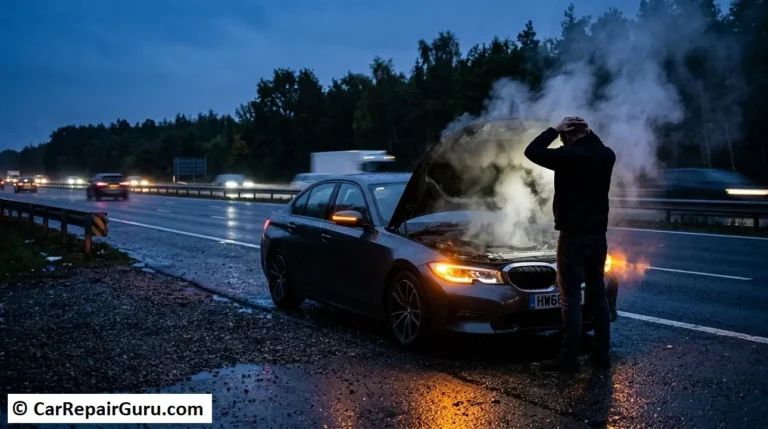
- Engine overheating or steam coming from the engine compartment.
- Loud knocking, grinding, or sudden mechanical noises.
- Smoke, a strong fuel smell, or signs of a fuel leak.
- Severe vibration combined with braking or steering problems.
If the vehicle is shaking violently, don’t try to drive it to a repair shop. Pull over somewhere safe, switch off the engine when appropriate, and arrange towing or roadside assistance.
The U.S. Environmental Protection Agency’s OBD guidance explains that a flashing malfunction indicator can signal a severe misfire that threatens the catalytic converter. Follow your vehicle manufacturer’s instructions as well.
If the vibration is mild and there are no warning lights, unusual noises, overheating, or changes in vehicle control, arrange an inspection promptly and follow the owner’s manual. Don’t assume every vibration is safe to ignore.
Final Advice
Engine vibration can come from several different problems, so the smartest repair starts with identifying when the shaking happens rather than replacing parts at random.
Pay attention to the engine’s RPM, dashboard warning lights, unusual noises, and whether the vibration occurs at idle, during acceleration, or at road speed. These details can help narrow down the cause and make diagnosis easier.
Start with safe visual checks and diagnostic codes, but leave repairs involving engine support, fuel systems, internal engine components, and other safety-critical work to someone with the right tools and training.
Most importantly, don’t ignore severe shaking or warning lights. Finding the actual problem early can help prevent further damage and get your car running smoothly again.
Frequently Asked Questions
Is It Safe to Drive With an Engine That Vibrates?
It depends on the cause and severity. A mild vibration from a worn mount may allow a short trip to a repair shop, but severe shaking, a flashing check engine light, overheating, or oil pressure warnings require you to stop safely and seek assistance.
Why Does My Engine Vibrate When I Turn On the AC?
The AC compressor adds load to the engine. If the engine already has an idle problem, worn mounts, or an issue with idle control, switching on the AC can make the vibration more noticeable. A faulty compressor can also contribute.
Can Bad Spark Plugs Cause Engine Vibration?
Yes. Worn or damaged spark plugs can cause an engine misfire, which may lead to rough idling, hesitation, reduced power, and shaking. However, ignition coils, injectors, and mechanical problems can cause similar symptoms.
Can Low Engine Oil Cause Engine Vibration?
Low engine oil can contribute to serious engine problems, particularly if oil pressure becomes insufficient. Some engines also rely on oil pressure for variable valve timing. Check the oil level according to the owner’s manual, and never ignore an oil pressure warning.
How Do I Know If Engine Mounts Are Bad?
Common clues include excessive vibration at idle, clunking when shifting gears, and unusual engine movement. However, these symptoms can have other causes, so a visual inspection and proper mount testing are needed before replacement.
Why Does My Car Shake at Idle but Smooth Out When Driving?
This can happen when the engine has an idle-related problem or when worn mounts transmit more vibration into the cabin at low RPM. Possible causes include ignition misfires, intake leaks, throttle body problems, and damaged engine mounts.
Can an Engine Misfire Cause Severe Shaking?
Yes. When one or more cylinders fail to burn their air-fuel mixture properly, the engine can run unevenly and shake noticeably. A flashing check engine light can indicate a severe misfire that needs prompt attention.
About the Author