Marco
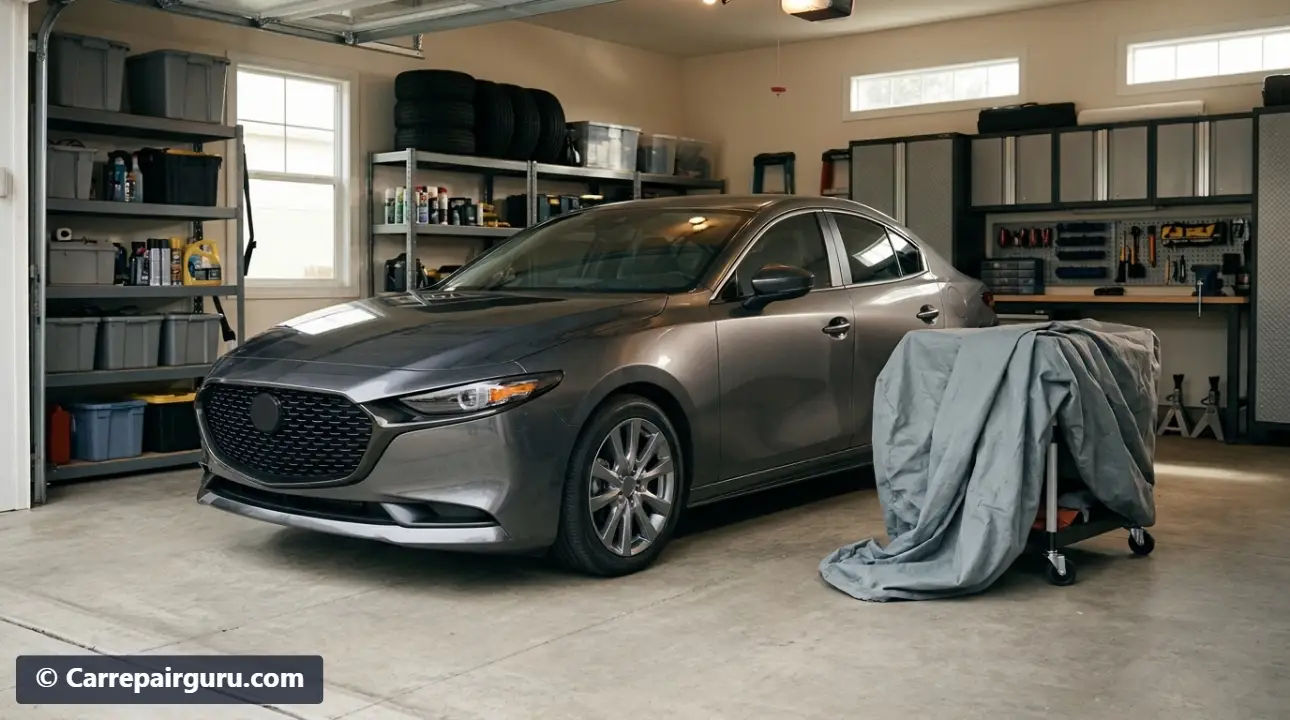
Leaving your car parked for several weeks or months takes more preparation than simply finding a safe place and turning off the engine. A vehicle that sits unused for a long time can develop battery problems, tire flat spots, moisture buildup, fuel issues, and even damage from rodents.
These problems are more likely when a car is stored without proper preparation, especially in places with extreme temperatures or high humidity.
Whether you’re going away for the winter, leaving for an extended work assignment, deploying overseas, or protecting a classic car, a few simple steps can help keep your vehicle in good condition.
This guide explains how to prepare your car for long-term storage, including what to do with the engine oil, fuel, battery, tires, and interior. You’ll also learn how to choose a suitable storage location and what to check before driving the car again.
- Before You Start, Decide How Long the Car Will Be Stored
- Short-Term vs. Long-Term Storage
- Check Your Owner’s Manual First
- Step 1 – Clean Your Car Inside and Out
- Wash and Protect the Exterior
- Clean the Interior and Remove Food
- Control Moisture Inside the Cabin
- Step 2 – Prepare the Engine and Fluids
- Should You Change the Engine Oil?
- Check Coolant and Brake Fluid
- Should You Use a Fuel Stabilizer?
- Step 3 – Protect the Battery
- Use a Compatible Battery Maintainer
- What If You Don’t Have Electricity?
- Special Considerations for Hybrid and Electric Cars
- Step 4 – Protect Your Tires
- Set the Correct Tire Pressure
- Prevent Flat Spots During Storage
- Protect Tires From Sunlight and Heat
- Step 5 – Protect the Wipers and Secure the Vehicle
- Protect the Windshield Wiper Blades
- Should You Leave the Parking Brake On?
- Step 6 – Protect Your Car From Rodents
- Remove Food and Eliminate Possible Nesting Areas
- Use Safe Rodent Deterrents
- Protect Air Intakes and Exhaust Openings
- Step 7 – Choose the Right Storage Location
- Indoor Car Storage
- Outdoor Car Storage
- Choosing a Suitable Car Cover
- Step 8 – Handle Insurance and Registration
- Check Registration and Inspection Dates
- Review Your Insurance Coverage
- Step 9 – How to Check Your Car After Storage
- Inspect for Rodents, Leaks, and Visible Damage
- Check the Battery and Tire Pressure
- Check the Brakes Before Driving
- When to Arrange a Professional Inspection
- Car Storage Preparation Checklist
- Final Thoughts
- Frequently Asked Questions About Car Storage
- How Long Can a Car Sit Without Being Started?
- Should You Start Your Car During Long-Term Storage?
- Do You Need Fuel Stabilizer When Storing a Car?
- Should You Disconnect the Battery Before Storage?
- Should You Inflate Tires More Before Storage?
- Should You Leave the Parking Brake On During Storage?
- What Should You Check Before Driving a Car After Storage?
Before You Start, Decide How Long the Car Will Be Stored
The amount of preparation your car needs depends partly on how long it will remain parked.
Leaving a car unused for two weeks is different from storing it for six months. Battery condition, temperature, humidity, and the vehicle’s age also make a difference.
Short-Term vs. Long-Term Storage
For a relatively short period, such as two to four weeks, a healthy vehicle may not need extensive preparation. However, checking the battery, tire pressure, and general condition before leaving is still a good idea.
For storage lasting several months, more preparation is recommended:
- Clean the vehicle inside and out.
- Check the engine oil and other important fluids.
- Plan how to maintain the battery.
- Set the tire pressure according to the manufacturer’s recommendations.
- Protect the interior from moisture and pests.
- Choose a dry, secure storage location.
If you’re planning to store the vehicle for six months or longer, check with the manufacturer or a qualified mechanic for additional recommendations.
Check Your Owner’s Manual First
Before disconnecting the battery, changing fluid levels, or preparing the vehicle for storage, check your owner’s manual.
Modern vehicles have different electrical systems, battery management features, and maintenance requirements. Hybrid and electric vehicles also need special attention because they have high-voltage battery systems in addition to their regular 12-volt batteries.
A procedure that works for an older gasoline-powered car may not be appropriate for a newer vehicle.
Step 1 – Clean Your Car Inside and Out
Cleaning your car before storage helps protect its paint, interior materials, and other surfaces. It also removes food and dirt that can attract insects and rodents.
Wash and Protect the Exterior
Start by washing the entire vehicle, including the wheels, wheel wells, and lower body panels.
Road salt, bird droppings, tree sap, and other contaminants can damage paint if they remain on the surface for months.
After washing:
- Dry the vehicle completely, including door edges and other areas where water collects.
- Remove stubborn contaminants using products suitable for your paint finish.
- Apply a quality automotive wax or paint sealant if appropriate.
- Clean the windows and exterior mirrors.
- Check the paint for chips or areas that may need attention.
You don’t need to use a clay bar on every vehicle. It’s only necessary when contaminants remain bonded to the paint after washing.
Also, avoid applying random chemical products to rubber seals and plastic trim. Use protectants specifically designed for those materials and follow the product instructions.
Clean the Interior and Remove Food
Food crumbs, drink spills, and other debris can attract insects and rodents while the car is parked.
Vacuum the seats, carpets, floor mats, and spaces between the seats and center console.
Pay attention to:
- Food crumbs and wrappers.
- Drink spills and sticky surfaces.
- Dirt trapped under the floor mats.
- Trash inside the glove compartment and door pockets.
- Personal belongings that may hold moisture.
If you have leather seats, clean them with a suitable leather cleaner. Apply a conditioner only if recommended for your particular leather finish.
Control Moisture Inside the Cabin
Moisture trapped inside a closed vehicle can lead to unpleasant odors and, under the right conditions, mold growth.
Before storage, make sure the carpets, floor mats, and upholstery are completely dry.
For additional protection:
- Use automotive-safe moisture absorbers or silica gel products.
- Check that the cabin is dry before closing the doors.
- Avoid leaving wet towels, clothing, or other damp items inside.
- Make sure the windows and sunroof close properly.
If the car is stored indoors in a secure, dry, well-ventilated area, slightly opening a window may help with air circulation. However, don’t do this if there’s a risk of rain, theft, insects, or rodents entering the vehicle.
Step 2 – Prepare the Engine and Fluids
Engine oil, coolant, brake fluid, and fuel all deserve attention before long-term storage.
You don’t necessarily need to replace every fluid before parking the car. The important thing is to make sure everything is in good condition and that any scheduled maintenance is completed.
Should You Change the Engine Oil?
Engine oil gradually collects contaminants during normal driving. Depending on the oil’s condition and the manufacturer’s maintenance schedule, leaving overdue oil in the engine for an extended period may not be ideal.
If an oil change is due soon, consider completing it before storage.
Fresh oil helps protect internal engine components, but there’s no universal rule that every car needs an oil change simply because it will be parked for several months.
Check your owner’s manual for the recommended oil type and service interval.
Also, check the oil level before storage. If it’s below the recommended range, investigate the cause and top it up with the correct oil if appropriate.
Check Coolant and Brake Fluid
Coolant protects the engine from overheating and freezing while also helping prevent corrosion inside the cooling system.
Before storage:
- Check the coolant level when the engine is completely cool.
- Look for visible leaks around the radiator, hoses, and reservoir.
- Check whether the coolant is due for replacement.
- Make sure the mixture is suitable for the temperatures expected during storage.
Don’t open a hot cooling system. Pressurized coolant can cause serious burns.
Brake fluid also deserves attention because it absorbs moisture over time. Excess moisture can reduce its boiling point and contribute to corrosion inside the braking system.
Follow the manufacturer’s replacement interval. If the brake fluid is overdue, have it serviced before storage.
Don’t rely on fluid color alone to decide whether it needs replacement.
Should You Use a Fuel Stabilizer?
Gasoline can deteriorate during extended storage, especially when exposed to heat and long periods of inactivity.
As fuel ages, some of its components can evaporate or change, potentially affecting how well the engine runs when you return.
A fuel stabilizer may help preserve gasoline during longer storage periods, but whether you need one depends on the vehicle, fuel type, and expected storage time.
If you decide to use one:
- Choose a stabilizer suitable for your fuel and vehicle.
- Follow the product’s instructions for the correct amount.
- Add it according to the manufacturer’s recommended procedure.
- If instructed, run the engine long enough to circulate the treated fuel through the system.
Some products recommend treating the fuel before filling the tank, while others have different instructions.
For gasoline-powered vehicles, keeping the tank relatively full may help reduce the amount of air space where moisture can collect. However, follow the vehicle manufacturer’s recommendations, particularly if the vehicle has a special fuel system.
Never overfill the tank.
Diesel vehicles, motorcycles, and vehicles with unusual fuel systems may have different storage requirements.
Step 3 – Protect the Battery
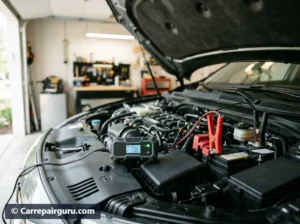
A battery can lose charge even when the vehicle isn’t being driven. Modern cars also continue using small amounts of electricity to maintain alarms, computers, and other electronic systems.
After several weeks or months, a battery that was already weak may no longer have enough power to start the engine.
Use a Compatible Battery Maintainer
If you have access to electricity where the vehicle is stored, a compatible battery maintainer is often a convenient option.
Unlike a basic charger that may deliver a continuous charging current, a suitable automatic maintainer monitors the battery and adjusts its operation to help maintain its charge.
Before connecting one:
- Check that the device matches your battery type and voltage.
- Read the battery and charger instructions.
- Inspect the battery for cracks, leaks, or other visible damage.
- Make sure the charging area has suitable ventilation.
- Connect the charger using the manufacturer’s recommended procedure.
Some vehicles have designated battery charging points rather than requiring direct connections to the battery terminals.
Follow the owner’s manual, especially if your vehicle has a battery monitoring system.
What If You Don’t Have Electricity?
If your storage location has no electrical outlet, you have a few options.
One possibility is disconnecting the negative battery cable, but this isn’t suitable for every modern vehicle.
Disconnecting a battery can reset settings, affect electronic systems, or require certain features to be reinitialized when power is restored.
If the manufacturer permits battery disconnection, follow the correct procedure.
Another option is removing the battery and storing it in a suitable location, provided the vehicle manufacturer allows this.
Keep a removed battery in a cool, dry, well-ventilated place, away from direct heat and anything that could cause a short circuit.
Do not leave a discharged battery sitting unused for months.
Special Considerations for Hybrid and Electric Cars
Hybrid and electric vehicles require additional care because they have both a regular 12-volt battery and a high-voltage battery.
The high-voltage battery has its own storage and charging requirements. These vary significantly between manufacturers and models.
Before storing one:
- Check the owner’s manual for the recommended battery charge level.
- Follow the manufacturer’s instructions for long-term parking.
- Check whether the 12-volt battery needs a separate maintenance procedure.
- Use only the charging equipment and methods approved for your vehicle.
Don’t assume that disconnecting the 12-volt battery will preserve the high-voltage battery.
If you’re unsure about the correct procedure, contact the vehicle manufacturer or an authorized service center.
Step 4 – Protect Your Tires
When a vehicle sits in the same position for months, its tires remain under constant pressure at the points touching the ground.
This can cause temporary flat spots or, in some cases, more persistent tire deformation.
Set the Correct Tire Pressure
Before storing your vehicle, check the pressure in all four tires.
Use the recommended cold tire pressure listed on the vehicle’s door-jamb label or in the owner’s manual.
Don’t inflate tires to the maximum pressure printed on the tire sidewall. That number represents a tire limit, not necessarily the correct operating pressure for your vehicle.
Some manufacturers provide separate tire pressure recommendations for extended storage. If yours does, follow those instructions.
It’s also worth checking the spare tire if your vehicle has one.
Prevent Flat Spots During Storage
If you can move the vehicle occasionally, changing its parking position can help distribute the weight across different sections of the tires.
For long-term storage, consider these options:
- Move the vehicle periodically if it can be done safely.
- Use suitable tire cradles designed to distribute the vehicle’s weight.
- Consider professional storage equipment if the vehicle will remain parked for many months.
Using jack stands to lift a vehicle is another possibility, but it requires proper lifting points, suitable equipment, and a safe, level surface.
If you aren’t experienced with this procedure, have a qualified technician handle it.
Never rely on an ordinary vehicle jack to support a car during long-term storage.
Protect Tires From Sunlight and Heat
Direct sunlight, ozone, and excessive heat can accelerate tire aging.
If the car is stored outdoors, consider using tire covers designed for vehicle storage.
Keep the tires clean and avoid applying unnecessary tire shine products before storage.
When you return, inspect the sidewalls and tread for cracks, bulges, or other signs of damage.
A tire that has developed serious damage should be professionally inspected before the vehicle is driven.
Step 5 – Protect the Wipers and Secure the Vehicle
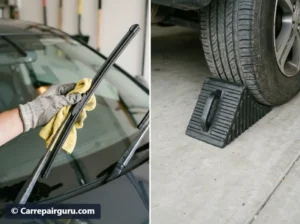
Windshield wipers and parking brakes are easy to overlook when preparing a vehicle for storage.
However, leaving them in unsuitable conditions for several months can create problems when you return.
Protect the Windshield Wiper Blades
Wiper rubber can deteriorate when exposed to sunlight, extreme temperatures, and prolonged contact with a hot or frozen windshield.
Before storage:
- Clean the windshield and wiper blades.
- Check for cracks, tears, or hardened rubber.
- Replace damaged blades if necessary.
- Make sure the blades aren’t resting on dirt or debris.
Some owners lift the wiper arms away from the windshield during storage. This may be appropriate for certain vehicles, but other manufacturers recommend leaving them in their normal position.
Check your owner’s manual before doing this.
Should You Leave the Parking Brake On?
This depends on your vehicle and the conditions where it will be stored.
In some situations, leaving the parking brake applied for a long period may increase the risk of brake components sticking, particularly in damp environments.
However, leaving a vehicle unsecured is also dangerous.
If the manufacturer recommends releasing the parking brake during extended storage, use properly rated wheel chocks on a level surface to prevent movement.
For manual transmissions, the manufacturer may recommend leaving the vehicle in gear. Automatic vehicles should follow the recommended parking procedure.
Electronic parking brakes may have additional requirements, so check your owner’s manual before changing their normal operation.
Never rely on the transmission alone to keep a vehicle stationary.
Step 6 – Protect Your Car From Rodents
Rodents can cause expensive damage to a vehicle that remains parked for months.
Mice and rats may enter through openings in the engine compartment, cabin air intake, or other accessible areas.
Once inside, they can chew electrical wiring, damage insulation, and build nests in hidden spaces.
Remove Food and Eliminate Possible Nesting Areas
Start by removing anything that might attract rodents.
Clean the interior thoroughly and remove all food, wrappers, and trash.
Also inspect the storage area for:
- Food containers.
- Cardboard boxes.
- Piles of leaves.
- Clutter near the vehicle.
- Other materials that could provide nesting places.
Keeping the surrounding area clean can make your storage location less attractive to pests.
Use Safe Rodent Deterrents
There are several products marketed to discourage rodents from entering vehicles.
These include commercial repellents, scented pouches, and specialized rodent-deterrent tape.
However, their effectiveness varies, and no product guarantees complete protection.
If rodents are a known problem in your storage area, consider using traps or professional pest-control services.
Avoid placing poisons or chemicals inside the vehicle where they could create additional hazards for people or pets.
Protect Air Intakes and Exhaust Openings
If rodents are a concern, check accessible openings where they might enter.
Some storage recommendations suggest using suitable protective covers over exhaust outlets or air intake openings.
Any cover must be secure, suitable for the opening, and removed before starting the engine.
Never start the vehicle while an exhaust outlet or air intake is blocked.
Place a large, visible reminder near the steering wheel or ignition area if you use temporary covers.
Also, inspect the engine compartment and cabin air filter area before returning the vehicle to service.
Step 7 – Choose the Right Storage Location
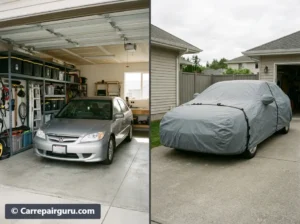
Where you park your vehicle can make a significant difference to its condition.
A clean, dry, secure location is generally preferable to an exposed parking space.
Indoor Car Storage
A suitable indoor garage or storage facility can protect your vehicle from direct sunlight, rain, snow, and falling debris.
Look for a location that is:
- Dry and reasonably ventilated.
- Protected from leaks and flooding.
- Free from excessive humidity.
- Secure against unauthorized access.
- Clear of materials that could attract rodents.
Avoid storing a car in an enclosed space with fuel-burning equipment operating nearby.
Never run the engine inside a closed garage because exhaust gases contain carbon monoxide, which can be fatal.
Outdoor Car Storage
If indoor storage isn’t available, choose an outdoor location carefully.
Try to avoid parking:
- Under trees that drop sap or branches.
- Near areas where water collects.
- In places exposed to frequent flooding.
- In locations where the vehicle is likely to be hit by other vehicles or equipment.
A suitable outdoor parking space should be as level, secure, and well-drained as possible.
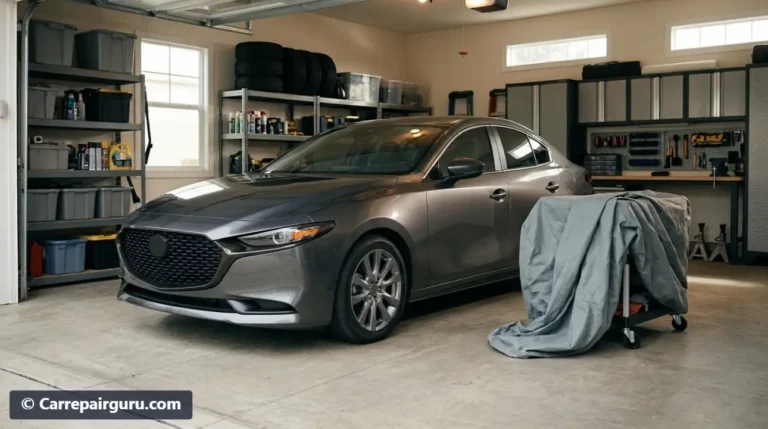
Choosing a Suitable Car Cover
If you plan to cover the vehicle, choose a cover designed for automotive use.
A good cover should:
- Fit the vehicle properly.
- Have a soft inner surface that reduces the risk of paint scratches.
- Allow suitable moisture vapor to escape.
- Be suitable for indoor or outdoor conditions, depending on where the car is stored.
Avoid using an ordinary plastic tarp directly against the vehicle’s paint.
Plastic sheets can trap moisture and rub against the paint when moved by wind.
Before covering the vehicle, make sure it’s clean and completely dry.
Step 8 – Handle Insurance and Registration
Mechanical preparation isn’t the only thing to consider before leaving your vehicle unused.
Depending on how long you’ll be away, registration, inspections, and insurance coverage may also need attention.
Check Registration and Inspection Dates
Check when your registration and any required vehicle inspections expire.
If they will expire while you’re away, find out whether you can renew them in advance.
Rules vary by state, so check your local motor vehicle authority for the applicable requirements.
Review Your Insurance Coverage
If your vehicle will remain parked for several months, contact your insurance company to ask whether it offers a storage or reduced-use policy.
Some policies allow owners to reduce certain types of coverage while maintaining protection against risks such as theft, fire, and weather damage.
However, don’t cancel liability coverage or make changes without checking the legal requirements in your state.
Also, ask whether your policy covers damage caused by rodents, flooding, vandalism, or other storage-related problems.
Get the details in writing so you know exactly what is and isn’t covered.
Step 9 – How to Check Your Car After Storage
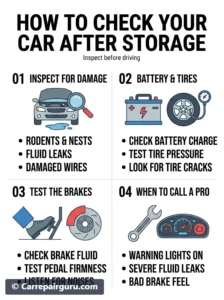
Preparing your car properly is only half the job.
Before driving it again, take some time to inspect the vehicle. A car that looks perfectly normal from the outside may still have a weak battery, damaged wiring, leaking fluids, or brake problems.
Inspect for Rodents, Leaks, and Visible Damage
Walk around the vehicle and look for anything unusual.
Check for:
- Rodent droppings or nesting material.
- Chewed wiring or damaged hoses.
- Fluid spots underneath the vehicle.
- Cracked or damaged tires.
- Signs of water entering the cabin.
- Damaged belts or visible engine compartment components.
If you find damaged wiring, fuel lines, or other important components, arrange a professional inspection before starting the vehicle.
Check the Battery and Tire Pressure
If you used a battery maintainer, disconnect it according to its instructions.
If the battery was disconnected, reconnect it using the manufacturer’s procedure.
Check that the battery terminals are secure and that the battery has enough charge to start the vehicle.
Next, check the tire pressure while the tires are cold.
Inflate them to the vehicle manufacturer’s recommended pressure, not the maximum printed on the tire sidewall.
If the tires show cracks, bulges, or other visible damage, have them inspected before driving.
Check the Brakes Before Driving
Brake components can develop surface rust during storage, particularly when the vehicle is parked in a humid environment.
Some light surface rust on brake rotors may disappear during normal braking. However, heavy corrosion, unusual noises, vibration, or poor braking performance should never be ignored.
Before moving the vehicle:
- Check the brake fluid level.
- Make sure the brake pedal feels normal and firm.
- Check that the parking brake releases correctly.
- Look for visible leaks around the wheels.
- Listen for unusual noises when moving the vehicle slowly.
If the brake pedal feels unusually soft, sinks toward the floor, or the vehicle doesn’t stop normally, don’t continue driving.
Have the braking system inspected by a qualified technician.
When to Arrange a Professional Inspection
Some problems aren’t easy to identify without diagnostic equipment.
Arrange a professional inspection if:
- The battery won’t hold a charge.
- Warning lights remain illuminated.
- You find damaged wiring or hoses.
- There are visible fluid leaks.
- The brakes feel different from normal.
- The engine runs roughly or makes unusual noises.
- The tires show signs of serious deterioration.
Once everything checks out, start the vehicle according to the manufacturer’s instructions.
Let it reach normal operating temperature as appropriate, and avoid unnecessary high engine speeds immediately after starting.
If the vehicle is safe to drive, begin with a short, gentle trip and pay attention to how it responds.
Car Storage Preparation Checklist
Use this checklist before leaving your vehicle unused for an extended period.
Before Storage
- Check the owner’s manual for storage instructions.
- Wash and completely dry the vehicle.
- Clean the interior and remove food.
- Check engine oil and other important fluids.
- Decide whether fuel stabilizer is appropriate.
- Prepare a battery maintenance plan.
- Check and adjust tire pressure.
- Protect the wipers and secure the vehicle properly.
- Check for possible rodent entry points.
- Choose a dry, secure storage location.
- Review insurance and registration requirements.
After Storage
- Inspect the vehicle for rodent damage.
- Check for fluid leaks.
- Inspect the battery and electrical connections.
- Check tire pressure and tire condition.
- Check the brake pedal and parking brake.
- Remove all temporary covers or exhaust plugs.
- Check dashboard warning lights.
- Arrange professional inspection if anything seems unusual.
Final Thoughts
Preparing your car for long-term storage doesn’t have to be complicated, but skipping important steps can lead to problems when you return.
Clean the vehicle, check its fluids, protect the battery and tires, and choose a suitable storage location. Most importantly, follow the manufacturer’s instructions for your particular vehicle.
Before driving again, take time to inspect the car rather than assuming everything is fine because it was parked safely.
A little preparation now can save you unnecessary repairs and help make sure your vehicle is ready when you need it.
Frequently Asked Questions About Car Storage
How Long Can a Car Sit Without Being Started?
A healthy vehicle can often sit unused for several weeks without problems, but there isn’t one guaranteed time limit. Battery condition, temperature, vehicle age, and electrical systems all affect how long it can remain parked. For storage lasting several months, follow a proper storage procedure.
Should You Start Your Car During Long-Term Storage?
Not necessarily. Starting a car for only a few minutes may not allow the engine and exhaust system to reach normal operating temperature, which can leave moisture behind. Some manufacturers recommend periodic operation and vehicle movement during extended storage, so follow your owner’s manual rather than applying a universal weekly starting rule.
Do You Need Fuel Stabilizer When Storing a Car?
Fuel stabilizer can help preserve gasoline during extended storage, but it isn’t required for every vehicle or storage period. Check the fuel manufacturer’s recommendations, the stabilizer instructions, and your vehicle owner’s manual before using one.
Should You Disconnect the Battery Before Storage?
Disconnecting the battery can reduce electrical drain, but it may reset vehicle settings or affect electronic systems. Some modern vehicles require specific procedures. Check your owner’s manual before disconnecting the battery, and consider a compatible battery maintainer if electricity is available.
Should You Inflate Tires More Before Storage?
Follow the vehicle manufacturer’s storage recommendations. Some manufacturers specify a different pressure for extended storage, but you should never automatically inflate tires to the maximum pressure printed on their sidewalls.
Should You Leave the Parking Brake On During Storage?
It depends on the vehicle and storage conditions. In some damp environments, an applied parking brake may increase the risk of components sticking. If the manufacturer recommends releasing it, secure the vehicle with properly rated wheel chocks on a level surface.
What Should You Check Before Driving a Car After Storage?
Inspect the tires, battery, engine compartment, and underside for visible damage or leaks. Check the fluid levels, brake pedal, and dashboard warning lights. Remove any temporary protective covers from the air intake or exhaust before starting the engine. If you find damage or anything feels abnormal, arrange a professional inspection before driving.
About the Author